
Acasă Blog Pagina 4

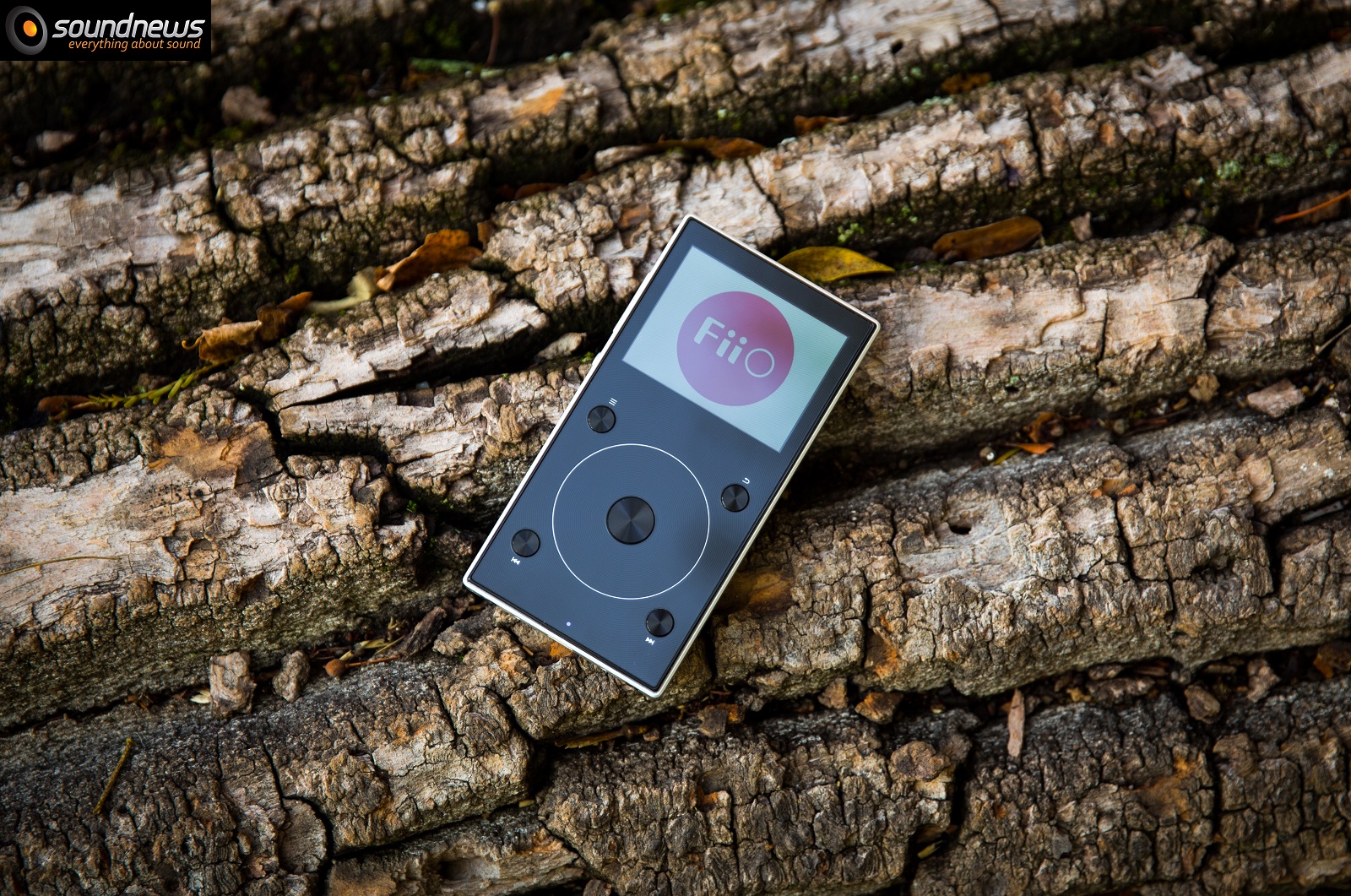
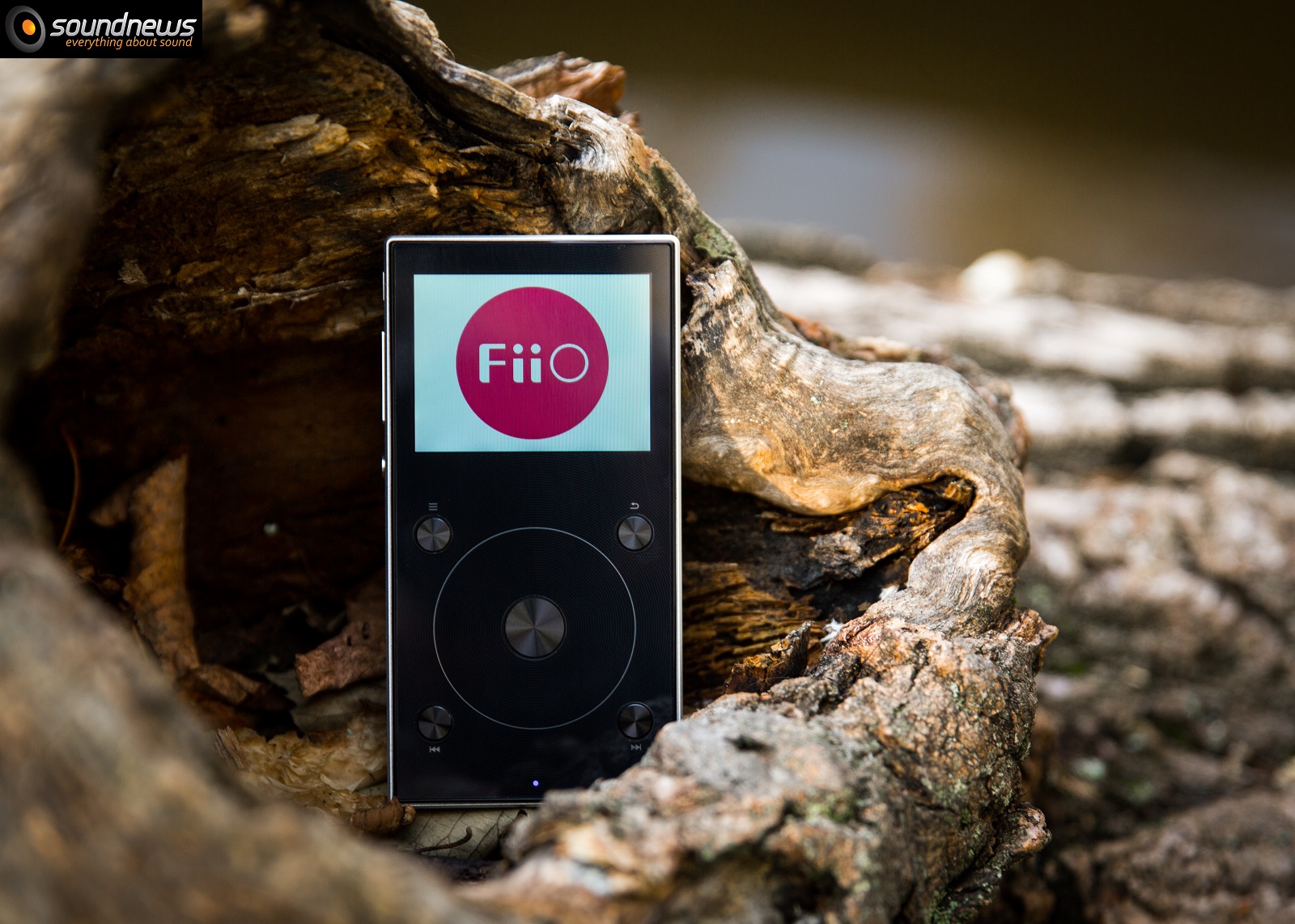
X3 Mark III – Third time’s a charm

4

Hello everybody.

Who still remembers when first gen X3 was announced that was capable of decoding 24bit/192 kHz material?

At least for us it was a portable revolution, although I do not own an impressive collection of Hi-Res material, I was really glad to see dedicated hardware for high fidelity audio playback. That device kickstarted a whole new generation of really cool Hi-Res portables.

I’ll tell you a small secret, from many points of view X3 Mk III could be the best FiiO DAP, especially from the perspective or price/performance ratio. If an Android OS is not needed, or third party apps or Wi-Fi streaming capabilities, then X3 MK III might be the device you are looking for.
Design and build quality

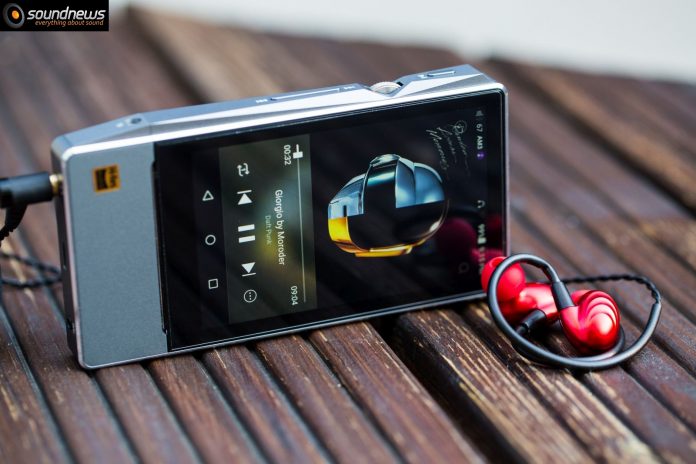
It’s small and cute, it uses performance audio parts, potent headphone amplification and besides it has a balanced 2.5 mm TRRS output and if needed it can be used as an external DAC for your PC.

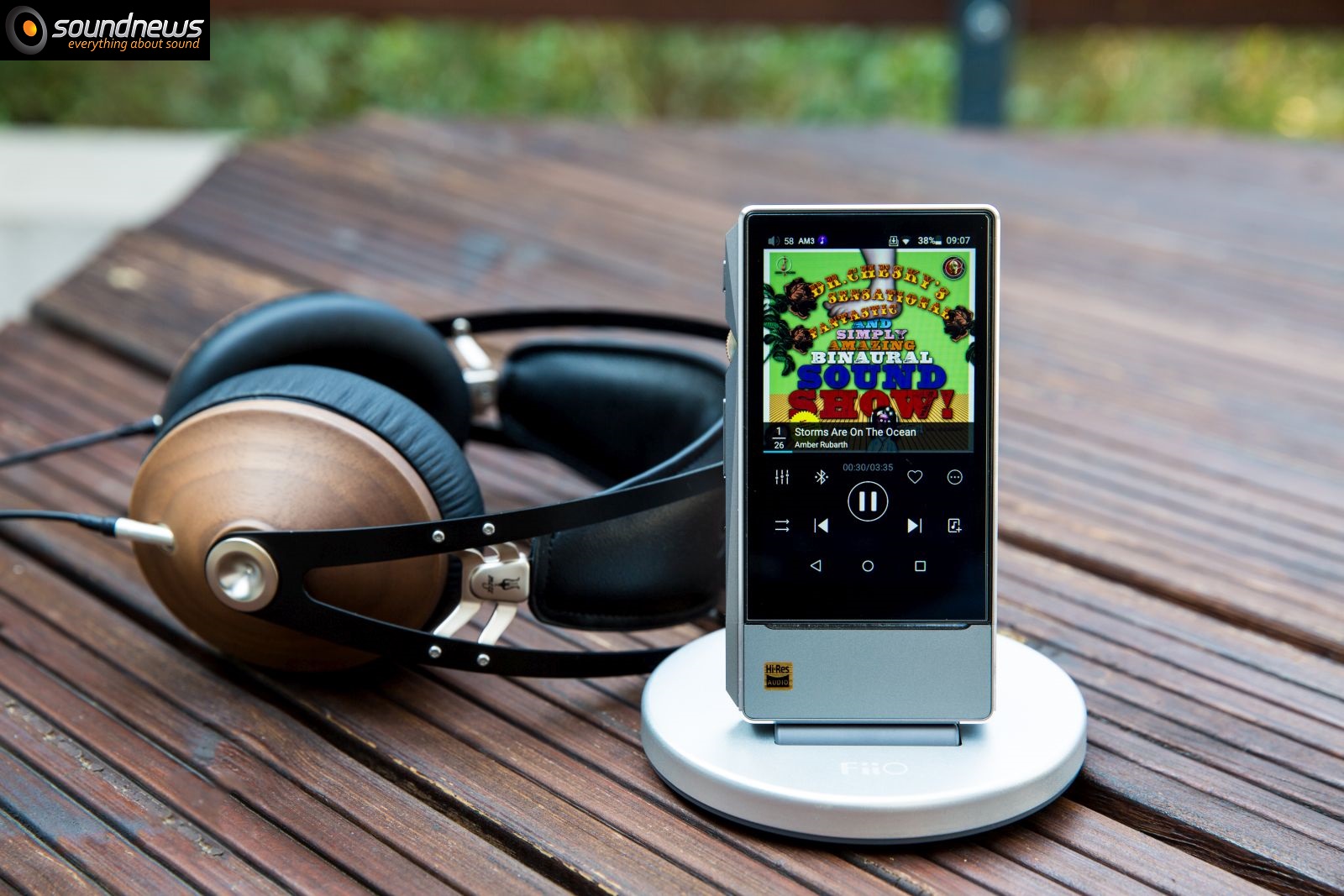
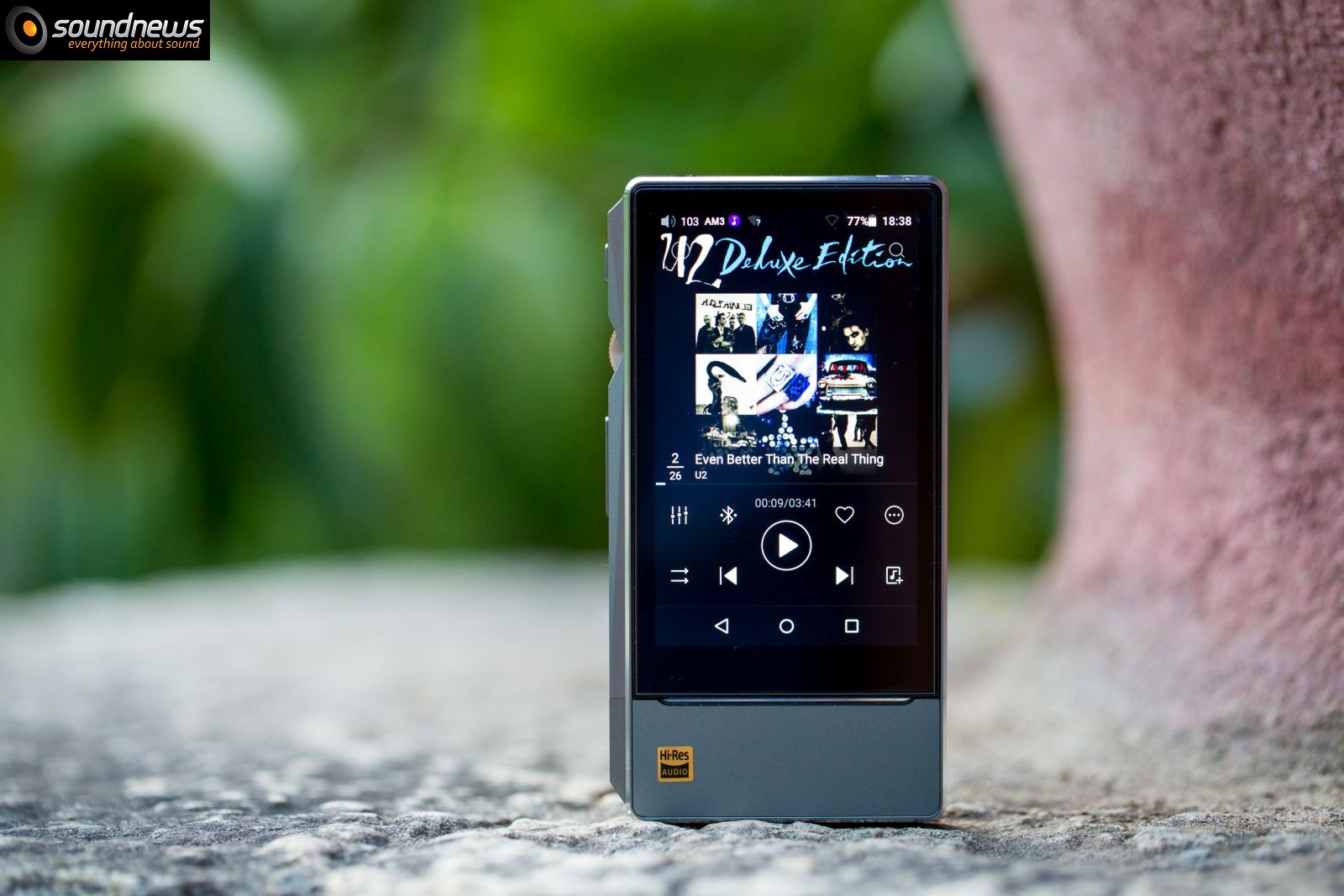
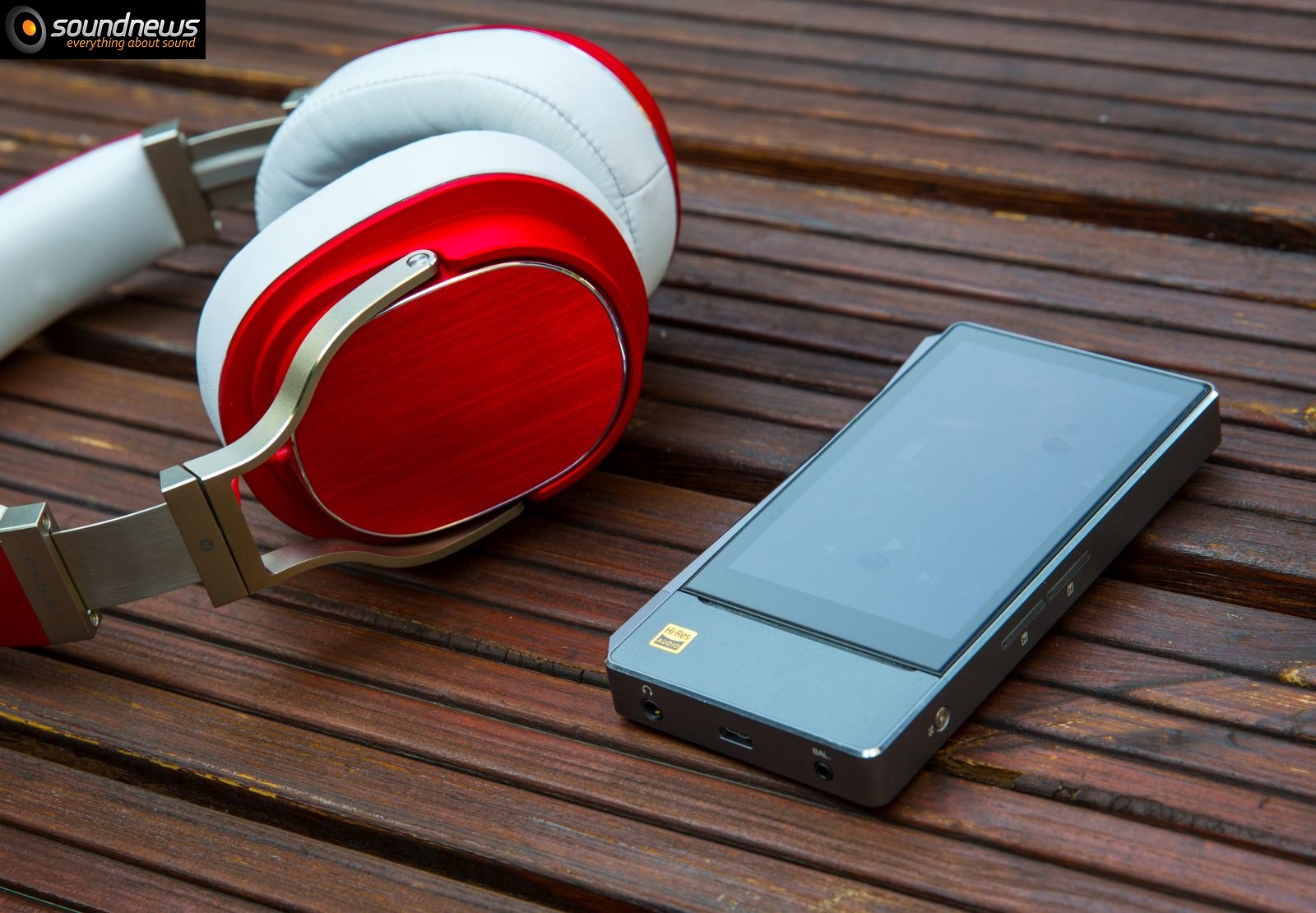
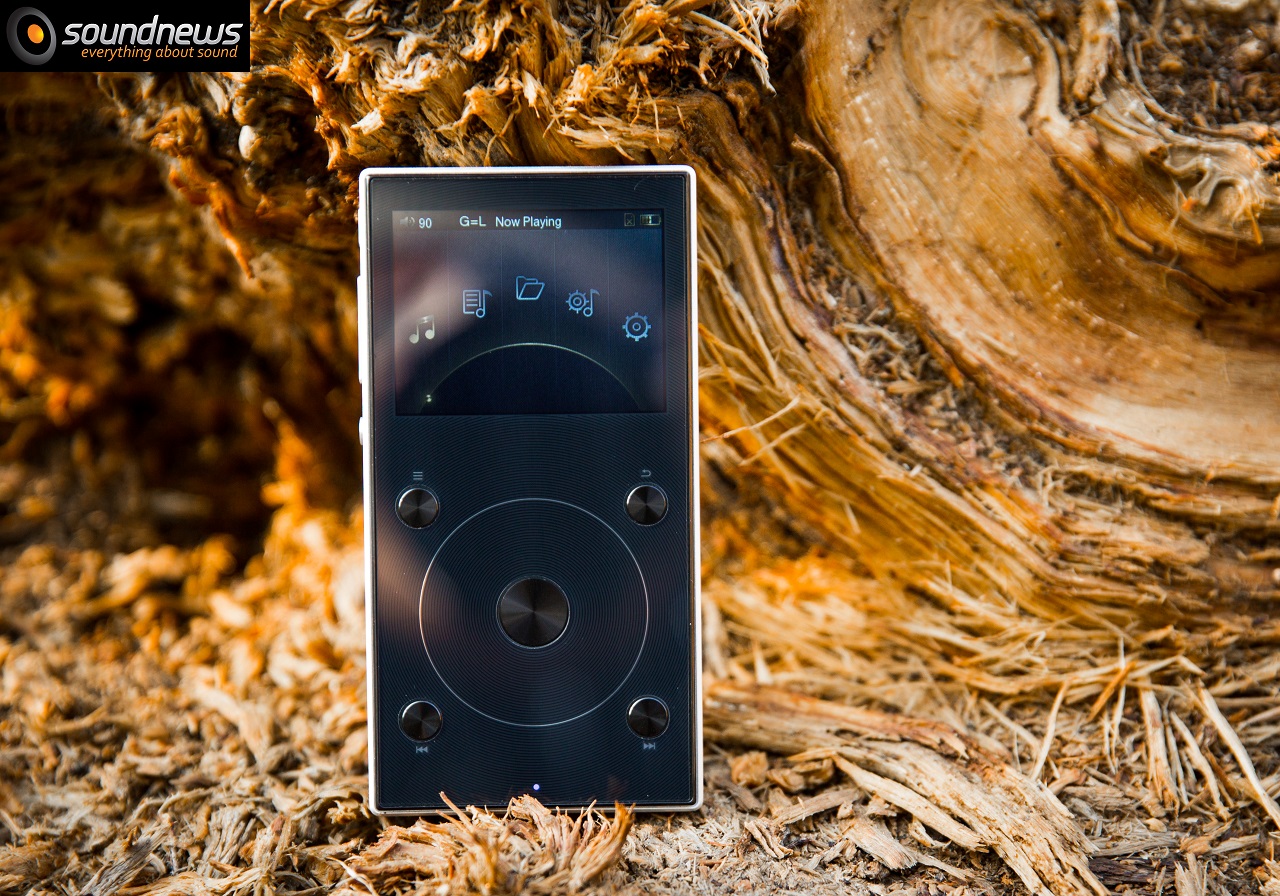
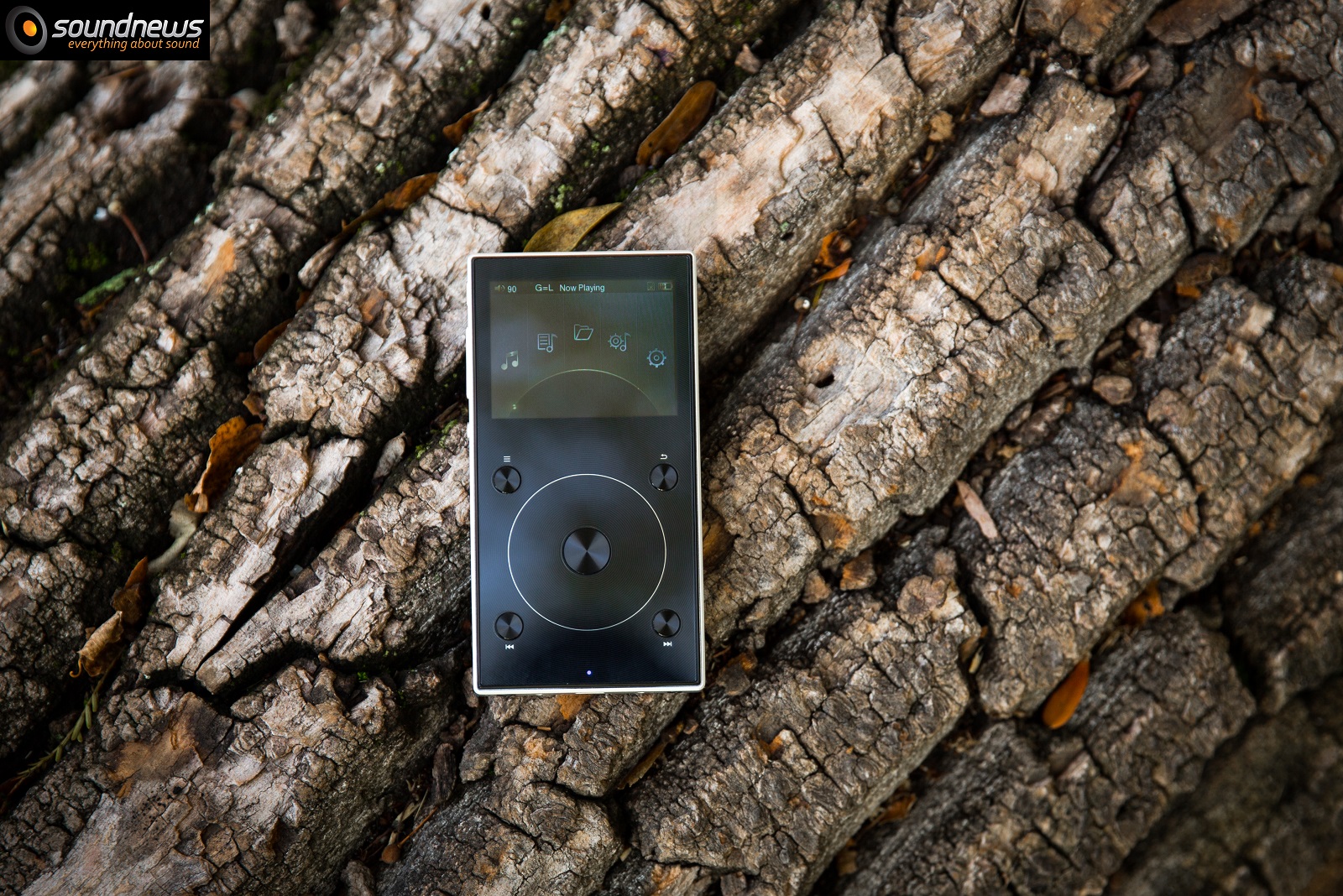
At first inspection I notice that it is thinner, a little bit taller, all buttons, ins and outs were moved on the left or bottom side.

Like his predecessor the 3.5 mm jack has a triple function: it can be a normal 3.5mm headphone output, a clean line-out that provides 1.9V Rms or a digital coaxial output to another higher performance DAC (like the desktop ones). On the bottom the balanced out can be found together with microUSB input for changing or data transfer.

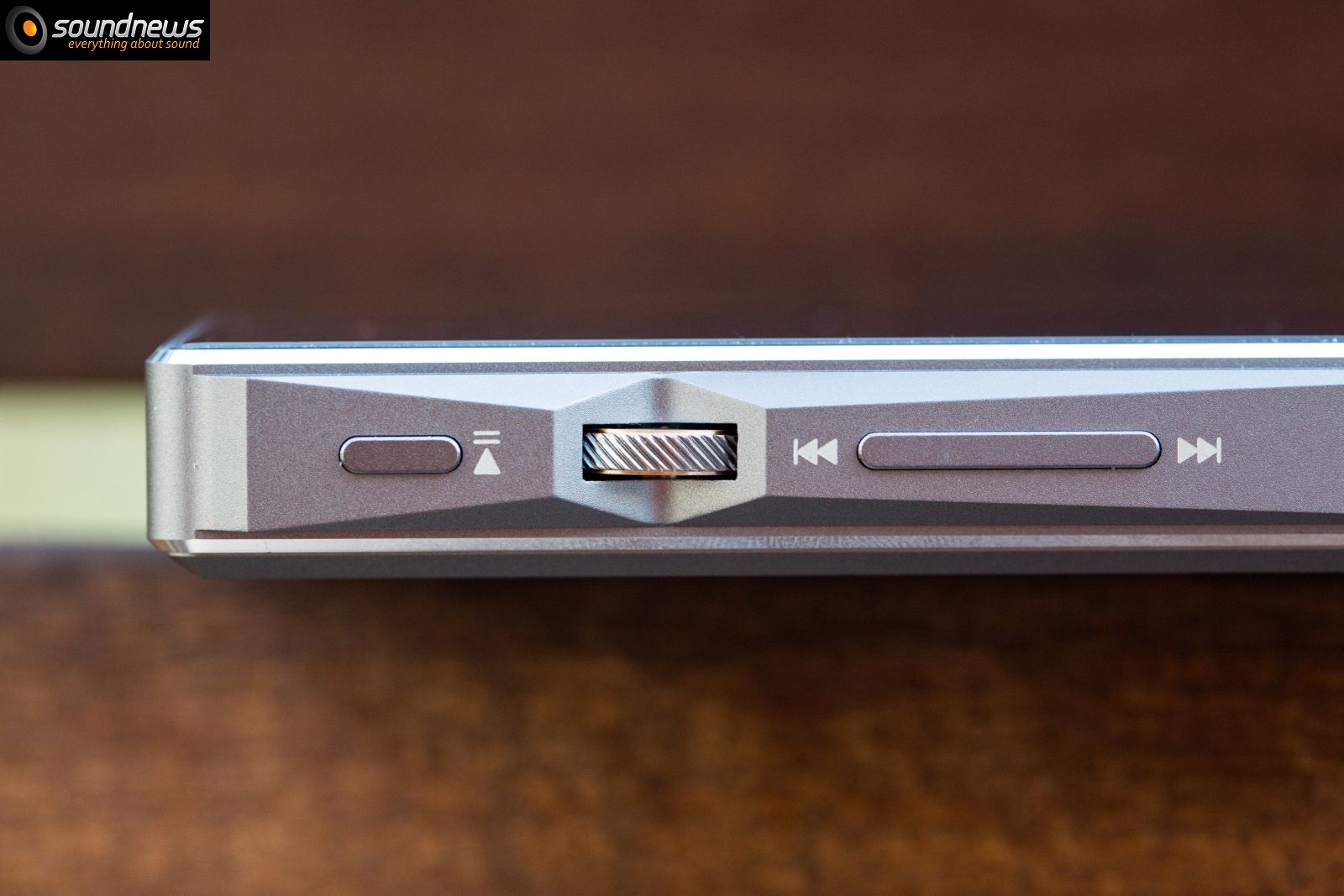
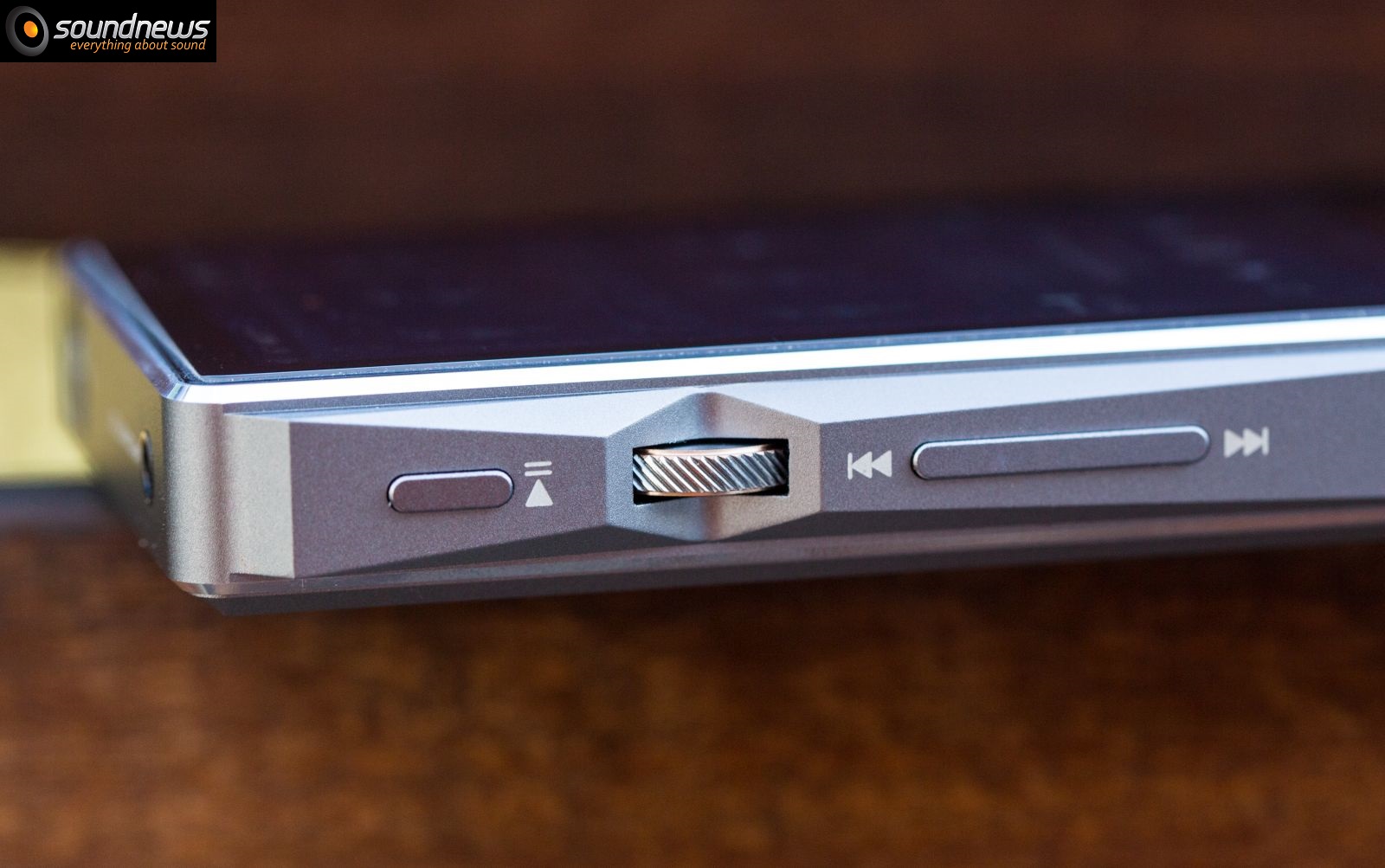
On the left side besides the standard volume buttons, On/Off button and microSD slot, a multifunction button can be found as well that works as a shortcut for many features of this DAP: like directly accessing the EQ, fast changing a theme or background, changing fast forward or back for a tune, play/pause and many others. In many cases when display cannot be accessed the multifunction button really comes in handy.

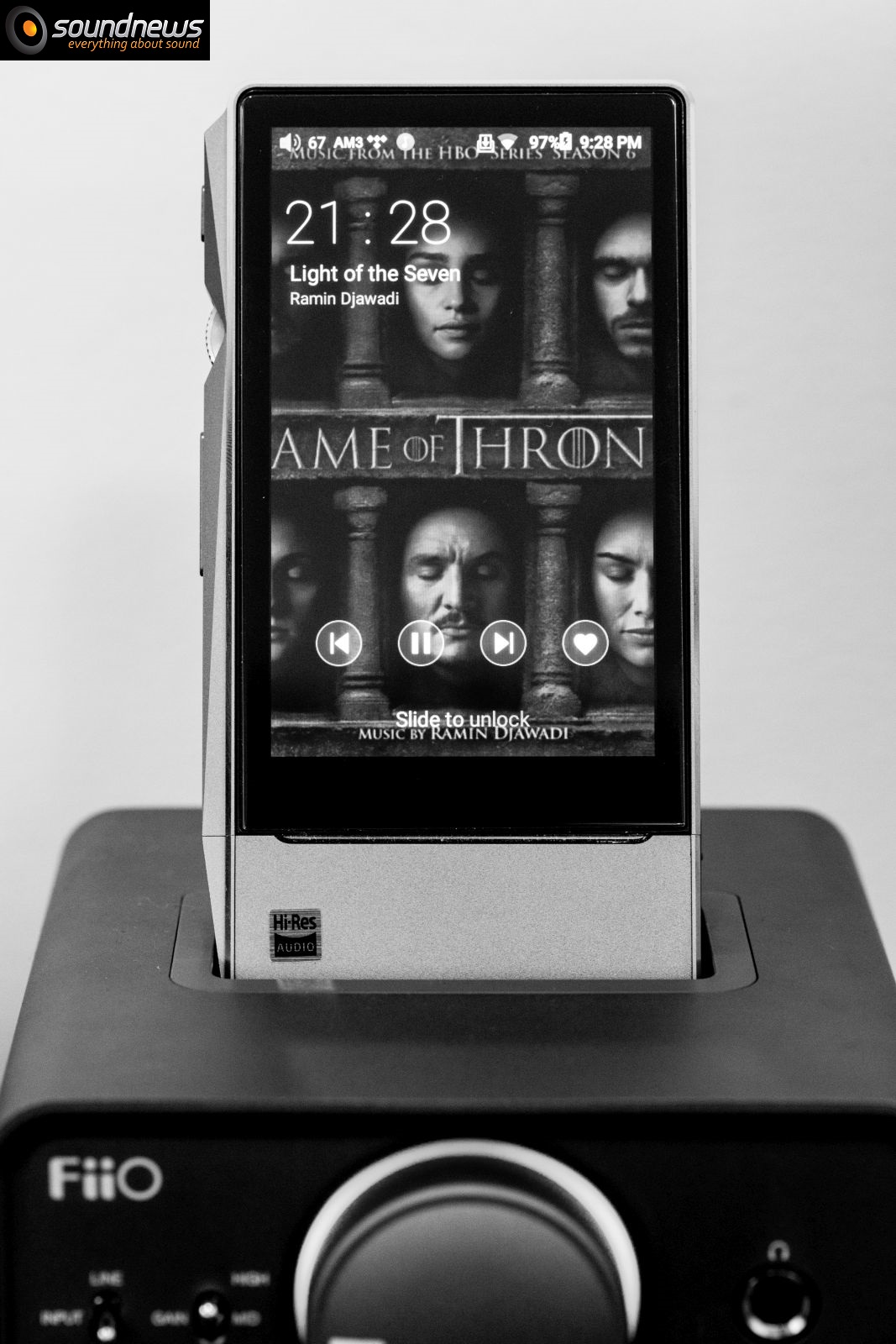
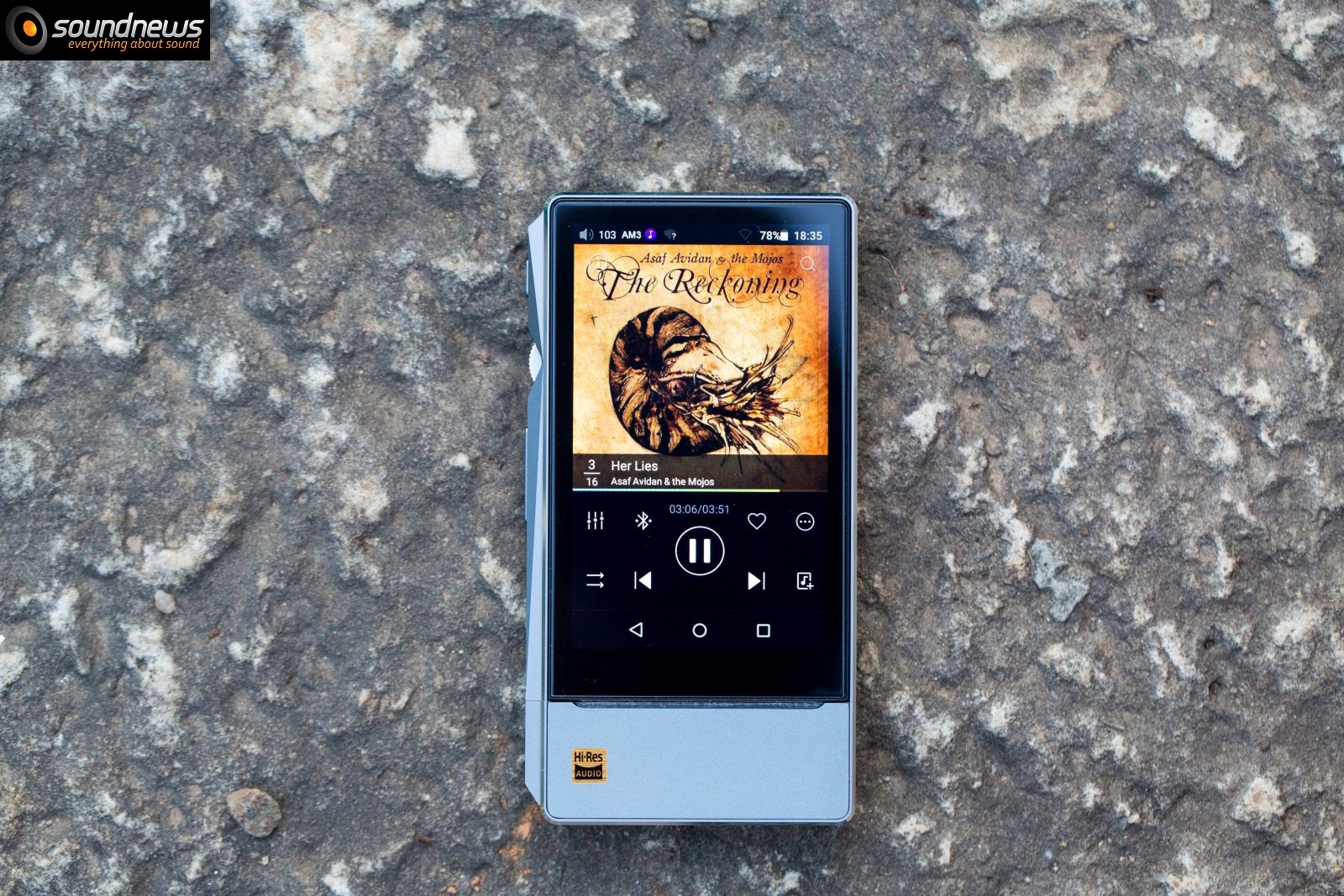
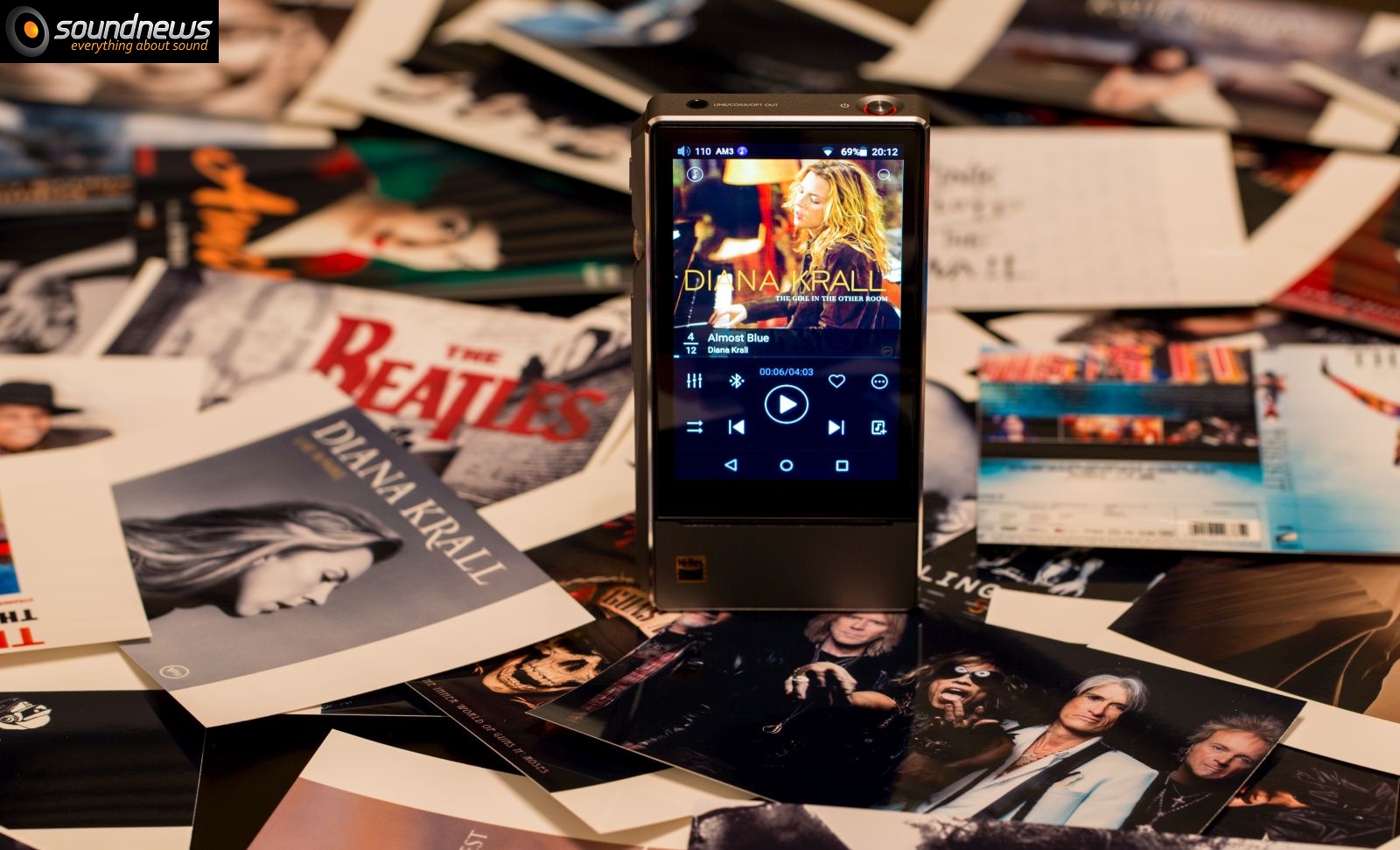
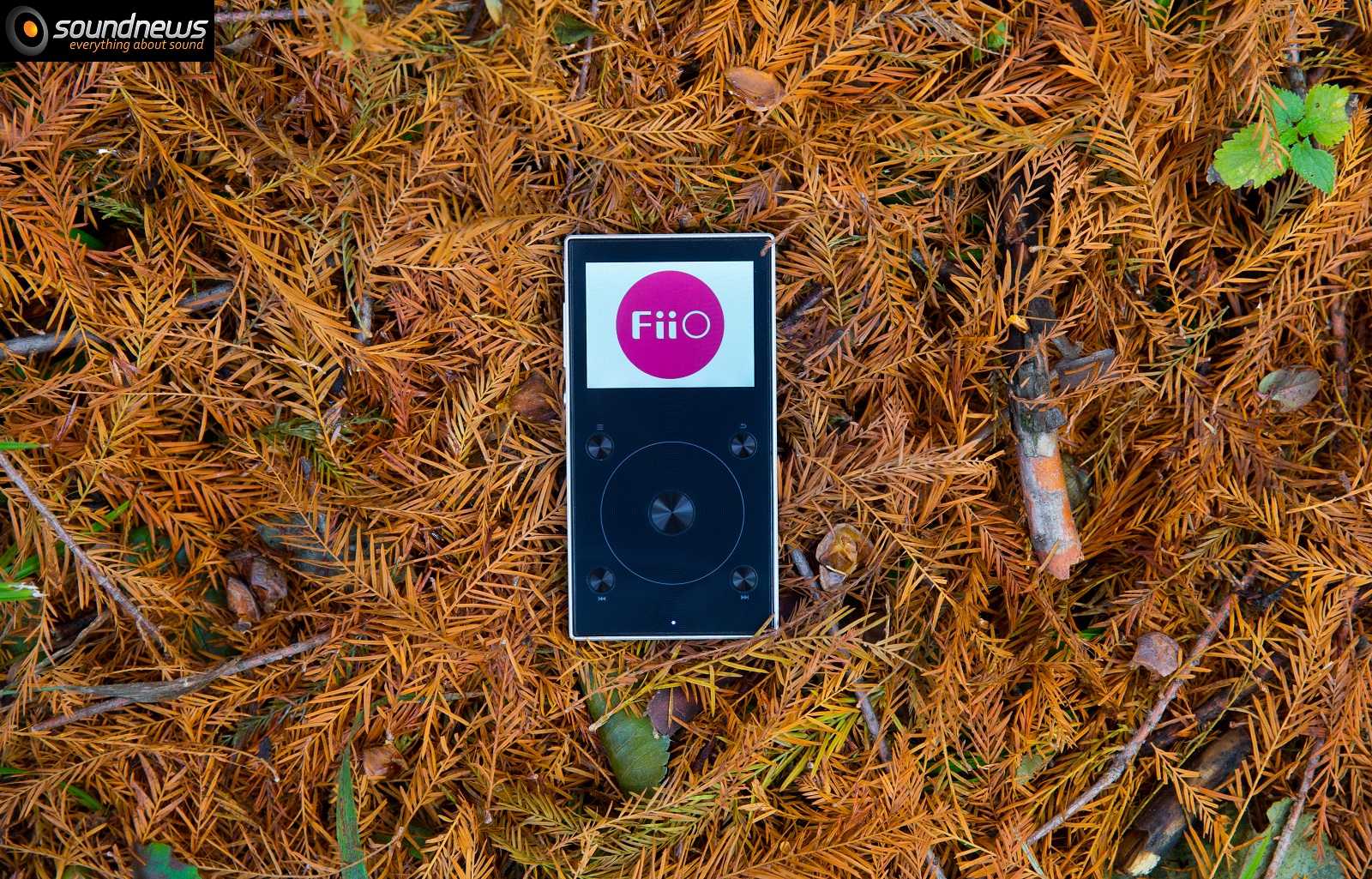
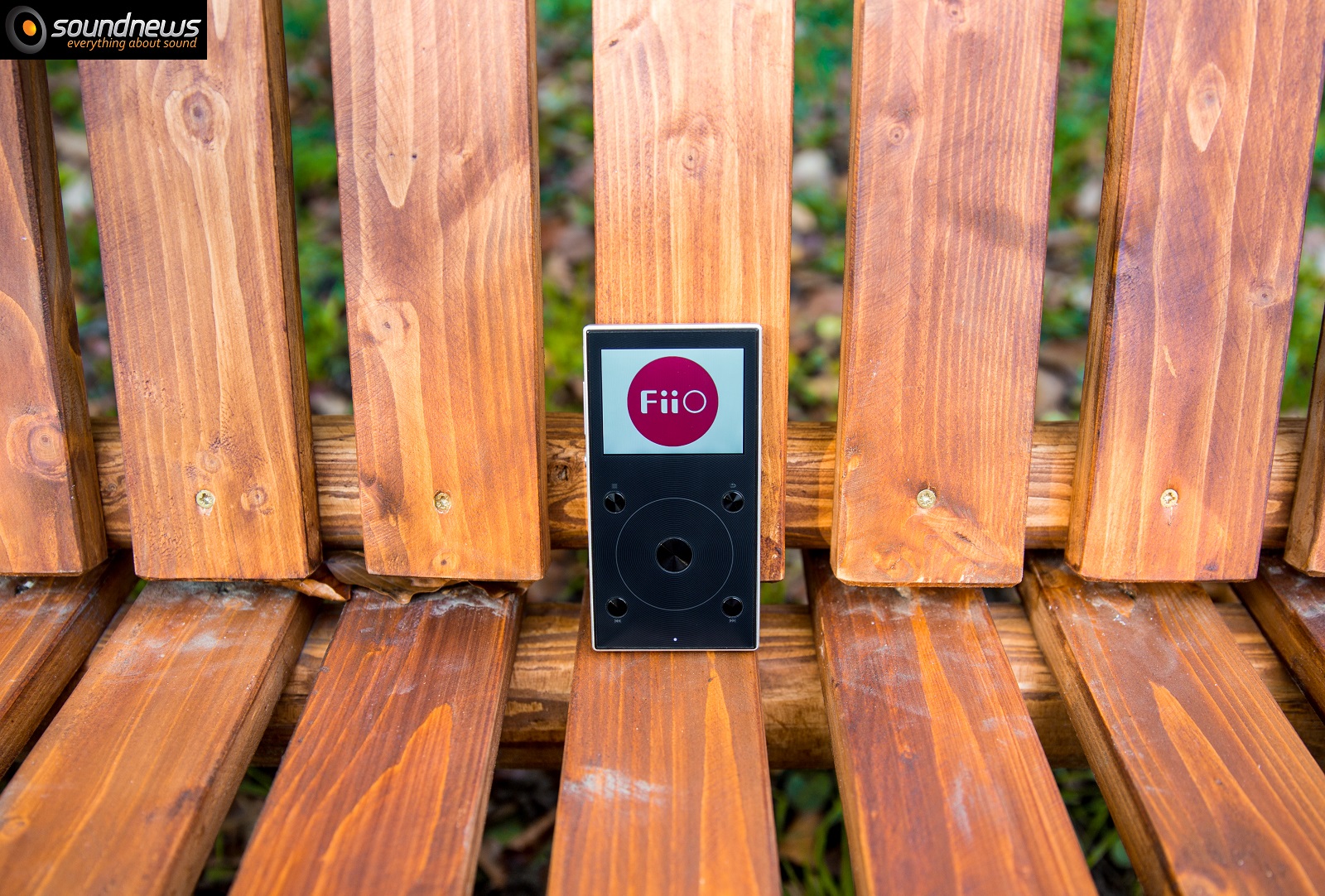
The front side is entirely covered by glass, I’m glad to see the newest touch wheel – its much more reliable than the mechanical one found in the past devices. The back plate seems to be plastic made and the reinforced frame is aluminum made which is always nice to see.
I can’t complain, build quality seems good, I kind of like it its design as well, but honestly I like the X3 MKII look a little bit more, it’s uni-body design is more appealing to me.

Under the hood

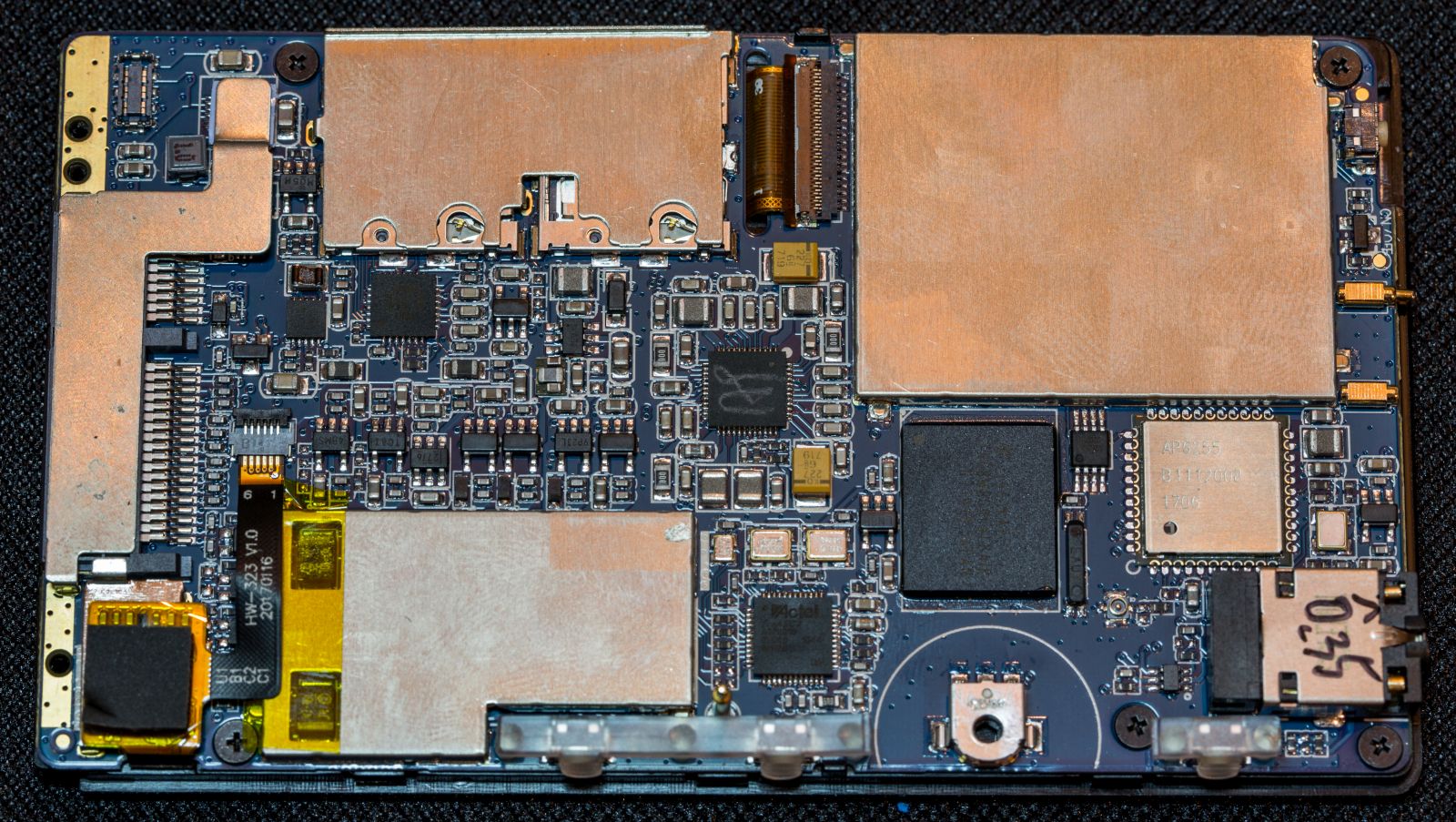
On the inside at least for me things are much more interesting.

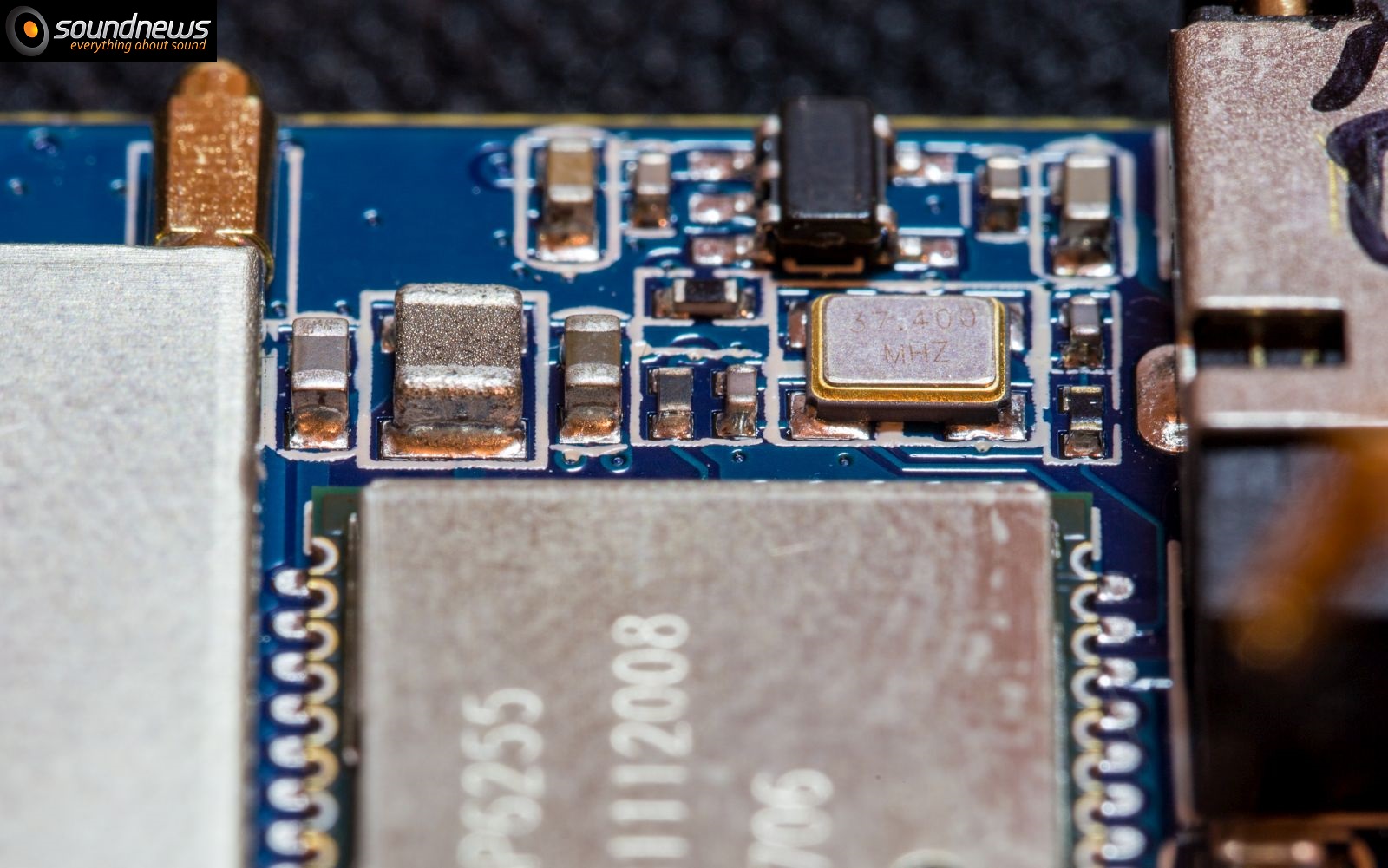
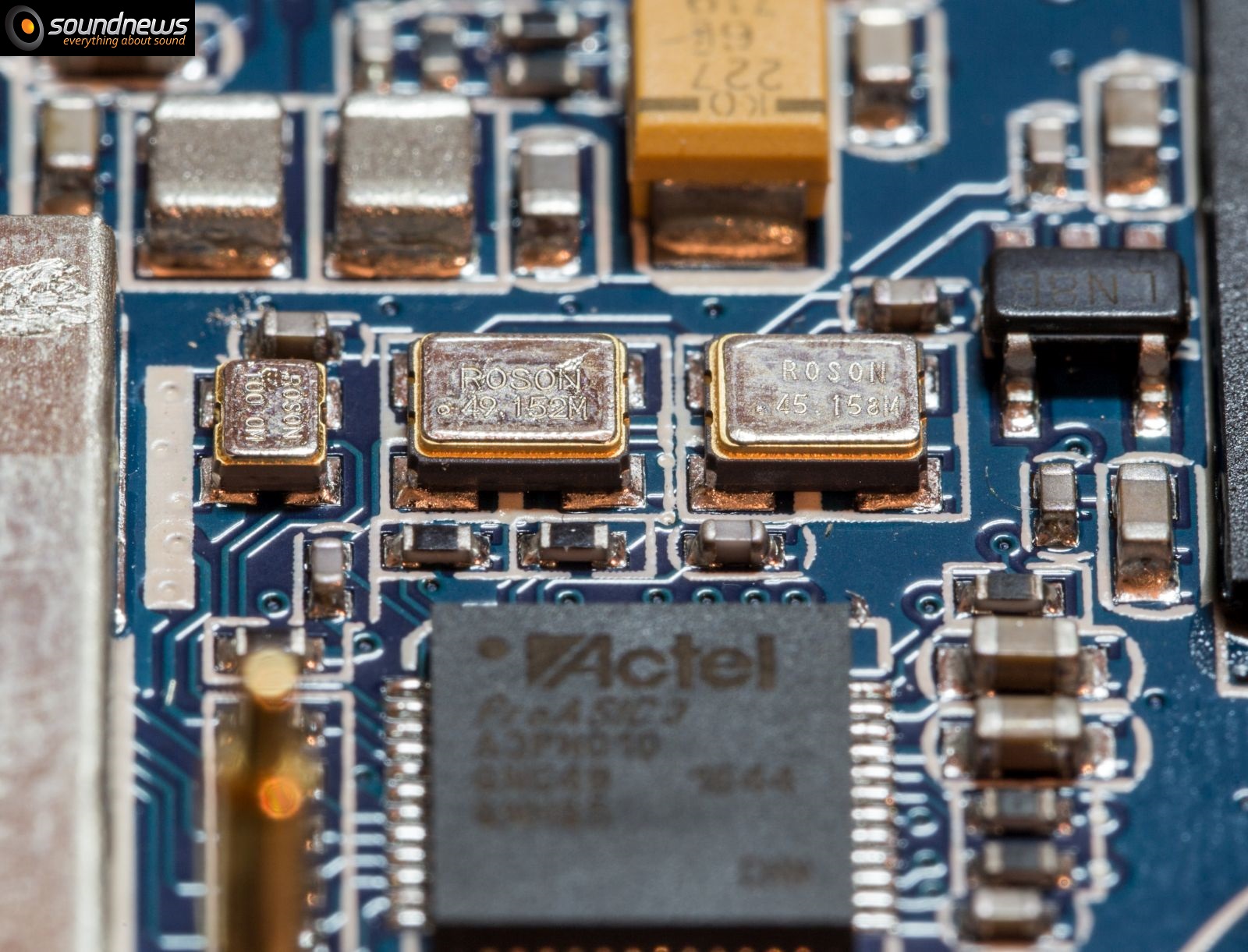
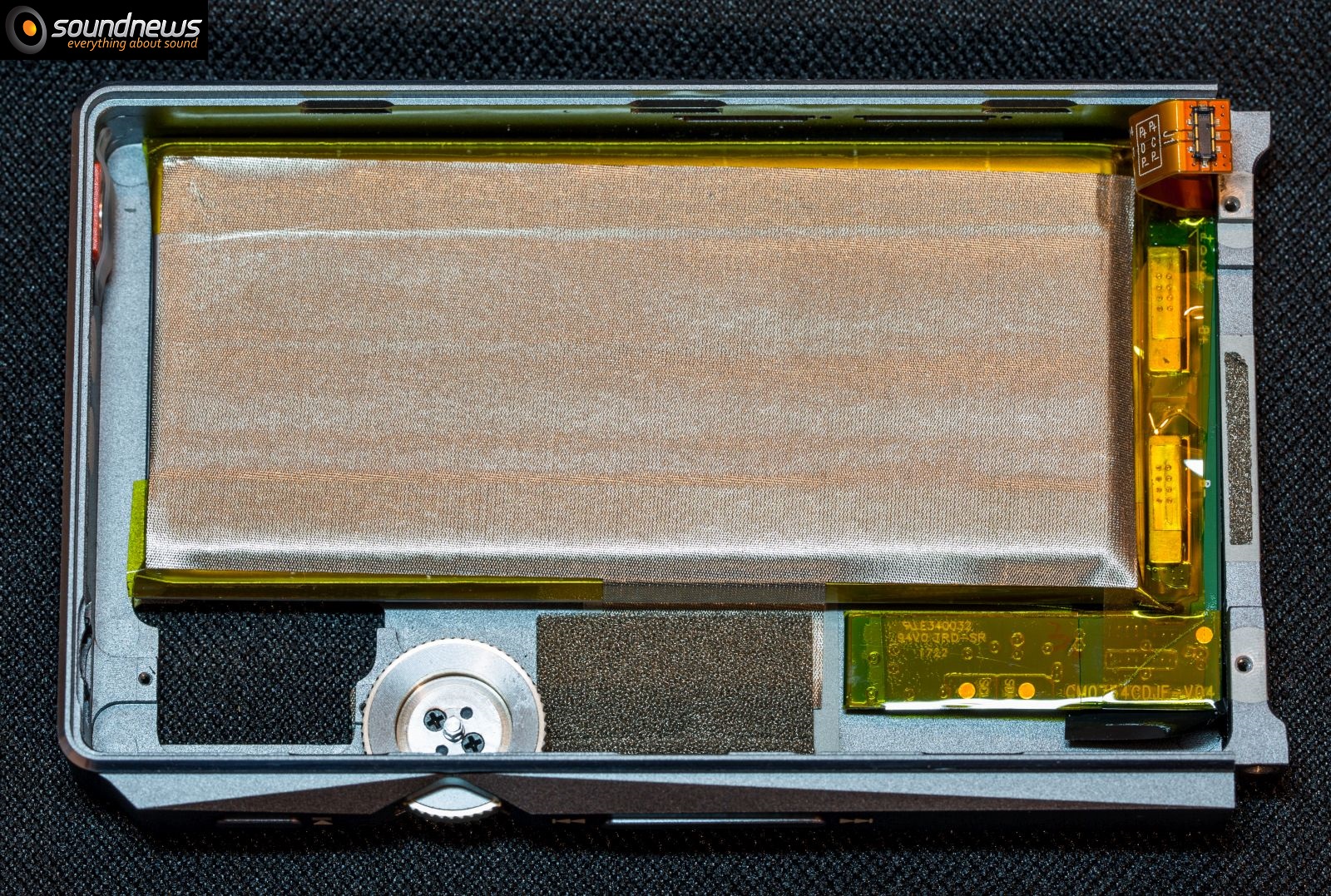
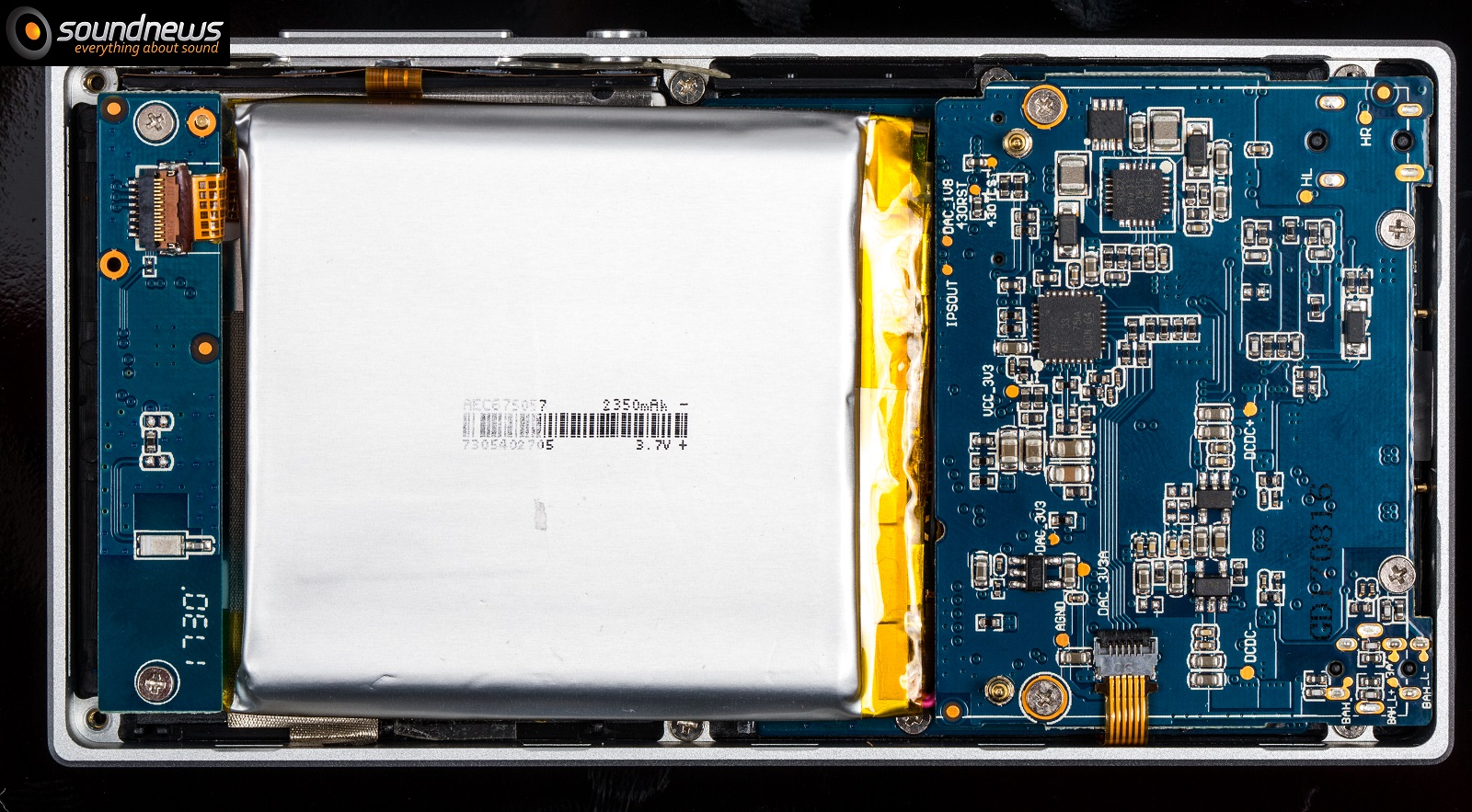
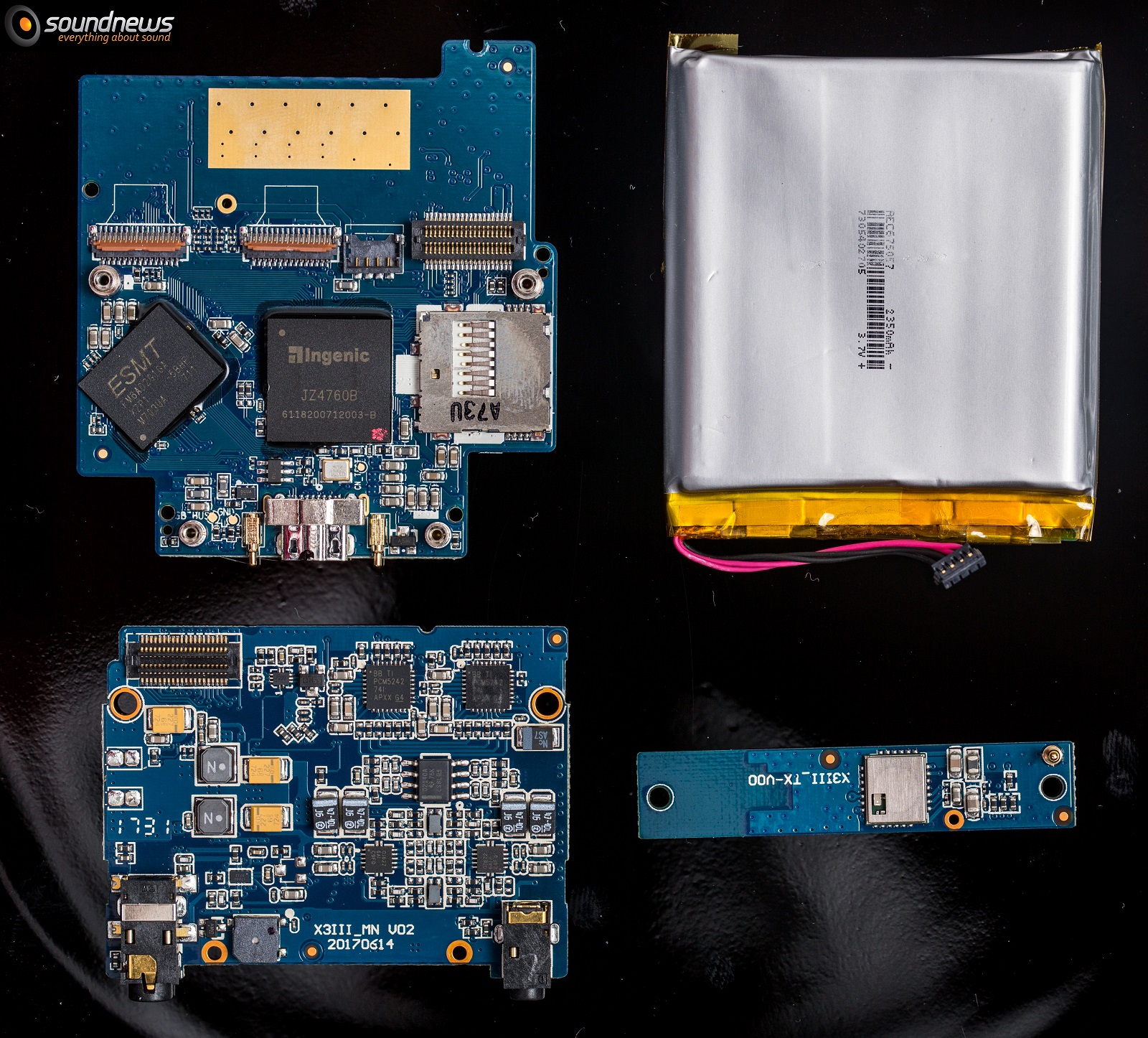
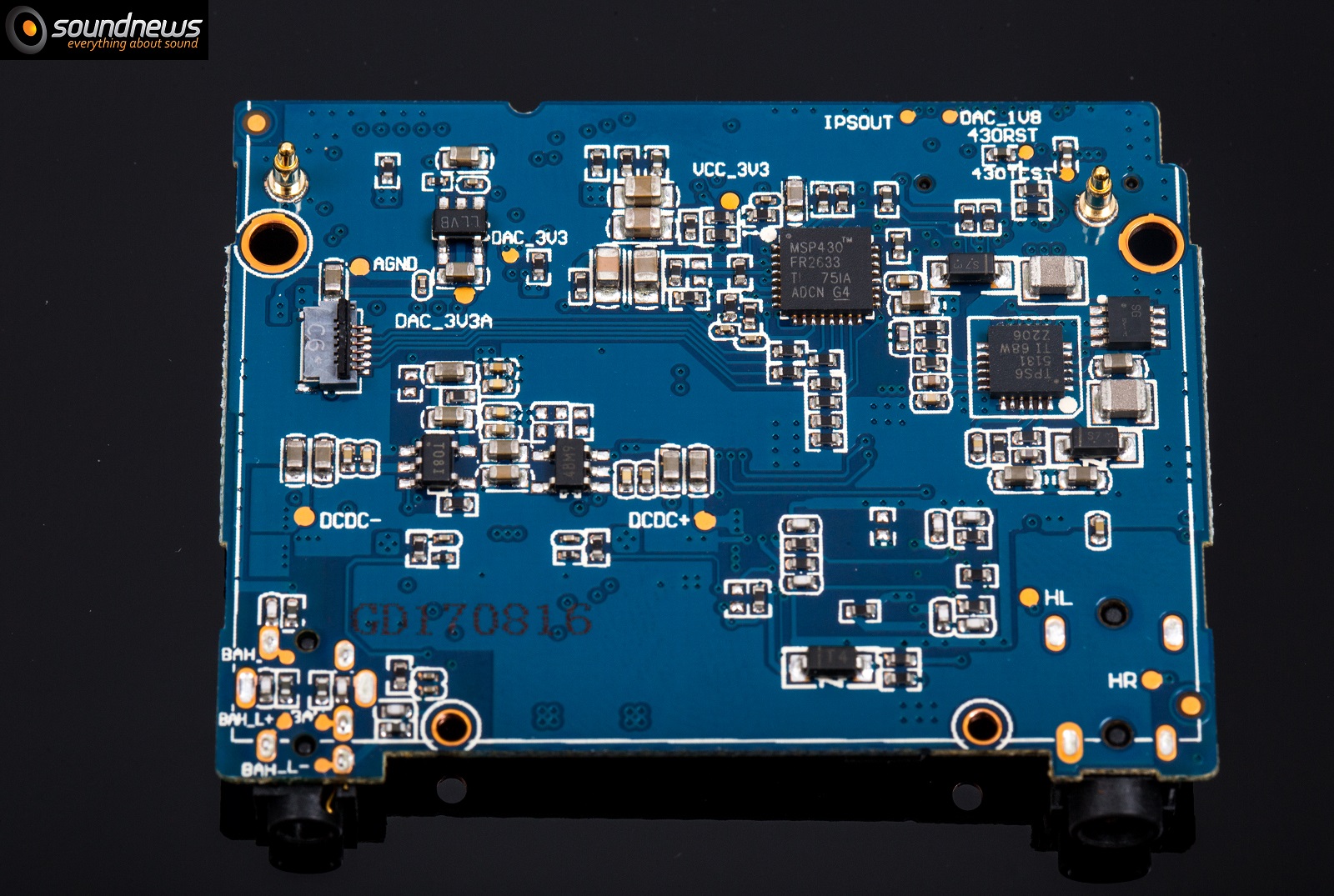
Firstly in its construction 3 different PCBs were used, one for analog amplification, one for digital conversion and one for Bluetooth.

Lets take them one by one.

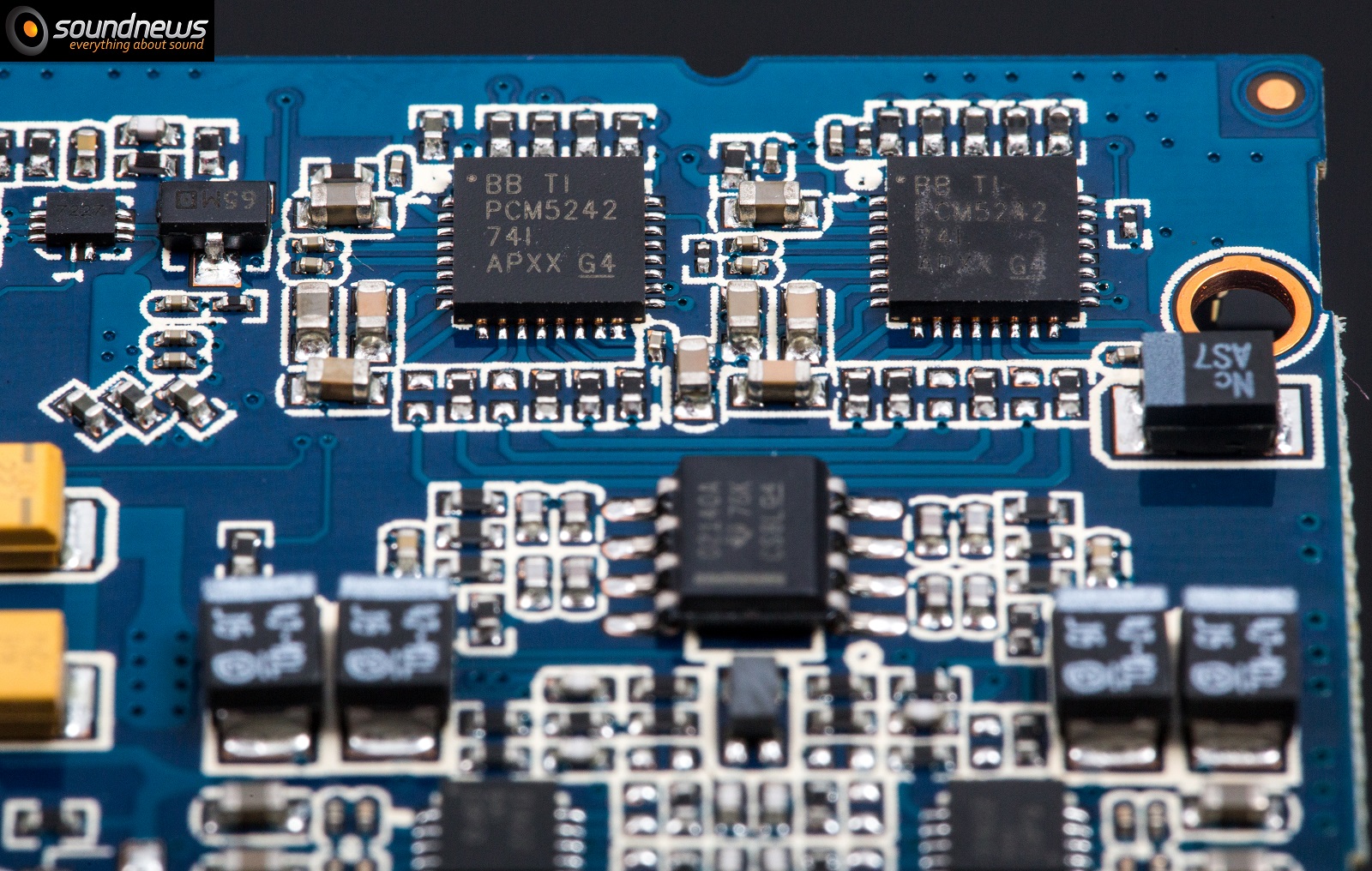
Digital decoding is handled by two pairs of TI PCM5242, two pieces exactly for that true balanced output and also for offering a better SNR and a much better crosstalk of ≥97 dB.

In USB DAC mode, both DAC chips will work which is really good, please note the 1.9V output from the line-out!
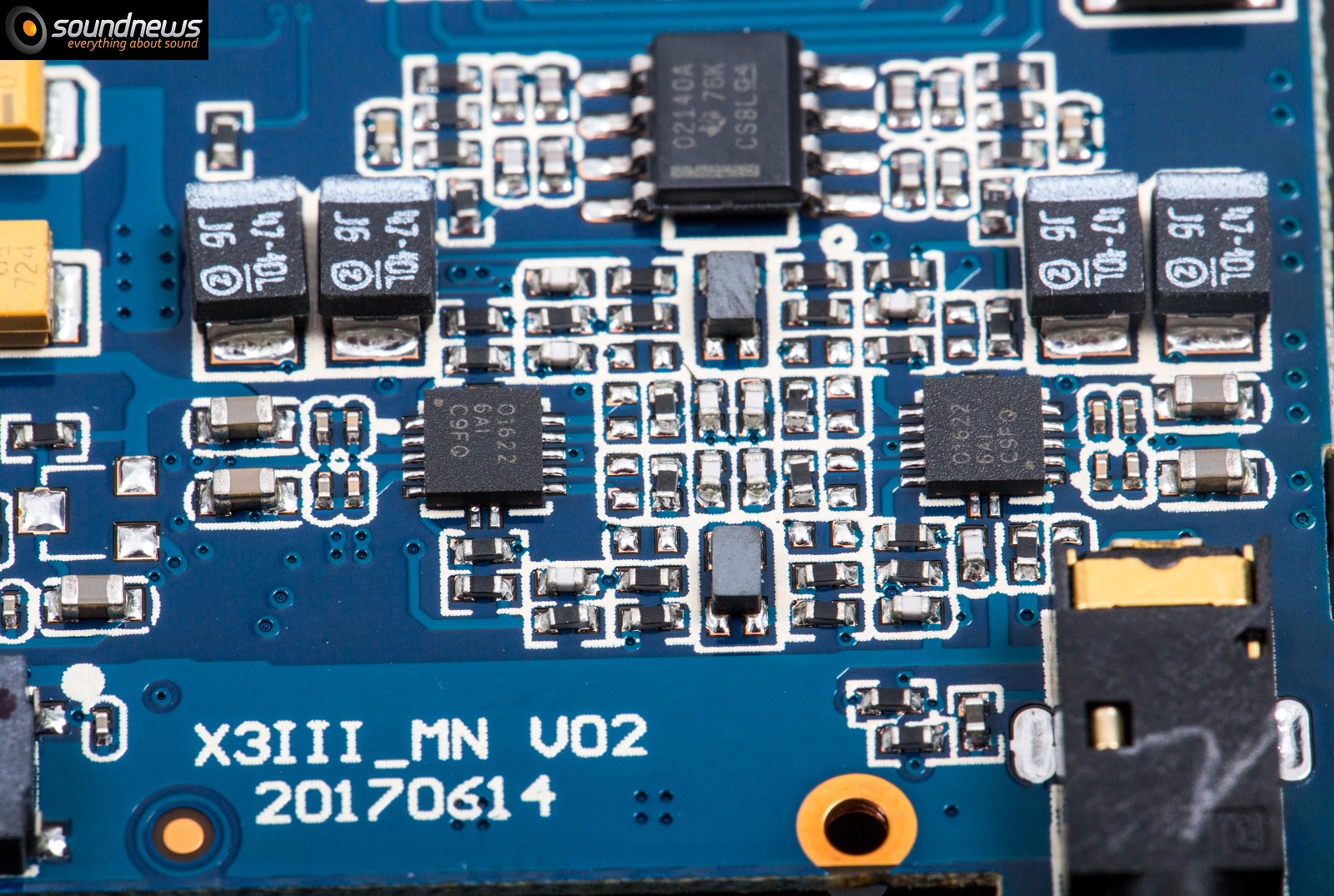
Amplification work is handled by OPA2140 and OPA1622.

First op-amp is used in the low-pass filter and the second one handles the actual amplification stage. Both chips are found in higher performance amplifiers, sincerely I do not worry much for the amplification, on normal 3.5 mm headphone out it offers 160mW of power and on balanced output 190mW of power into 32 Ohms, for its size and weight those are really impressive numbers.

Bluetooth duties are handled by the F1C81 chipset which regretfully doesn’t offer AptX or AptX HD support but at least it works with Bluetooth and Bluetooth Low Energy devices.

Battery capacity is at 2350 mA that together with Sennheiser Momentum M2.0 over the ear headphone at a volume of 60 out of 120 offers a little bit more than 11 hours of playtime.
I’d wish a little more, but its Ok. Lets not forget that X7 MKII with the high-power module offers 8 hours of playtime, so I consider than 11 hours is more than adequate.

X3 supports Hi-Res PCM files up to 24/192kHz for majority of lossless formats and also natively support for DSD64.

Like the old model X3 MKIII doesn’t have internal memory and relies entirely on the microSD card slot that supports cards up to 256 Gb.

In USB DAC mode X3 works in asynchronous mode – crucial information for some.

Sadly Hi-Res PCM files cannot be played via Bluetooth, only PCM 16/44.1 kHz files.

Ok now lets get to the most interesting part.
Audio Performance

First impression is that it sounds quite musical and more natural that its superior models, having a well put together tonal balance.

It sounds somehow very different compared to its old iterations X3 and X3 MKII and I think that’s great, at the end of the article I will make some interesting comparisons between them.

Unlike his predecessor, newest X3 has an authentic sonic character, chosen direction by the manufacturer is very clear for me.

I adore a musical presentation having a slightly bigger body and that is why X3-III is right up my alley.

Besides a higher level of detail presented to the listener, at last for the first time I’ve heard a very fluid presentation on X3, with a good rendering of the extensions and a quite potent headphone amplifier.

First major change that was felt instantly was the superior rendering of bass and especially sub-bass.

Sennheiser HD600 are headphones known as not being extraordinary in the sub-bass area and still connected directly to the X3-III sub-bass was awakened from hibernation.

Listening to Massive Attack – Angel I was surprised by the performance of the sub-bass and upper bass.

Slowly but surely few layers of bass surfaced and were clearly heard on X3-III. First of all I was impressed by the capability of headphone amplification of this small guy and secondly by the extension in the bass area that for example X3-II was not capable of.

I wanted it or not, I just started shaking my head, on good audio equipment this tune can induce you into a state of trance and this thing just happened to me.

I’m glad that bass notes are not overlapping other frequencies and still offering a good impact and speed. It can be better than this but at a much higher price point.
Martin Solveig & Dragonette – Hello sounded really explosive.

The high dynamics of the track simply elevates your mood instantly by providing a fast transient response. On this track as well I felt an exact dose of musicality and technicalities. At some point bass guitar sounds like a separate entity from the song, when string vibrations stop abruptly is the moment when I realized that there is not any trace of echo or background noise, and believe me you don’t want to hear those on faster paced tracks.

Recently I listened to some folk rock from our northern neighbors Vopli Vidopliassova – Vesna which albeit didn’t sound super technical, it’s extremely musical and really challenges the correct playback of the mids. There are several acoustic instruments, some overlapping voices and an accordion, accompanied by guitars and drums.

This kind of music just shines on X3-III. I feel like mids are well defined on X3-III, they are indeed a bit syrupy and emphasized and it might be just that that puts you instantly in a state of well-being and relaxation.

It’s important to know that although the mids are slightly accentuated, they do not sound slow or mellow. As a general rule, equipment that sounds more musical will always sound slower, devoid of speed and impact.
But it’s not the case with X3-III, the potent headphone amplifier stage and those two DAC chips really do mix well together, offering good dynamics and well defined frequency extremes and a good dose of speed and impact.

Listening to the local haiduks Phoenix – Strungathe song, although recorded quite badly has some excellent passages in which my imagination is playing me and in which the holography and positioning of instruments in space is demonstrated.

I’m glad to hear the very well defined space between instruments, muddiness effect is not present and a crowded interpretation will rarely be heard on this device.

Bass notes and mids once again shone on this track, offering a small dose of vintage that is so very present. Vintage rock reproduction was just magical, not even X5-III or X7-II can sound as seductive as the X3-III.

Going on with a higher quality material: dCS The Spirit of Turtle in DSD64 just now I realized the capable technicalities of this device.

Surely the level of detail is quite high, but it still has something to learn from the performance of older brothers X5-III and X7-II. Only now I felt the biggest difference.

Although the highs and lows are not sharp or abrasive, they do not have the last bit of information, something is still missing in this area of frequency.

Slightly romantic sound is due to calmer treble left a little bit behind.

On NedSym Lite – Ravel’s Tomb I’ve heard a deep and penetrating sound with a pretty deep soundstage but a little limited in width, I would have wanted a larger and maybe higher stage.

The sounds do not hit a sudden imaginary wall; it dissipates quite smoothly and does not create the feeling of agglomeration at all. From this point of view, X3 is something special, offering a deep stage and quite extensive but not very wide, somewhere in the middle.
Headphone amplification

Imagine how happy I was when on single-ended 3.5 mm output I was able to satisfactory drive some Sennheiser HD600 and I was not even on the loudest volume levels.

Out of curiosity to the line-out of X3-III I connected from my point of view the best portable headphone amp: HeadAmp Pico Power and listened to the same HD600. The differences were not that big in the favor of Pico Power.

Yes, I had a better detail extraction, better dynamics and higher drive ability, but besides that X3-III in stock form sounded decently and not very far away, which pleased me enormously.

Comparatively X1-II in stock form although I like how it sounds it is pulled down heavily by its mediocre headphone amplification that is unable to drive demanding headphones.

It’s not the case with X3-III and I even don’t think there is a need of adding an external headphone amp, in its stock form X3-III already drives most of dynamic headphones.

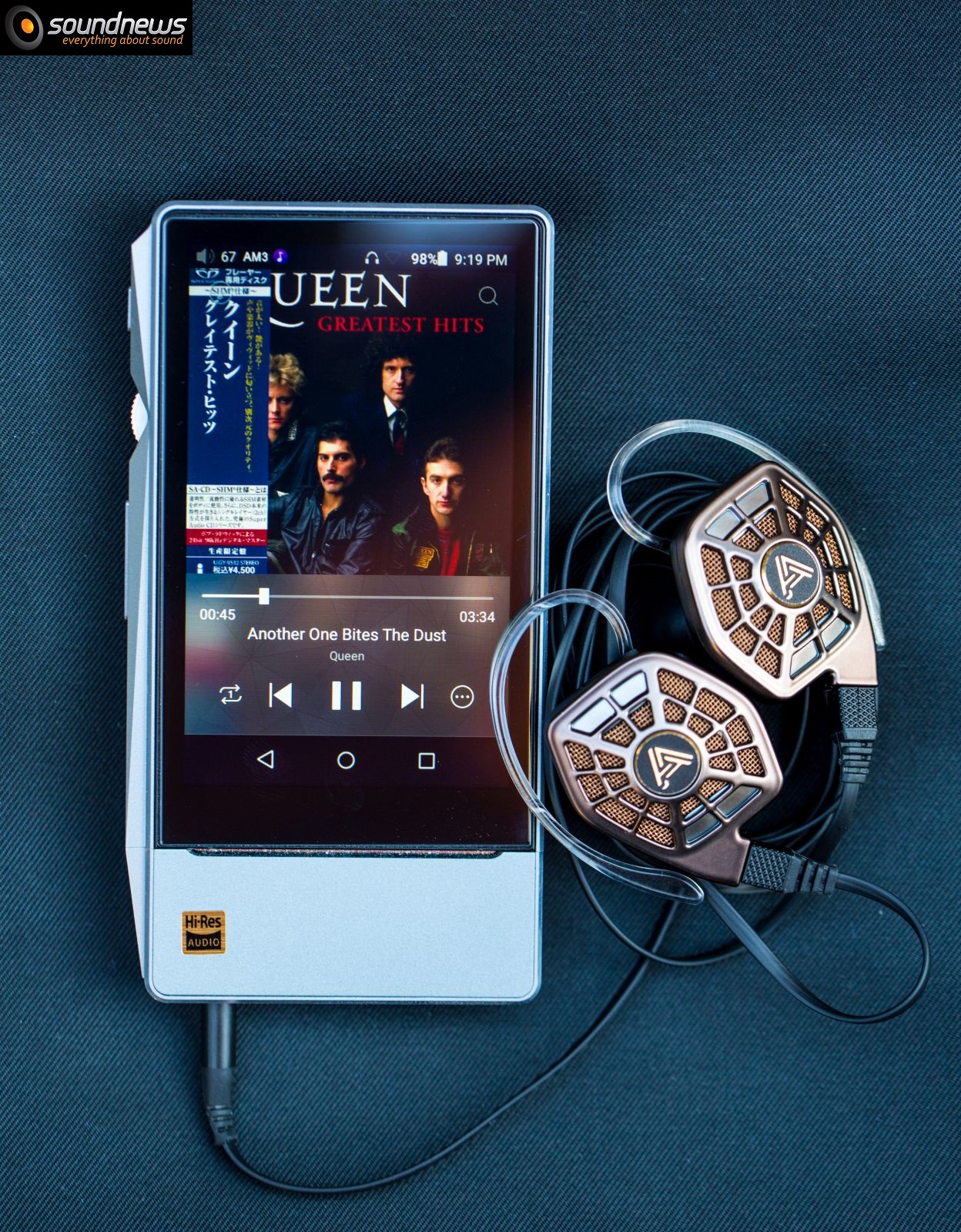
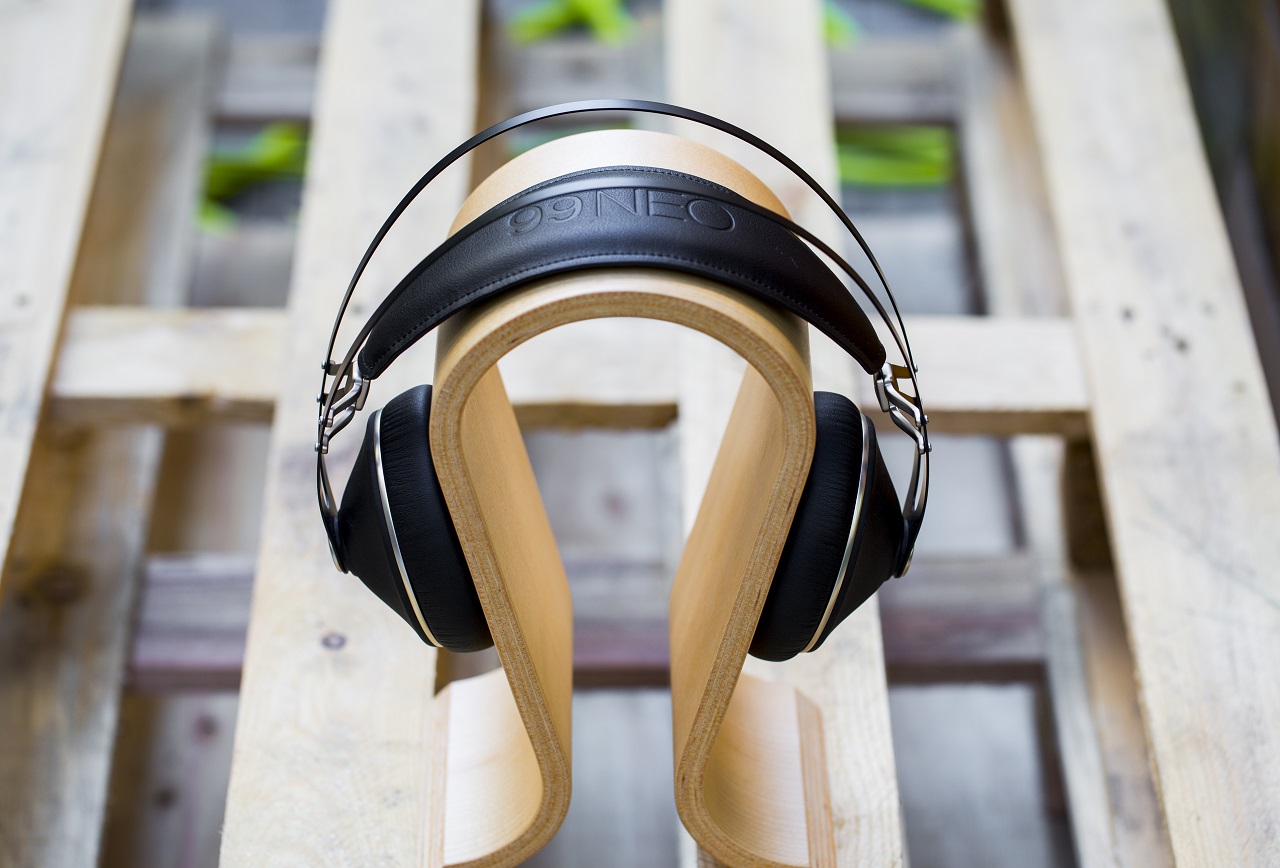
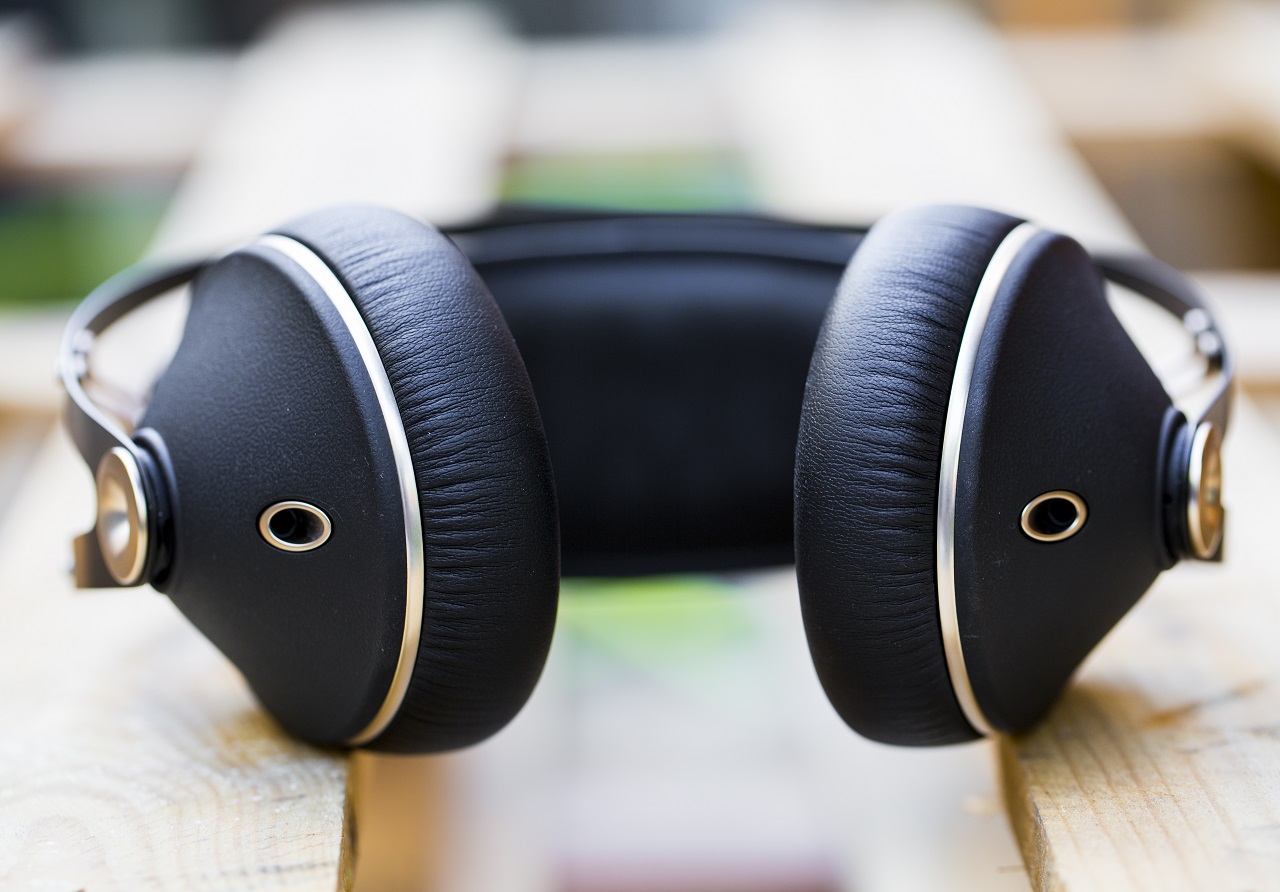
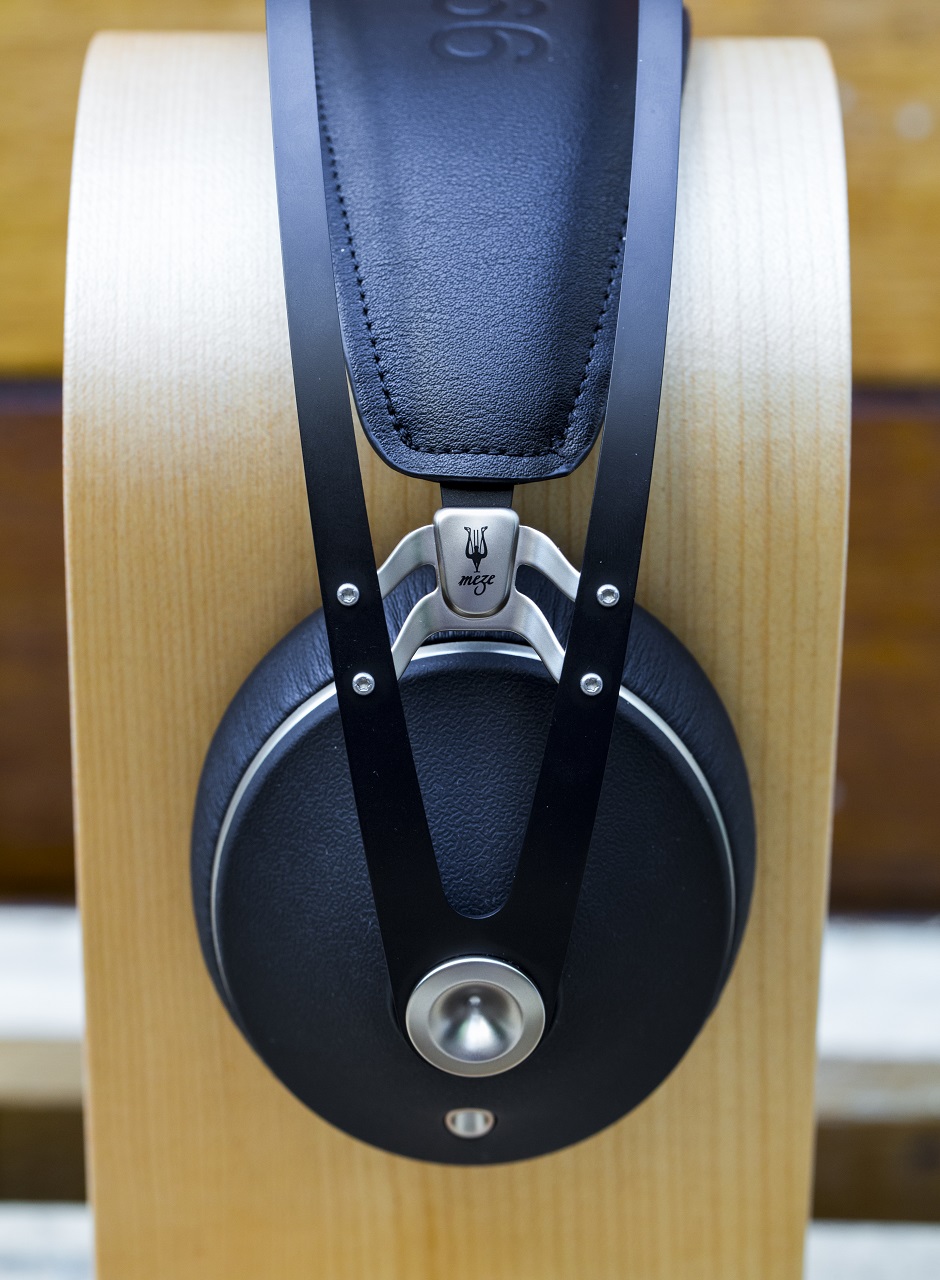
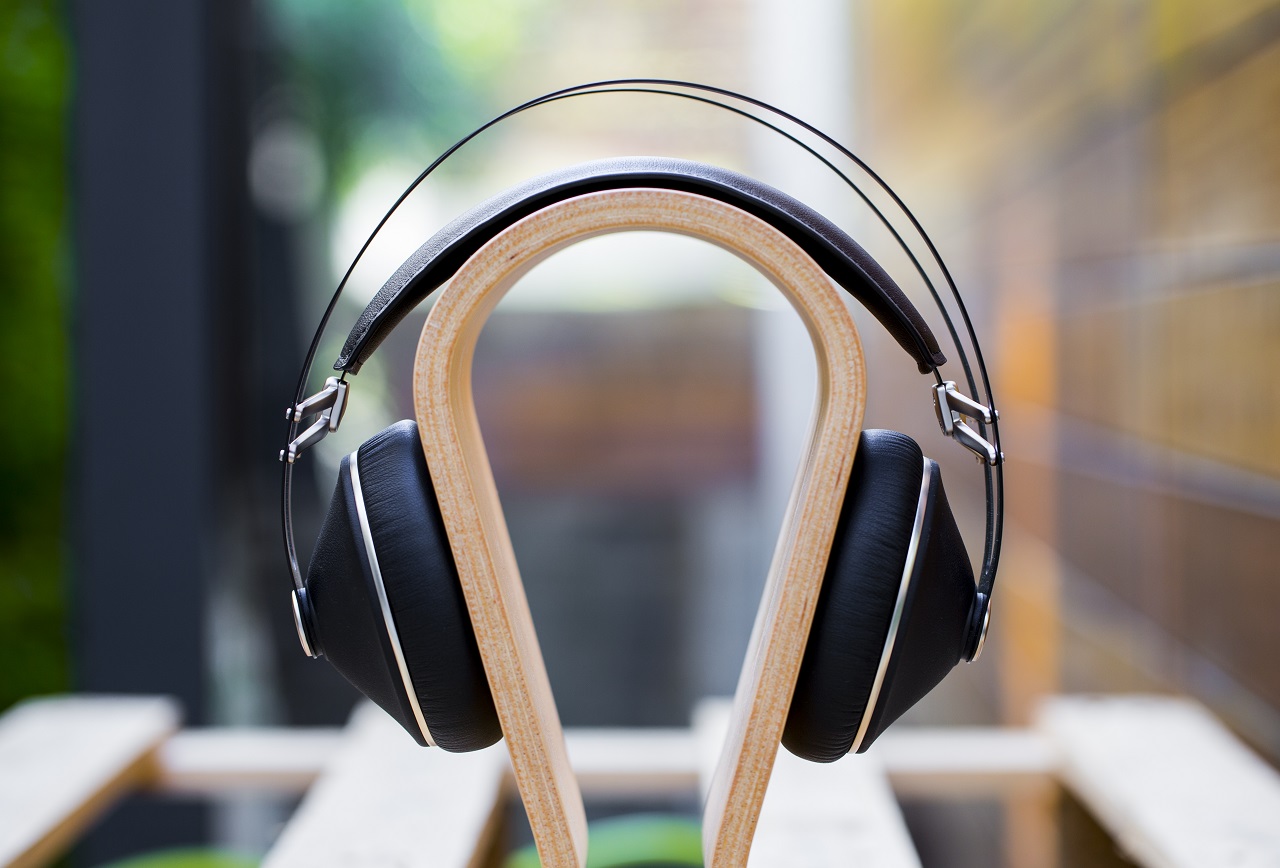
With portable headphones, there is no point in discussing it, it easily drives some Momentum M2.0 and Meze 99 Classics / Neo headphones and some F9 IEMs from the same manufacturer. On low gain, internal headphone amp doesn’t hiss, so highly sensitive IEMs can be used, only on high gain can barely heard an un-disturbing hiss – but only when nothing is played, when music is starting it is impossible to hear it.

Using F9 on balanced output soundstage expanded on width and depth. Sound becomes more airy and notes breathe easier. Sound also becomes slightly faster, having a better kick and impact. Nevertheless sub-bas on the balanced output has a somewhat shorter decay creating an impression that it is not so present.
Comparisons

vs X3 MKII

Newest device sounds more explosive having better dynamics, more lively somehow but less neutral. Level of detail retrieval is almost the same, sub-bas and upper bass are better rendered on newer device and the treble is better rendered on the older X3-II. Soundstage is deeper and larger on newer X3, from this point of view older brother sounds flatter, more 2D in a way.

Headphone output is almost the same, X3-III still wins by providing a balanced output and I think it sounds airier and decompressed that really can help few headphones that do lack airiness and are more up front.

vs X1 MKII

X1 although having the same sound character, it loses big when speed, impact and width of stage are taking into account. Its headphone amplifier is also pretty limited that has a major impact on the grander scale of the sound picture.

X1 sound a bit devoid of life, slower, its less authoritative and offer a weaker control over the headphone drivers.

X3 is in another league, clearly in a higher one.

vs X5 MKIII

Acoustic sound print of both devices is quite close, still X5 wins ground on crowded music where dynamic rises and falls are so important.

X5 sounds more linear and more technical. It’s faster, having a better impact on the eardrum. The difference is not as big as between X1 and X3, for tight budgets X3-III might even be the perfect middle ground between sound reproduction and features. Sonically X5 is better, but not much better, instead it offers additional features that X3 doesn’t have (Wi-Fi streaming, 3rd party apps, etc.).

Bluetooth connectivity

Probably it’s the only disappointing feature of the newest X3.

Bluetooth connectivity is kind of slow and it connects slowly. I do not recommend X3 MKIII if your biggest priority is the Bluetooth feature, surely there are better devices that offer a better Bluetooth experience.
Conclusions

This little guy raises the bar again on what a good price/performance ratio DAP should offer.

If Operating Systems is not your thing, installing 3rd party apps or other useless features do not interest you but only listening to high fidelity music from a microSD card, then I think X3-III is currently the most complete solution.

It worked flawlessly in USB DAC mode and as a digital transport, it excelled as a portable Hi-Res DAP and it limped on Bluetooth (I do hope for at least AptX in future iterations) but overall X3 offered a pleasant experience, using top-of-the-line components and performance.

I liked it quite much especially on acoustic music and I do feel it excells on everything that has tons of mids and bass.

At this moment it might just be the most balanced Hi-Res DAP on the market.

X3 MKIII can be purchased at around 200 Euro mark from authorised on-line stores.
Pros:

  • Cool 3 in 1 device (Hi-Res DAP with Bluetooth, USB DAC and a digital coaxial transport

  • Top construction quality, classic design, very pocketable

  • Lively sound, very natural and authentic, rich tonality

  • Single ended 3.5 mm and balanced 2.5 mm headphone outputs

  • Airy presentation, deep and large stage

  • Good internal headphone amplifier stage

  • Good price/performance ratio

Cons:

  • Lack of AptX and AptX HD support and of Hi-Res playback over Bluetooth

  • Slight masking of treble and putting it on the second row

  • Difficult interface at first, needs some accommodation time

Equipment used for review:

FiiO X3 MKIII, X3 MKII, X1 MKII, X5 MKIII, F9, Sennheiser HD600, Momentum M2.0, Meze 99 Classics, Neo, Headamp Pico Power
FiiO X3 Mark III – Cel mai bun X3

6

Salutare tuturor.

Cine isi mai aduce aminte cand a fost anuntata prima generatie X3 care stia la acea vreme sa decodeze material 24bit/192 Khz?

Pentru noi cel putin a fost o revolutie a portabilelor, desi nu detin o colectie impresionanta de fisiere Hi-Res, m-a bucurat enorm folosirea circuitelor dedicate decodarii audio de inatla fidelitate. Acel aparat a dat startul unei intregi generatii de portabile Hi-Res bine puse la punct.

Va spun si un mic secret, din multe puncte de vedere X3 Mark III ar putea fi cel mai bun player portabil FiiO, mai ales prin prisma raportului pret/performanta. Daca nu aveti nevoie de un sistem de operare Android, de aplicatii terte sau de streaming de muzica prin Wi-Fi, atunci s-ar putea ca X3 MKIII sa fie exact ceea ce cautati.

Design si calitatea constructiei

Este micut si dragut, foloseste componente performante, amplificare de casti potenta si pe langa aceasta are si iesire balansata de 2,5 mm TRRS si la nevoie poate fi folosit si ca un DAC extern pentru PC-ul Dvs.

La o prima inspectie observ ca este mai subtirel dar putin mai inalt, toate butoanele si iesirile au fost mutate lateral in partea stanga si in partea de jos.

Ca si la predecesorul sau jack-ul de 3,5 mm are o functie tripla: poate fi iesirea normala de casti de 3,5 mm, iesire de linie neamplificata de 1.9V Rms, sau o iesire digitala coaxiala catre un alt convertor digital mai performant (cum sunt cele desktop). In partea de jos mai gasim si iesirea balansata de casti de 2,5mm si conexiunea microUSB pentru incarcare si transfer date.

In partea laterala din stanga pe langa butoanele standard de volum, pornire/oprite si slotul microSD, gasim si un buton multifunctional care din meniu poate fi setat ca o scurtatura pentru unele functii vitale ale aparatului: precum acccesarea imediata a egalizatorului, schimbarea temei si a fundalului sau derularea rapida inainte/inapoi a pesei, schimbarea piesei sau redare/pauza. In multe din cazuri cand accesarea ecranului nu este posibila, butonul multifunctional poate veni in ajutor.

Partea frontala pare fi in totalitate din sticla, ma bucur sa vad noua rotita touch si ma bucur ca au renuntat la cea mecanica – este mult mai fiabila. Capacul din spate este din plastic iar lateral avem un schelet din aluminiu.

Nu am ce sa-i reprosez, calitatea constructiei este una buna, design-ul este unul reusit, insa sincer imi place nitel mai mult look-ul predecesorului X3 MKII si acel feeling de corp masiv “unibody”dintr-o singura bucata de metal.

Sub capota

In interior cel putin pentru mine lucrurile sunt mult mai interesante.

In primul rand in constructia aparatului s-au folosit 3 placi PCB, una pentru amplificarea analog, una pentru decodarea digitala si una pentru circuitele si antenele Bluetooth.

Sa luam la puricat fiecare placuta in parte.

De decodarea digitala se ocupa doua bucati TI PCM5242, s-au folosit doua tocmai pentru a putea putea oferi un semnal 100% balansat (daca se doreste), pentru a oferi cel mai bun SNR de pe hartie si pentru a avea un Crosstalk impresionant de ≥97 dB.

In modul USB DAC, ambele DAC chip-uri vor functiona, ceea ce este un lucru extraordinar, de notat este iesirea de 1.9V! pe iesirea de linie.

De amplificarea analogica se ocupa OPA2140 si OPA1622.

Primul circuit se ocupa de filtrajul low-pass si al doilea se ocupa de amplificarea propriu zisa. Ambele op-amp-uri se folosesc doar in amplicatoare audio de inalta performanta, sincer de amplificarea de casti nu imi fac griji, pe iesirea normala de casti avem maxim 160mW putere in 32 Ohmi, iar pe iesirea balansata 190 mW, pentru marimea fizica pe care o are playerul sunt niste cifre impresionante.

De semnalele Bluetooth se ocupa chipsetul F1C81 care cu parere de rau nu poate oferi semnal AptX sau AptX HD, insa macar poate functiona in doua moduri: Bluetooth si Bluetooth Low Energy.

Bateria are capacitatea de 2350 mA care impreuna cu niste casti portabile Sennheiser Momentum M2.0 la un volum de 60 (din 120) ma tinut putin peste 11 ore.

As dori putin mai mult, dar e foarte Ok si atat. Sa ne amintit ca X7 MKII cu modulul high-power are o autonomie de doar 8 ore, deci consider ca 11 ore sunt suficiente.

Playerul supota fisiere PCM Hi-Res de pana la 24/192 kHz in majoritatea formatelor lossless existente si DSD64 redate nativ.

Ca si vechiul model, X3 MK III nu are o memorie interna si se bazeaza exclusiv pe slotul microSD care suporta carduri de pana la 256 Gb.

In modul USB DAC aparatul functioneaza in modul asincron – informatie destul de sensibila pentru unii.

Ah si ca sa nu uit prin Bluetooth nu pot fi redate fisiere Hi-Res, doar PCM-uri de pana la 16 bit 44.1 kHz!

Haideti sa trecem la partea cea mai interesata.

Performanta Audio

Prima impresie este ca playerul suna ceva mai muzical si mai natural decat modelele superioare, avand si un echilibru tonal bine pus la punct.

Suna intr-un fel foarte diferit de vechile iteratii X3 si X3 MKII si cred ca este un lucru foarte bun, spre sfarsitul articolului voi face si cateva comparatii interesante.

Spre deosebire de predecesorul sau, noul X3 are un caracter sonor autentic, directia aleasa de producator este foarte clara pentru mine.

Ador sunetul putin mai muzical si mai natural si de aceea X3-III este pe placul meu.

Pe langa nivelul de detaliu destul de ridicat, in sfarsit pe X3 am auzit pentru prima data un sunet mai lichid, cu o buna redare a extensiilor si cu un amplificator de casti destul de potent.

Prima schimbare practic instant auzita a fost redarea superioara a basului si mai ales a sub-basului.

Sennheiser HD600 nu sunt casti recunoscute ca fiind extraordinare pe sub bas si totusi conectate direct la X3-III sub-basul a fost trezit din hibernare.

Ascultand Massive Attack – Angel chiar m-a surprins prestatia sub-basului si a basului de sus.

Usor au iesit la ivealea cele cateva nivele de bas auzite clar pe X3-III. In primul rand m-a impresionat amplificarea capabila a micului X3 si in al doilea rand extensia pe bass de care de exemplu nu era capabil vechiul X3-II.

Am vrut sau nu, pur si simplu am inceput sa clatin din cap, pe echipament corect piesa te poate induce intr-o stare de transa si acest lucru s-a si intamplat.

Ma bucurat faptul ca basul nu s-a prelins pe celelalte frecvente, in acelasi timp oferind un impact si o viteza destul de bune. Se poate mai bine de atat insa la alta suma de bani.

Martin Solveig & Dragonette – Hello a sunat pur si simplu exploziv.

Dinamica ridicata a piesei pur si simplu iti ridica dispozitia instant oferind un ranspuns tranzitoriu destul de rapid. Si in aceasta piesa am simtit o doza exacta de muzicalitate si de tehnicalitati. Chitara bas la un moment dat suna ca o entitate aparte, vibratia strunelor oprindu-se destul de brusc, e momentul in care se poate observa lipsa totala a ecoului – care credeti-ma nu il doriti mai ales pe melodiile ceva mai rapide.

Recent am ascultat niste folk rock al vecinilor din nord: Vopli Vidopliassova – Vesna care desi nu pare super tehnic, este extrem de muzical si pune la incercare redarea corecta a mediilor. Se folosesc cateva instrumente acustice, cateva voci suprapuse si un acordeon, acompaniate de chitari si tobe.

Muzica de acest gen pur si simplu straluceste pe X3-III. Simt ca frecventele medii sunt foarte bine definite pe X3-III, putin de tot insiropate si accentuate te baga instant intr-o stare de bine si de relaxare.

Foarte important de stiut este faptul ca desi mediile sunt usor accentuate ele nu suna deloc lent sau molestite. Ca o regula generala, echipamentele care suna mai muzical vor suna mereu ceva mai lent, lipsite de vlaga si de viteza.

Nu este cazul la X3-III, amplificatorul potent si cele doua DAC chip-uri creaza un mix foarte bun, oferind atat dinamica si extremitati bune dar si o doza buna de viteza si impact.

Ascultand artistii autohtoni Phoenix – Strunga – piesa desi inregistrata destul de prost are niste pasaje excelente in care imi joaca imaginatia si in care este demonstrata holografia si pozitionarea instrumentelor in campul auditiv.

Ma bucur sa aud instrumentele foarte bine delimitate intre ele, efectul de terci nu este prezent, aglomeratie spre fericire rar se va auzi pe acest aparat.

Basul si mediile din nou au stralucit pe aceasta piesa, oferind o mica doza de vintage care este atat de prezenta. A fost magica reproducerea rock-ului vintage, nici macar X5 sau X7 nu pot suna atat de seducator precum X3-III.

Trecand pe material de calitate superioara: dCS The Spirit of Turtle in DSD64 abia acum imi dau seama cu adevarat de tehnicalitatile aparatului.

Cu siguranta nivelul de detaliu este destul de ridicat, insa mai are ceva pana la performanta fratilor mai mari X5 si X7. Abia acum simt diferenta cea mai mare.

Desi inaltele foarte bine redate si nu sunt deloc ascutite sau abrazive, nu au ultimul strop de informatie, ceva lipseste in aceasta zona a frecventelor.

Sunetul putin romantic cred ca tocmai se datoreaza inaltelor ceva mai calme si plasate pe randul doi.

Pe NedSym Lite – Ravel’s Tomb am auzit un sunet profund si patrunzator oferind o scena destul de adanca insa putin limitata pe latime, as fi vrut o scena mai extinsa si poate mai inalta.

Sunetele nu lovesc un perete imaginar brusc, se disipa destul de lin si nu creaza deloc senzatia de aglomeratie. Din acest punct de vedere X3 este chiar ceva special, oferind o scena adanca si destul de extinsa insa nu foarte extinsa, undeva pe la mijloc.

Amplificarea

Imaginati-va ce bucurie am avut cand pe iesirea single-ended de 3.5mm am putut pilota multumitor Sennheiser HD600 si nici macar nu am ajuns la volumul maxim.

De curiozitate la iesirea de linie al X3-III am conectat d.p.m.d.v. cel mai bun amplificator portabil de casti: HeadAmp Pico Power si am ascultat la aceleasi HD600. Diferentele au fost destul de mici in favoarea Pico Power. Da, am avut un nivel de detaliu mai ridicat si mai multa dinamica si putere, dar in rest X3 in varianta stoc a sunat decent, ceea ce m-a bucurat enorm.

X1-II in varianta stoc desi imi place cum suna este tras in jos destul de mult de amplificarea de casti mediocra incapabila sa conduca casti ceva mai performante.

Nu este cazul pe X3-III si sincer nu cred ca mai este nevoie adaugarea unui alt amplificator extern de casti, in varianta stoc X3 deja suna foarte bine.

De casti portabile nici nu are rost sa mai discutam, a condus cu lejeritate si Momentum M2.0 si niste Meze 99 Classics/Neo si niste IEM-uri F9 de la acelasi producator. Pe Low Gain amplificatorul de casti nu ofera hiss, deci pot fi folosite si IEM-uri ultra sensibile, doar pe High-Gain abia se poate auzi un hiss nederanjant – insa numai cand nu este redat nimic, cand porneste muzica este imposibil sa mai aud si hiss-ul.

Folosind F9 pe iesirea balansata scena audio se largeste atat in latime cat si in adancime. Sunetul devine usor mai aerisit si notele respira mai usor. Sunetul devine putin mai rapid, loveste cu un impact ceva mai mare. Cu toate acestea sub-basul pe iesirea balansata se retrage ceva mai repede creand impresia ca nu mai este la fel de prezent.

Comparatii

vs X3 MKII

Noul aparat suna mai exploziv si mai dinamic, mai vioi intr-un fel, mai putin liniar insa. Nivelul de detaliu este comparabil, sub basul si basul sunt mai bine redate pe noul aparat iar inaltele sunt redate mai bine pe vechiul X3. Scena este mai adanca si mai larga pe noul X3, d.a.p.d.v predecesorul suna ceva mai plat, mai 2D intr-un fel.

Puterea de iesire este aproximativ aceeasi, X3-III totusi castiga oferind si o iesire balansata care cred eu ca suna mai aerisit si mai decomprimat ce poate ajuta multe casti care au deficiente la acest capitol.

vs X1 MKII

X1 desi are aproximativ acelasi caracter, pierde major cand vine vorba de viteza, impact, adancime si latime scena. Este limitat destul de mult de amplificatorul intern ceea ce are un impact major asupra experientei finale.

X1 suna mai molestit si parca lipsit de vlaga, este mai putin autoritar si ofera un control mai slab asupra difuzoarelor castilor.

X3 este in alta liga, superioara.

vs X5 MKIII

Caracterul acustic al ambelor aparate este destul de apropiat, totusi X5 castiga teren pe muzica aglomerata unde urcusurile dinamice sunt atat de importante.

X5 suna putin mai liniar, insa clar mai tehnic. Este si mai rapid, avand un impact mai bun in timpane. Diferenta nu este la fel de mare ca intre X1 si X3, pentru bugete mai restranse X3-III poate fi chiar mijlocul perfect intre sunet si functiile oferite. Sonic X5 este mai bun, dar nu mult mai bun, insa ofera functii suplimentare care X3 nu le poate avea (streaming Wi-Fi, aplicatii terte, etc).

Conexiunea bluetooth:

Probabil singurul punct mai putin reusit al lui noului X3, conexiunea bluetooth este destul de lenta si se conecteaza greoi. Nu va recomand sa cumparati X3 mark III daca utilizarea pe bluetooth e prioritatea dvs., cu siguranta exista aparate mai performante la acest capitol.

Concluzii

Micutul X3 ridica din nou stacheta playerelor accesibile care ofera un raport excelent intre performanta si pretul platit.

Daca nu va intereseaza sisteme de operare complicate, instalarea de aplicatii terte sau functii suplimentare inutile si va intereseaza doar redarea cat mai fidela a muzicii preferate stocata pe un card microSD atunci cred ca X3-III este cea mai completa solutie la ora actuala.

A functionat fara cusur in modul USB DAC si ca transport digital, a excelat ca un player portabil Hi-Res si o schiopatat putin pe Bluetooth (sper implementarea macar AptX in viitoarele interatii) dar per total X3 mi-a oferit o experienta placuta, utilizand componente de top si performanta pe masura.

Mi-a placut destul de mult in special pe muzica acustica pentru ca simt ca exceleaza cu tot ce inseamna bas sau medii.

La acest moment cred ca este cel mai echilibrat player Hi-Res de pe piata

X3 Mark III poate fi procurat la pretul de 1050 lei la cateva magazine on-line din tara.

Pro:

  • Aparat 3 in 1 (player Hi-Res si Bluetooth, DAC USB, transport digital coaxial)

  • Constructie de top, design clasic, intra in orice buzunar

  • Sunet viu, natural, autentic, tonalitate bogata

  • Iesire de casti single ended 3.5mm si balansata 2.5mm

  • Sunet bine aerisit, scena destul de larga si foarte adanca

  • Putere de iesire excelenta

  • Pret corect raportat la performanta acustica

Contra:

  • Lipsa tehnologiei AptX si Aptx HD pentru redarea fisierelor lossless pe Bluetooth

  • O usoara mascare a inaltelor si plasarea lor pe planul doi

  • meniu greoi, este necesara o perioada de acomodare

Echipamente folosite pentru recenzie:

FiiO X3 MKIII, X3 MKII, X1 MKII, X5 MKIII, F9, Sennheiser HD600, Momentum M2.0, Meze 99 Classics, Neo, Headamp Pico Power
Sony WF1000X true wireless – review

0

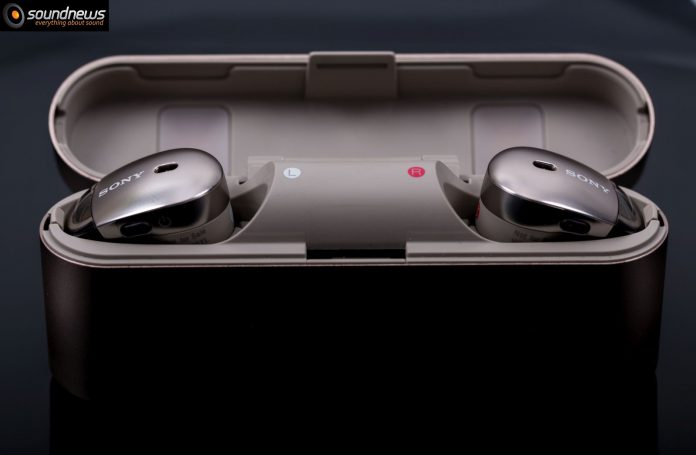
Castile fara fir devin din ce in ce mai populare, din motive de confort sau pur si simplu de nevoie, pentru ca tendinta actuala este ca telefoanele sa nu mai aiba iesire pentru clasicul jack de 3.5mm (iPhone, Pixel si probabil mai urmeaza).

Cea mai noua categorie in domeniu sunt asa zisele modele „true-wireless”, adica castile care pur si simplu nu au nici un fir, nici macar intre ele, si care se fixeaza fiecare intr-o ureche in mod separat . Cu siguranta va mai amintiti de celebrele Airpods, acele casti cu forma de periuta de dinti prezentate de Apple odata cu lansarea lui iPhone 7. Ei bine, acel model a dat startul unei serii nesfarsite de lansari de casti „true-wireless” si acum avem pe piata zeci de variante, incepand cu modele foarte ieftine de la producatori de care nu am auzit niciodata si pana la casti de la nume consacrate precum B&O sau Onkyo, iar acestea trec binisor de 200 Euro.

In acest context noile Sony WF 1000X reusesc sa aduca ceva nou intr-o piata aglomerata si in plina expansiune si anume anularea activa a zgomotului. Din cauza limitarilor tehnologice impuse de dimensiunile mici, producatorii nu s-au incumetat sa introduca si noise-cancelling in castile de acest tip. Exista modele in-ear cu anulare a zgomului, dar acestea sunt de tip neck-band, un bun exemplu fiind ANC40BT de la Audio Technica. Sony au inteles ca este o paine de mancat in acest segment si au intrat pe piata cu un model de top disponibil pentru aproximativ 220 Euro.

Sony WF1000X (1 of 1)

DESIGN:

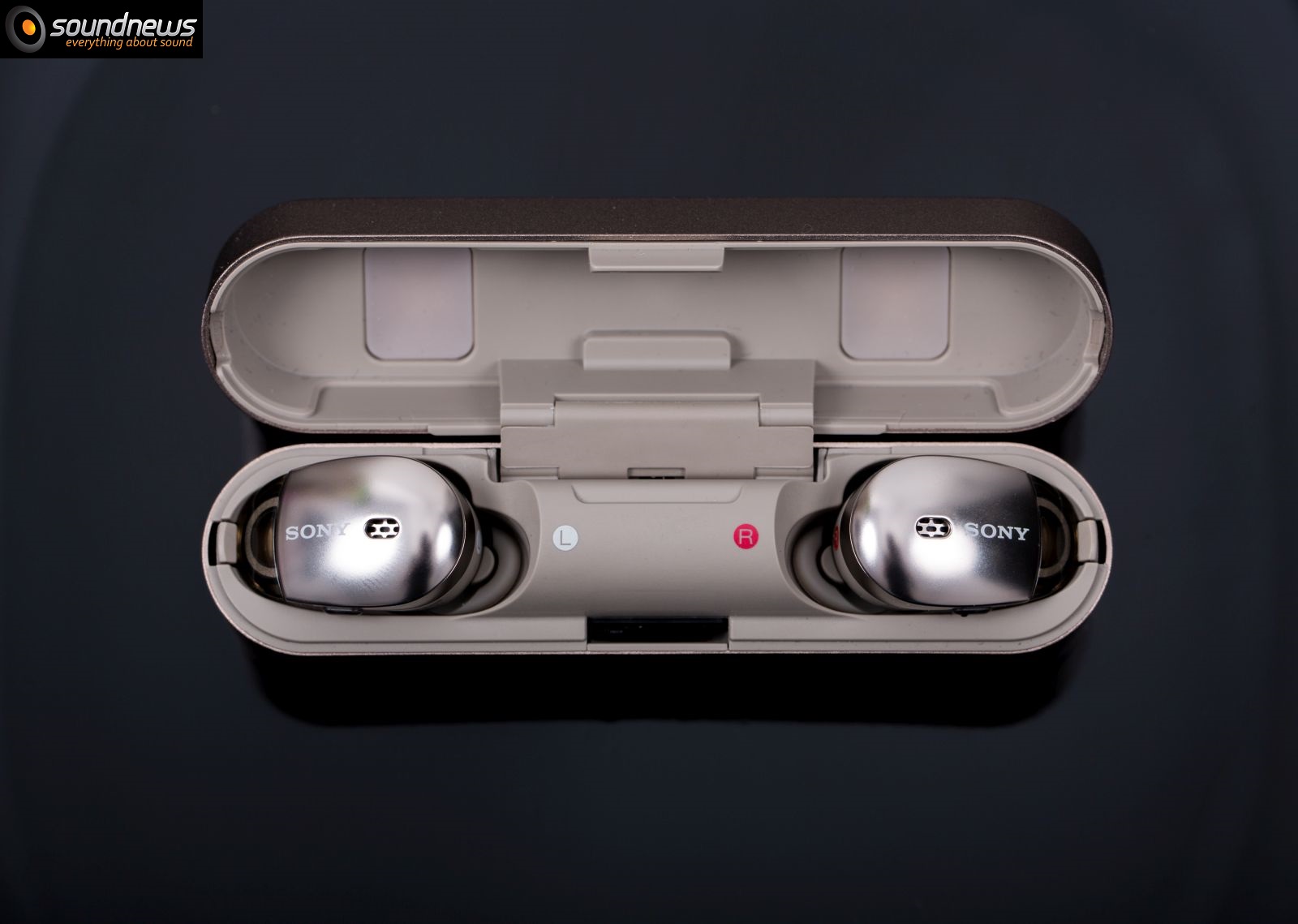
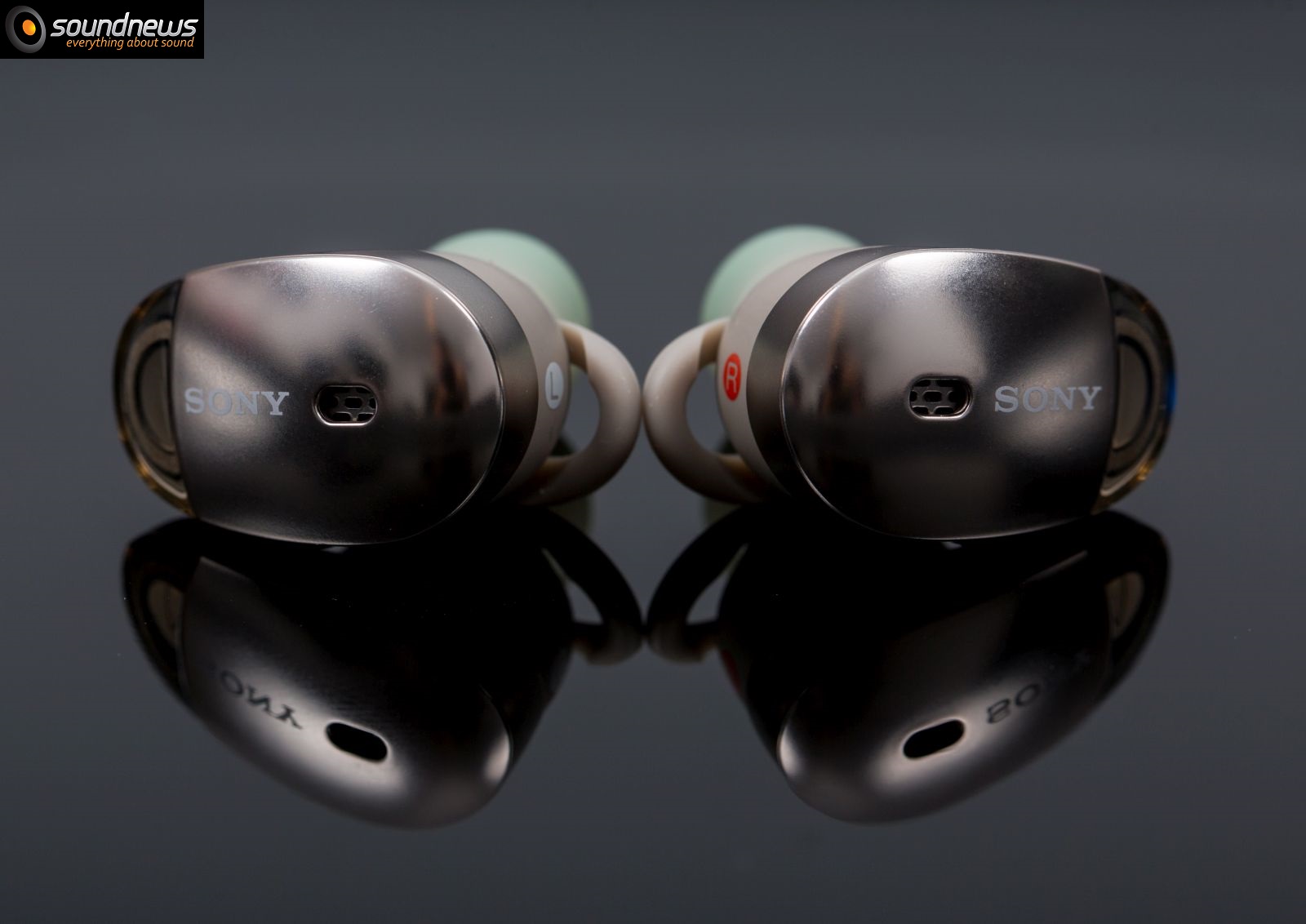
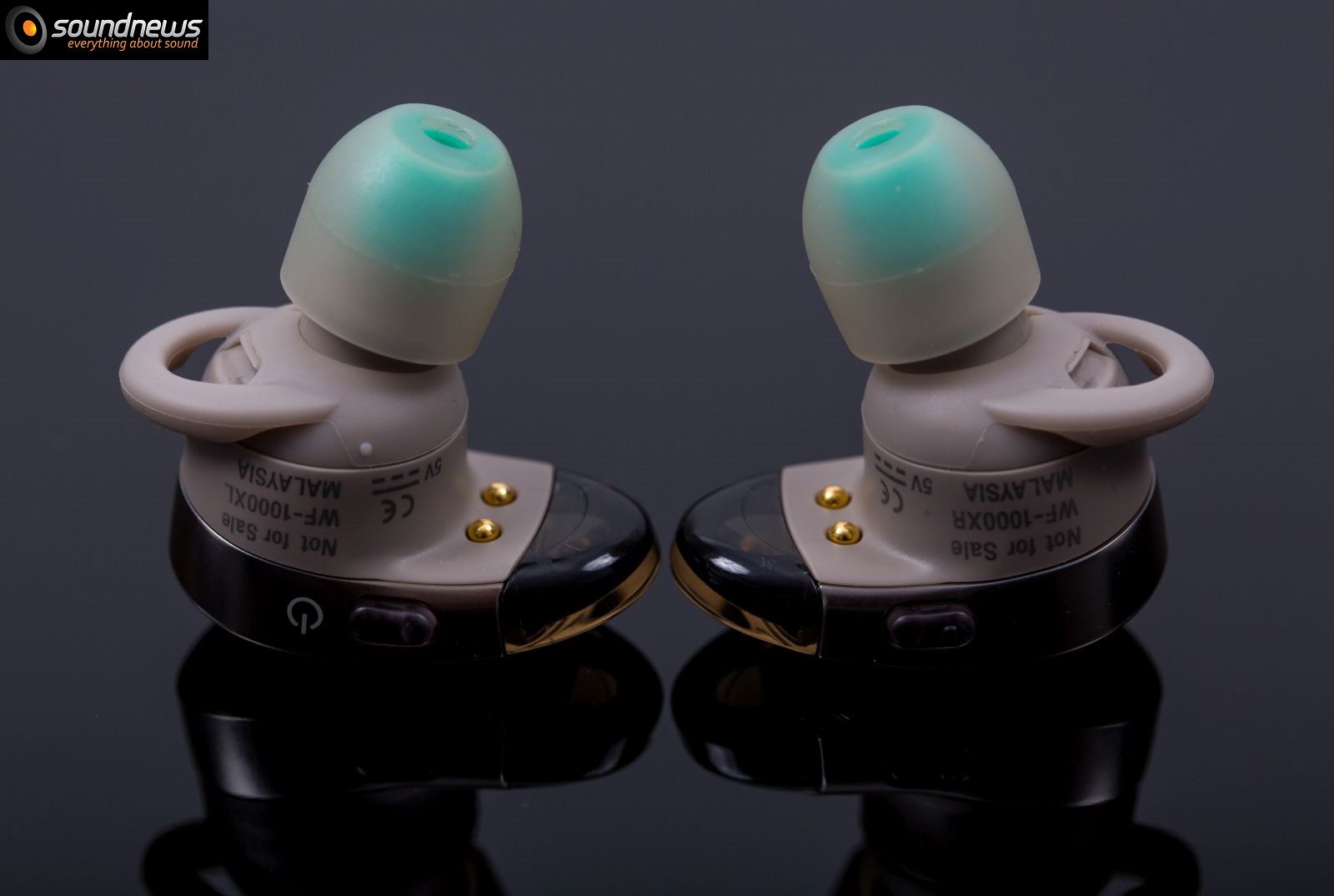
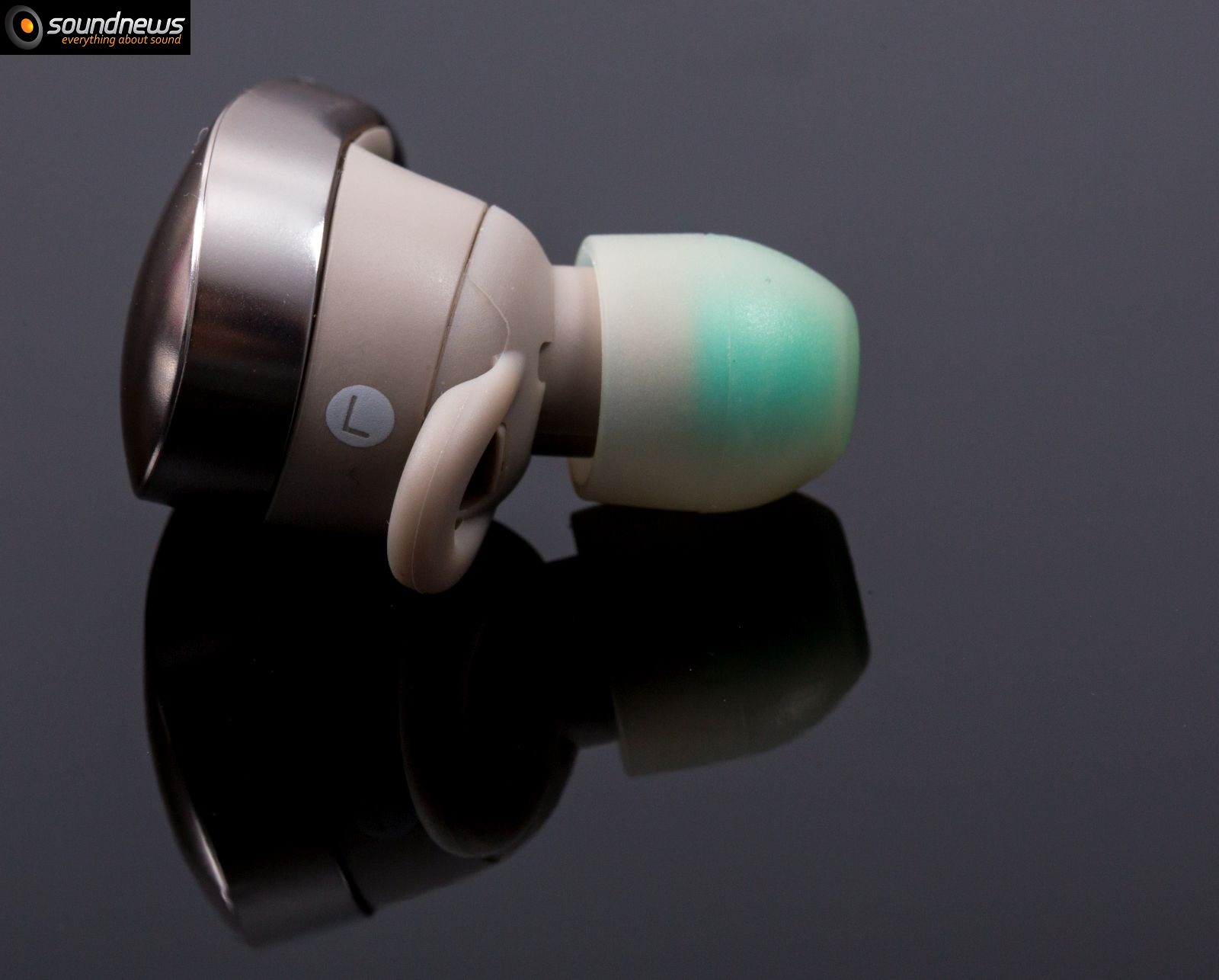
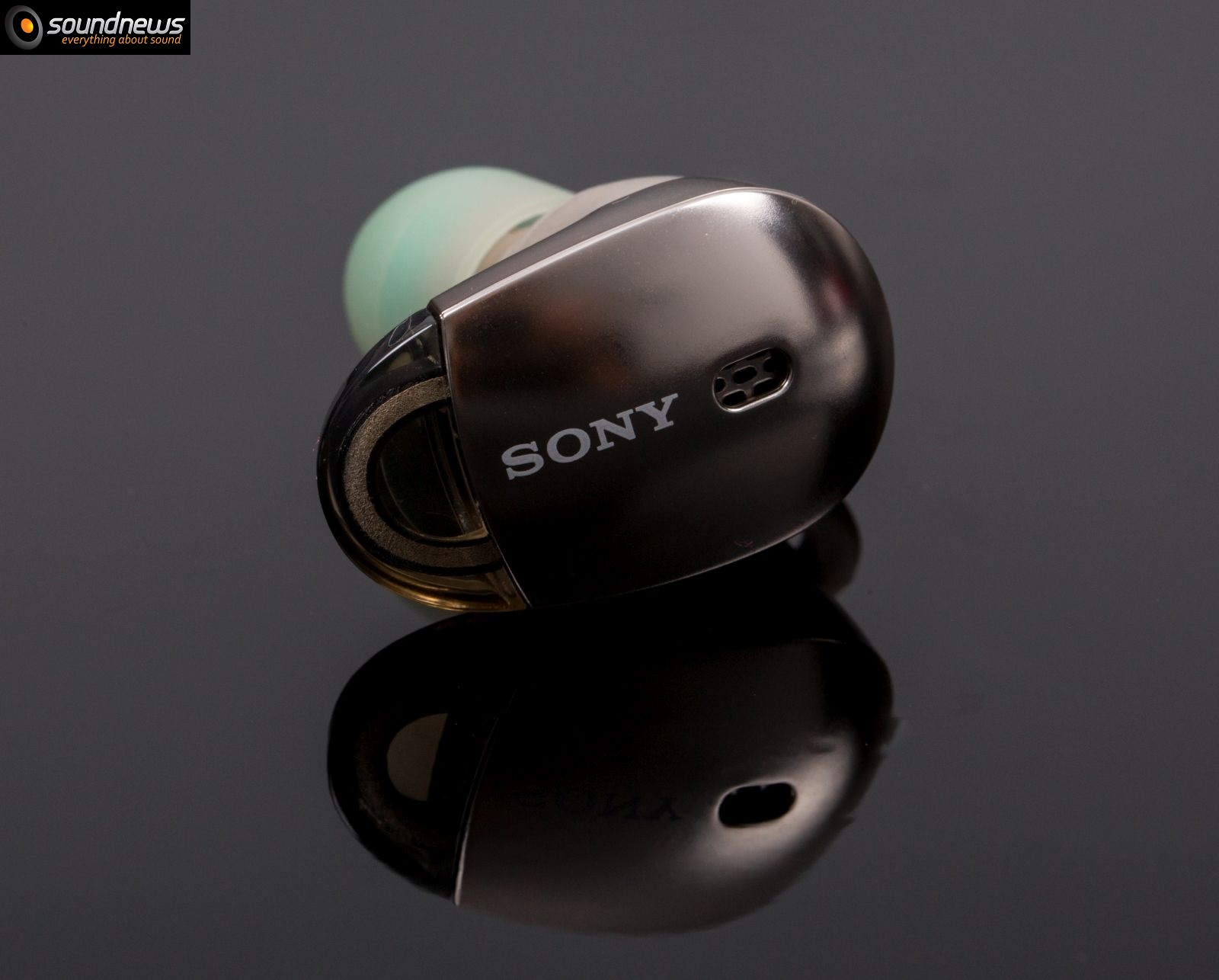
Ca sa nu mai lungim povestea prea mult, sa spunem din capul locului ca WF1000X arata bine, chiar foarte bine, au un design high-tech, cu materiale de foarte buna calitate. Este adevarat ca sunt ceva mai masive decat majoritatea concurentilor, iar acest lucru afecteaza confortul, dar sunt aratoase si cu singuranta atrag privirile celor pasionati se gageturi.

Ergonomia si confortul sunt medii. Datorita dimensiunilor mari le simti destul de prezente in urechi. Am facut un test si am alergat cu ele pe banda 35 de minute si am concluzionat ca nu sunt potrivite pentru aceasta activitate. Am avut ceva emotii, de cateva ori le-am tinut cu mana sa nu-mi sara din urechi, iar eu sunt un alergator (foarte) slab, care nu depaseste 9km/h. La viteze mai mari sunt convins ca vor „decola” destul de repede.

Sony WF1000X (1 of 1)-5

FUNCTIONALITATE:

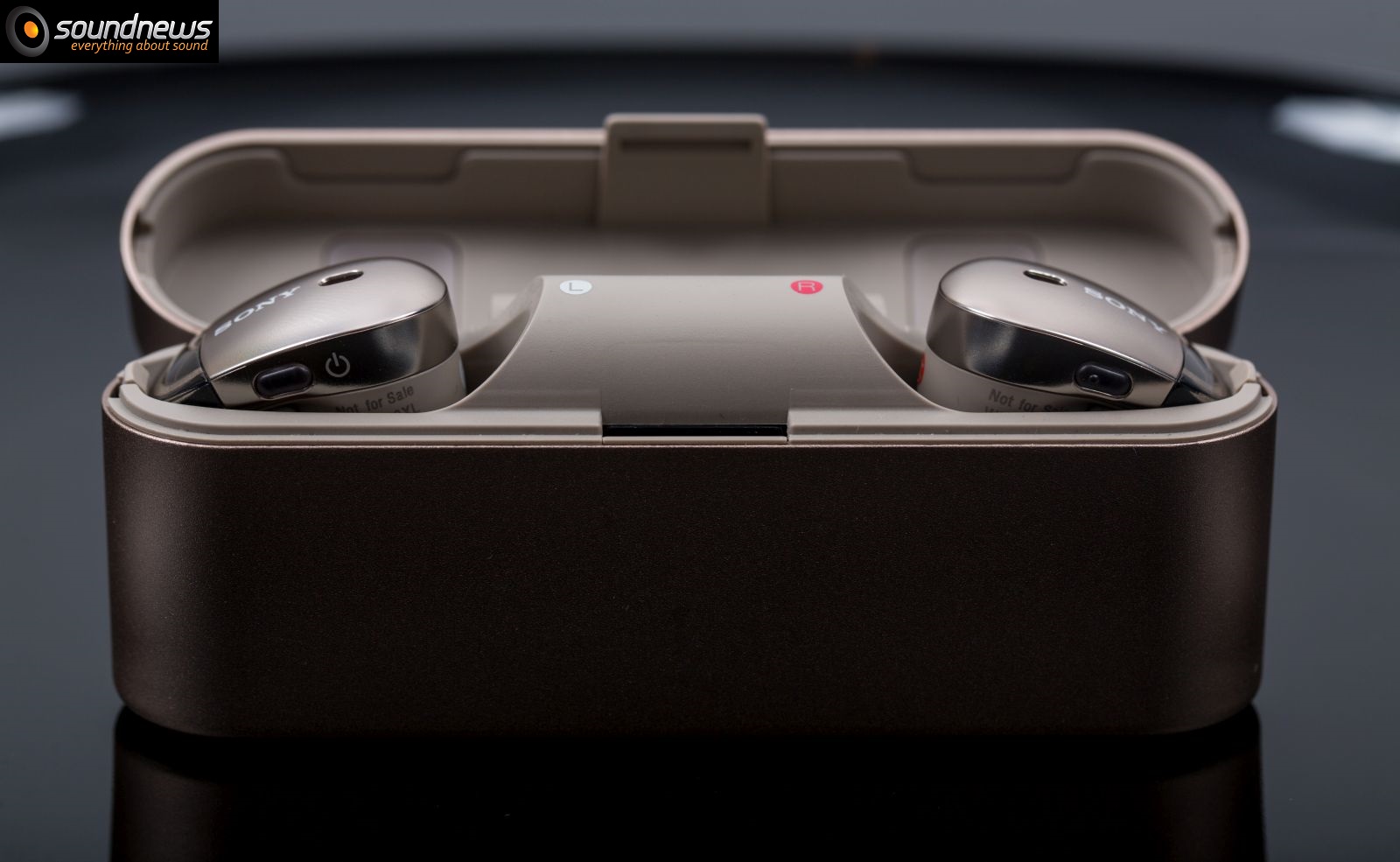
Pe langa diverse accesorii de tip adaptoare de silicon, cablu de incarcare etc., in pachet avem doua casti de tip in-ear complet independete una de cealalta si o cutie de transport care are rol de depozitare si incarcator. Castile nu pot fi incarcate decat in cutia lor, deci trebuie mereu sa o aveti mereu la purtator. Cutia are si ea acumulator intern si are functie de power-bank, asigurand doua incarcari suplimentare pentru WF1000X.

Casca stanga se pune in modul asociere si se sincronizeaza cu telefonul, iar casca dreapta si sincronizeaza cu cea stanga cu ajutorul unicului buton de pe aceasta. Odata asociate cele doua isi pastreaza seterile, iar in momentul in care le scoateti din cutie se sincronizeaza intre ele automat.

Din cand in cand apar probleme de sincronizare intre cele doua casti. Nu foarte des si destul de scurte (1-2 secunde), dar exista.

Sony WF1000X (1 of 1)-3

AUTONOMIE:

Producatorul spune ca vor tine 3 ore, eu nu am trecut cu ele de 2 ore si jumatate, dar sa zicem ca ascult eu muzica mai tare si probabil consumul este mai ridicat decat in testele celor de la Sony. Oricum autonomia este slaba fata de modelele On-Ear, acolo unde fara probleme am avut 15 ore de Sony MDR 1000X si peste 20 de ore cu Sennheiser PXC 550.

ANULAREA ZGOMOTULUI AMBIENTAL:

Sony prin modelul MDR 1000X sunt liderii tehnologiei NC, acestea avand cel mai performant sistem de anulare a zgomotului ambiental din acest moment. Desi nu sunt chiar la acelasi nivel, WF1000X sunt suprinzator de eficiente si ele la acest capitol, mai ales daca luam in considerare ca intr-un model de tip in-ear este mult mai greu de implementat aceasta tehnologie. Ceea ce m-a deranjat putin este his-ul cu care vine asociat modul NC, fasaitul continu fiind deranjant la o auditie cu nivel sonor mic sau in pauzele dintre melodii.

Exista mai multe setari pentru NC, adaptativ, ambiental, etc. Sunt bine implementate si functioneaza exact cum specifica producatorul.

Sony WF1000X (1 of 1)-6

APLICATIA PENTRU SMARTPHONE:

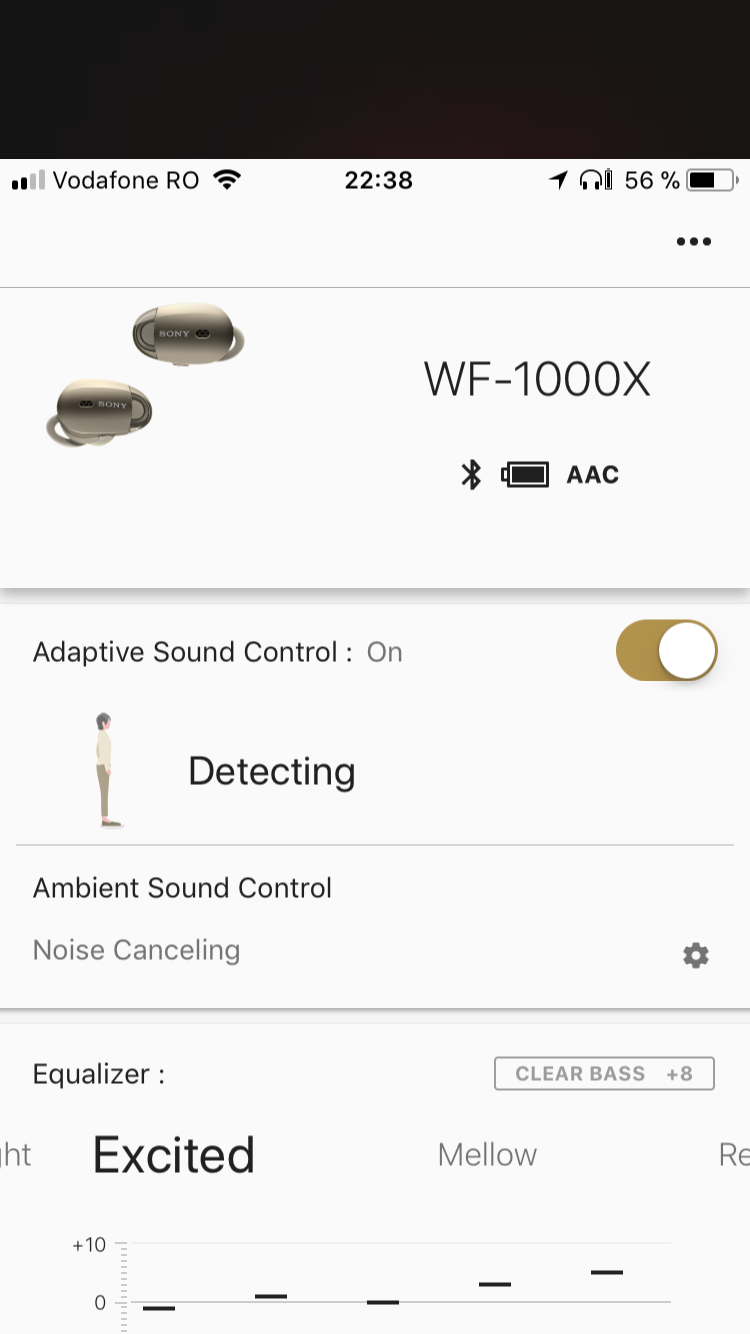
Da, avem si aplicatie, si este chiar foarte utila. Se poate verifica nivelul bateriei, se pot regla diversi parametrii ai castilor sau folosi egalizator pentru ele, practic avem o parghie foarte buna pentru a modifica sunetul exact asa cum ne dorim. Este asemanatoare cu Captune de la Sennheiser, dar putin mai simpla.

IMG_2391

HEANDS FREE:

Comportamentul castilor ca si heandfree pentru telefon este mediocru. Am facut cateva teste si persoanele pe care le apelam mi-au spus fara exceptie ca ma aud destul de slab. Ma plimbam printr-un mall, dar nu era zgomot excesiv care sa perturbe conversatia.

Am fost neplacut surpins sa constat ca din motive care-mi scapa, doar casca stanga functioneaza in timpul conversatiilor, in casca dreapta nu se aude nimic.

Sony WF1000X (1 of 1)-8

SUNETUL:

In mod normal la o pereche de casti, capitolul sunet ar fi fost mai stufos decat toate celelalte la un loc. Nu este cazul acum, prin natura lor aceste casti sunt mai interesante din punct de vedere al functiilor decat prin prisma calitatii sunetului.

Sunetul este decent, cu usor accent pe bas, specific Sony de altfel. Nu-mi aduc aminte sa fi ascultat un model al producatorului japonez care sa nu aiba o prezenta mai accentuata a frecventelor joase. Oricum majoritatea utilizatorilor prefera mai mult bas si sunt convins ca nimeni nu are in vedere achizitionarea unei perechi de WF1000X pentru niste auditii critice, de mare rafinament.

WF1000X au o prestatie sonora peste medie, avand un nivel bun al detaliilor, raspunsul in frecventa este destul de echilibrat, mediile sunt bine definite si pastreaza intr-o proportie buna naturaletea si balansul tonal. Nu sunt niste casti audiofile, pot sa scriu o pagina de casti cu fir care se vor auzi mai bine si vor costa mai putin, dar aici discutam de un intreg pachet de functii prezente in acest model, nu doar de calitatea absoluta a sunetului.

Castile cu bluetooth au de obicei un sunet destul de slab raportat la pretul lor, iar in cazul modelelor in-ear acest lucru se accetueaza si mai mult. WF1000X ofera cel mai bun sunet dintre toate castile in-ear wireless testate de mine, cu exceptia modelelor cu neckband (Momentum In-Ear Wireless si Audio Technica ANC40BT).

Sony WF1000X (1 of 1)-4

CONCLUZII:

Sony WF1000X sunt departe de a fi perfecte, dar mi-au starnit destul de mult curiozitatea. Materialele de foarte buna calitate, anularea eficienta a zgomului ambiental si sunetul bun pentru aceasta clasa fac din WF1000X o recomandare solida daca aveti nevoie de un model true-wireless. Mai exista si factorul design si fara discutie WF1000X arata ca niste mici bijuterii high-tech premium.

Va recomand sa achizitionati un model de casti bluetooth doar dupa ce analizati propriile nevoi si ajungeti la concluzia ca aveti neaparata nevoie de un astfel de model. Nu le cumparati pentru ca sunt trendy, nu le cumparati pentru ca vecinu’ zice ca sunt bune, va asigur ca o pereche de casti cu fir bine alese la acelasi buget se vor auzi (mult) mai bine.

PRO:

  • design placut, materiale de calitate
  • sunet bun pentru aceasta clasa
  • anulare eficienta a zgomotului
  • aplicatie de telefon utila

CONTRA:

  • autonomie modesta
  • desincronizari intre cele doua casti
  • microfon slab

Sony WF1000X (1 of 1)-7

FiiO X7 Mark II – The PROfessional

4

I admit, I smile every time I see a new version of FiiO portable DAPs from the X series, but also when I see one used by someone on the go.

The star of the last appearances in the FiiO portfolio was of course X7 MKII, I was simply bound to listen and share my impressions with you. I think I will never be bored by these players or by anyone else, I use portable players since I can read, so you cannot stop me.
Until now, the second generation seems very promising, FiiO has embedded in this device absolutely the best they have, it’s the top of the line of the manufacturer.
It is important to note that this device is expensive, big and heavy, it is intended for enthusiasts and its not a substitute for a smartphone; those interested in such a product already understand that portability was the only compromise made in the development of this DAP, its top priority was 100% highest fidelity sound reproduction.

FiiO X7 Mark II-3

I. The boring stuff…

1. Internal Components and Design

X7 Mark II, as its predecessor, was designed on the Android 5.1 platform, the hardware components were chosen so that the interface would move fluidly, provided it will not consume too much power, the high power consumption will be done by audio components that deal with decoding and amplifying the audio signal.
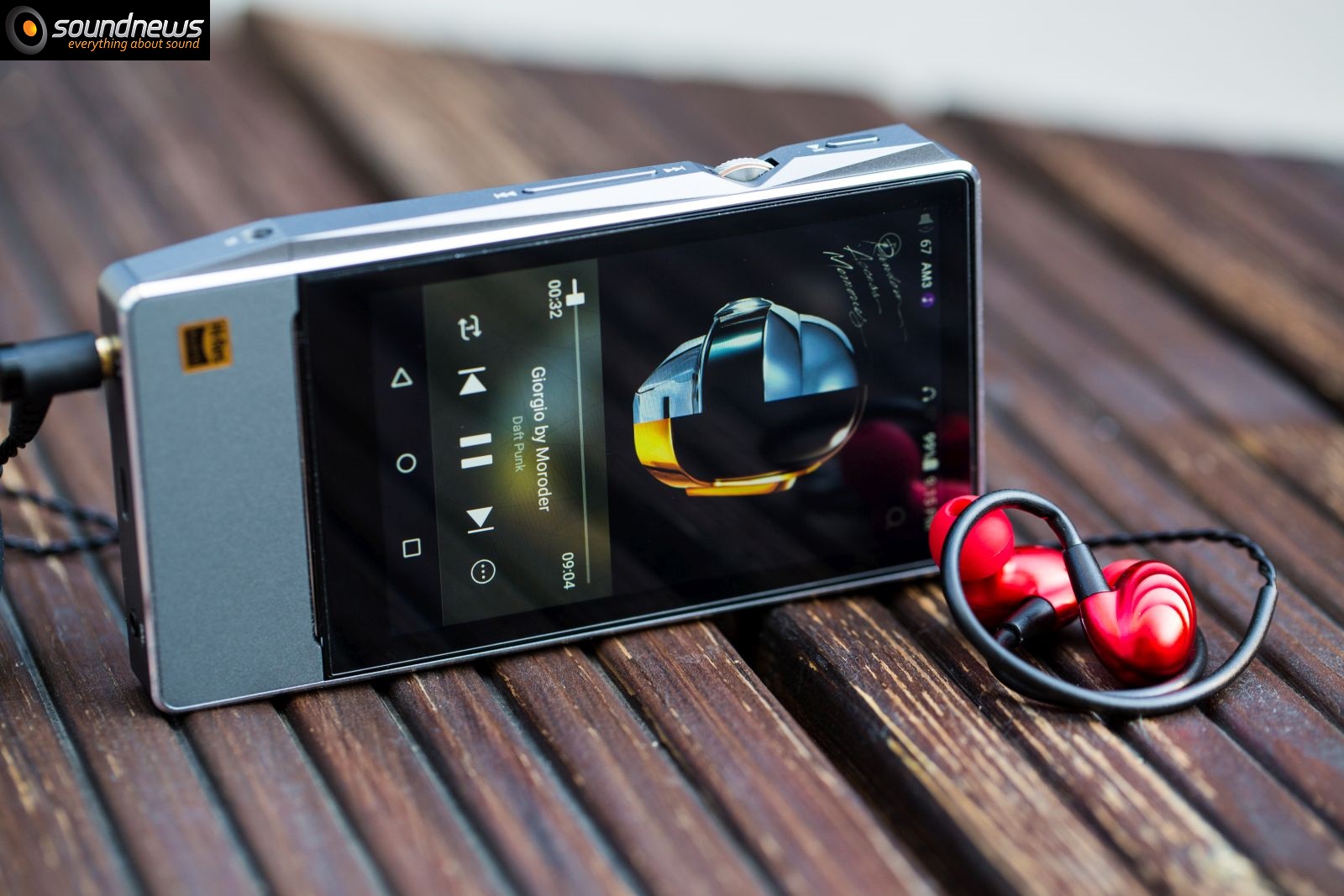
We are dealing with the RK3188 SoC, it’s a quad-core processor running at a 1.4 GHz frequency, at last 2 Gb of RAM is the norm (compared to just 1 Gb in the predecessor X7) – this change had a positive impact, the interface is moving fluidly, the device responds faster to commands, audio streaming apps load files a little faster, and overall the device feels more nimble and agile.
Probably a really good thing was doubling the ROM memory from 32 to 64 Gb, of which ~ 56 are usable – if you use lossy files it is very possible that you no longer need a microSD card. But really I do not see the reason why someone would buy a 800 Euro player just to listen to mp3 files, I propose harshly punishing such heretics. 

X7 mark II (1 of 1)-5

The IPS touchscreen has a diagonal of 4 „and a resolution of 800 x 480 pixels, by today’s standards it is quite low-res, but more than enough for what was thought it to be.
A massive upgrade is the availability of two microSD memory expansion slots, each accepting cards up to 256 Gb, for a flagship DAP it was a must implementing two slots instead of just one from the previous model.
Another change is the use of 2.4 GHz and 5 GHz Wi-Fi adapter for faster data transfers.
The Bluetooth adapter is version 4.1 that also supports the aptX standard, this time it can also work with BLE (Bluetooth low energy) applications allowing it to engage with almost any Bluetooth device.
The internal battery also had a small upgrade from 3500 mAh to 3800 mAh which is a very good thing. This time it supports quick charge 2.0, but for this feature you will need to purchase a standardized QC 2.0 charger separately.

FiiO X7 MK 2-8

As far as the components for audio decoding and analog signal amplification are concerned – I tend to think that they chose what is best available today without major compromises, some of which were chosen due to their small size and portable factor.
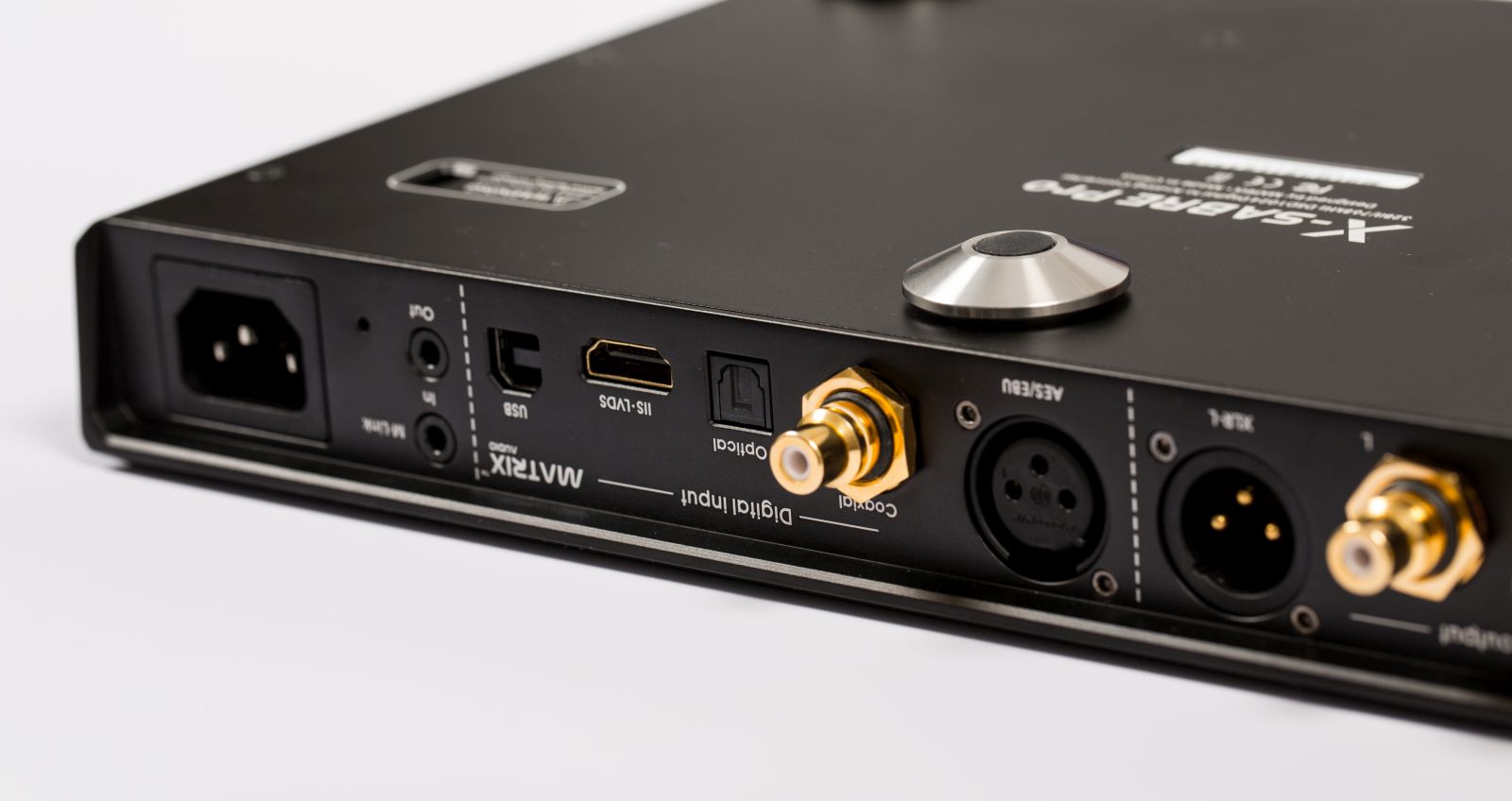
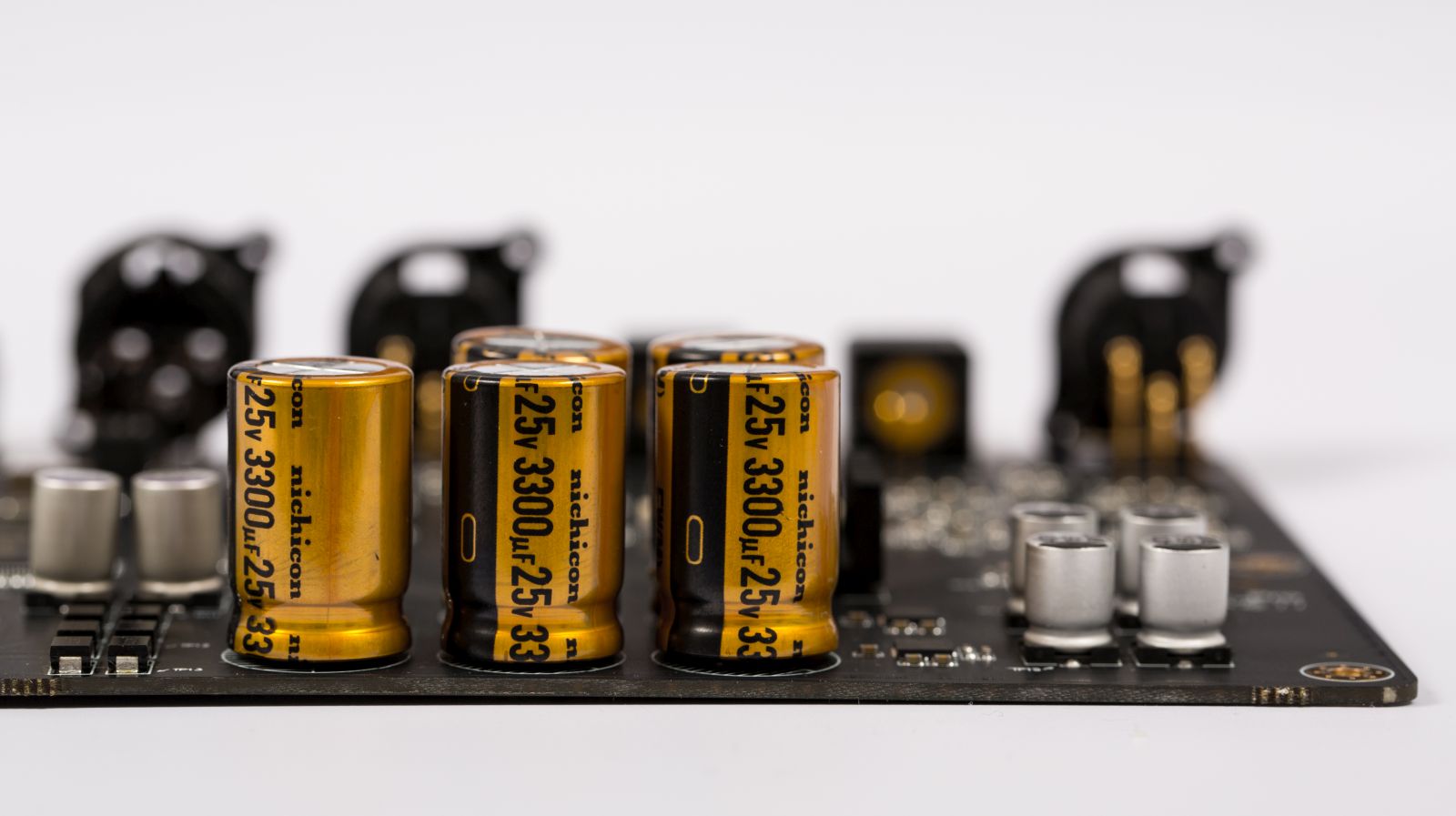
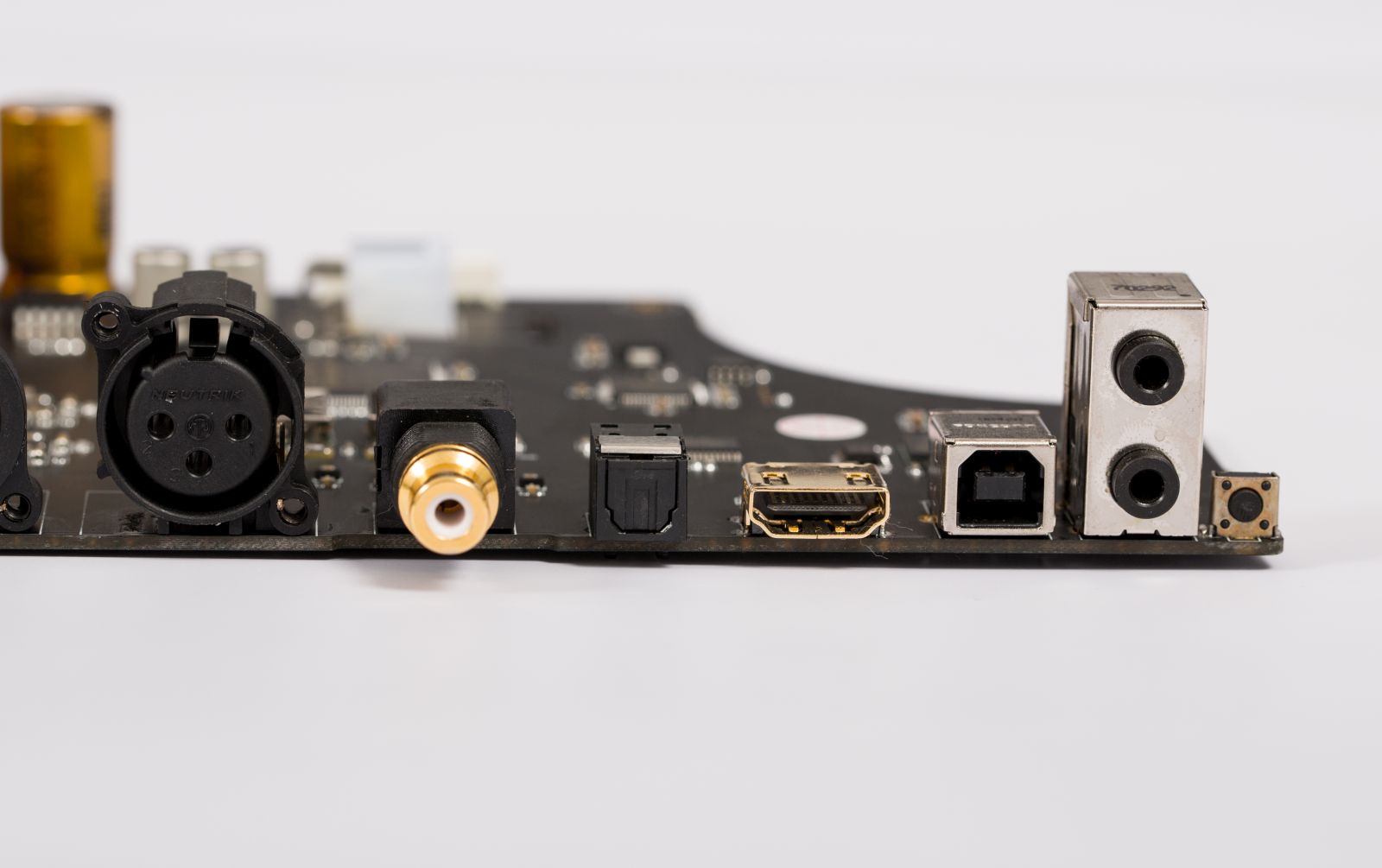
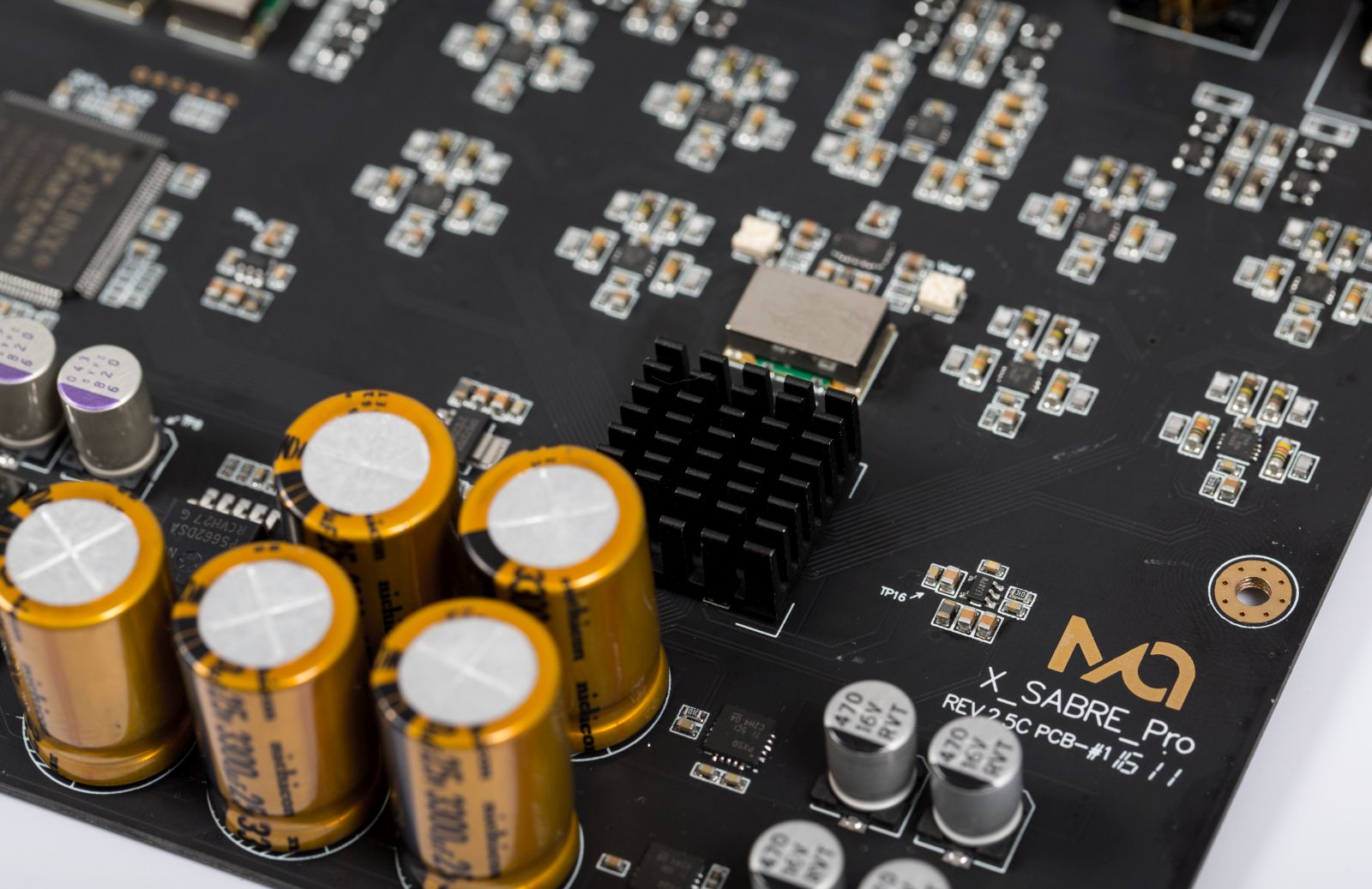
At the heart of audio decoding is the ESS Sabre 9028 PRO. Yes, the 8-channel desktop variant, not the low-power mobile version with just two channels. The only better spec DAC chip, its bigger brother 9038 PRO consumes way too much current and reaches temperatures too high to be integrated into a portable solution. In our Matrix X-Sabre Pro review, it can be seen that in a much larger case, the 9038 PRO chip had to be covered in its entirety by a passive radiator to dissipate heat efficiently.

The ES 9028 PRO is already found in some of the high-end desktop DACs, for example we can find it in the last iteration of the Benchmark DAC 3 HGC and in the Resonance Labs Veritas and probably in many others, all of which are considerably more expensive (++ 2000 Eur) than the DAP presented today, which by the way can also be used as an external DAC if desired.

FiiO X7 (1 of 1)-2
Checking the
DAC chip specifications we see it is able to play DxD files up to 32 bit 384 kHz and DSD 64 and 128.
The chip has been digitally configured using FPGA programming for the best results, extracting the last bit of your favorite music.
The Low-Pass Filter (LPF) is handled by two high-performance
OPA 1612 by Texas Instruments specifically developed for top audio applications. To satisfy FiiO engineers, Texas Instruments has exclusively developed a custom chip for X7 MKII and that is OPA 926 (2 pieces) used in the final signal amplification stage.

Unlike the first generation X7, we now have 3 high-performance crystal oscillators – one for DSD and for multiple sampling rates of 44.1 kHz one for multiple of 48 kHz and one for 384 kHz.
Compared to the original X7, there are not just more crystal oscillators, but they run at a much higher speed. Digital noise is radically reduced, increasing the precision and stability of the clock and generally making a more accurate conversion of digital into analogue signals.

FiiO X7 (1 of 1)-4

As with the first generation, dedicated headphone amp is done by using external amplification modules.
The AM3A stock module represents a major upgrade from AM1 found in the first-generation X7. Not only it offers 2 times the power, but besides the 3.5 mm single-ended output, the AM3A also offers a balanced 2.5mm TRRS output.
Interestingly, the AM3A stock module does not pull down the device at all, as I felt AM1 was doing. The internal components used explains exactly why. The AM3A uses AD8620 JFET wide-band operational amplifiers as well as the OPA926 op-amp, which I mentioned above that was custom developed by TI.

Ah, let’s not forget that the S/PDIF digital output besides coaxial out can now send optical signal as well – a really good thing, especially since many audio devices use only an optical input.

As with the first generation, the DAPs body is carved from a massive matte aluminum block, ultra-resistant to scratches and mechanical shocks.
The design feels industrial and functional, the placement of the buttons is a great improvement over its predecessor, all of them being moved only to the left. The volume wheel is the icing on the cake, the feedback of each click is so pleasant to touch that I change the volume a few times per minute.
For full specifications, please visit the following
link.

FiiO X7 (1 of 1)-5

2. Graphical interface

The X7 Mark II can be used in two modes, both of which are very important.
The first is Android mode, which basically is a standard Android 5.1 interface, it is the only way to install and use third-party apps.
I installed and used most of the apps offered by FiiO Market: Onkyo Player, Neutron Player, Poweramp, streaming apps such as Tidal, Spotify, Qubuz.
Considering I have a Tidal Hi-Fi subscription, I was curious if it will be as good as on its predecessor.
I’m glad to see the interface responds faster a bit, selecting Hi-Fi quality for lossless music, any track loads for about 1-2 seconds, quite fast from my point of view.
If I authorize the device for offline play, I can save the music from Tidal both on internal memory or on the microSD card and of course I can play it without internet connection – an extraordinarily useful feature.
The Tidal mobile app has recognized all my playlists already created on the desktop app, my favorite music has been also recognized, this way I can carry all the music in the world in my pocket.

FiiO X7 MK 2-3

The second is Pure Music mode.
In this mode, it will automatically launch the FiiO Music app and the other apps can no longer be used. Also in this way, the device will block most of the Android secondary processes and the audio ASRC developed by Google. As a result audio processing will take a shorter path and battery life may increase slightly.
At least for me, the autonomy has increased up to an hour, it’s the only way I recommend listening to music stored on internal memory or on MicroSD cards. Audio performance might be the highest using Pure Music mode, I still inspect if it is the case or not.
The FiiO Music app at first seems not very user friendly, but after ~2 hours of testing everything is clear to me.
Navigation becomes easy and intuitive.

We have browsing by file, artist, album or genre. Custom playlists can be created or uploaded, it also supports .CUE files.
The equalizer is well made, besides 8 presets available, we also have a custom one with 10 bands that can be set as we please, from 60 Hz (first band) to 16 KHz (the last band).
X7 Mark II supports most lossless PCM files up to 32 bit 384 khz but also DSD 64 or 128 files with .DSF, .DFF or .ISO extensions.

For Bluetooth connection testing, we used an HP Roar Plus wireless speaker. It was instantly recognized, the actual working range is about 9-10 meters, in an open space it might even more so.

X7 mark II (1 of 1)-9

Another important feature, for some a must-have for sure is the use of the device as an external USB Hi-Res DAC. For this an additional driver must be installed that you can find right here, Mac OS users do not need that driver.
It is important to know that the PCM files supported in this mode are up to 24 bit 192 kHz.

My iMac automatically recognized the internal DAC of the X7 and the Tidal desktop app did as well.
The DAC worked flawlessly as a normal USB DAC, the OS audio settings see it as a 24-bit 192 Khz capable device, so everything is okay, I have nothing to reproach.
We used it both as an external DAC and as a portable player, but we mainly used it on the street with several IEMs and over-ear headphones.
Let’s get to the really interesting things.

FiiO X7 Mark II

II. The interesting stuff
1. Audio Performance

Last week I posted the review of Matrix X-Sabre PRO – a DAC that really impressed me and I consider it very capable for the price segment it belongs to.
Although I can not quantify in real numbers, I think X7 Mark II offers around 90% of X-Sabre Pro performance and that is not a bad joke at all, X7 MKII is very capable and can easily compete with DACs from established manufacturers.

Let’s start with a recording specially made for headphones, the binaural album Sessions from the 17th Ward by Amber Rubarth. What moved me from the first is the positioning of the sounds in a three-dimensional space. Absolutely magical interpretation that simply breathes and plays with my imagination.
The sound depth is
stunning and the holography is just breathtaking.
The stereo image is no longer stereo because I’m just surrounded by sounds that are hitting me from every angle.
The purity of the sound was not affected, the texture of the voices is palpable and real.
As a whole interpretation seems full, crisp and very airy.
I consider the performance to be neutral in the good sense, with lots of dynamics and speed.

FiiO X7 MK 2-6

Listening to more melodic music as Pink Martini – Je Dis Oui! the recording is almost perfect.
The main voice is a bit warm and clean. Sibilant pitch is absent and does not appear at all, creating a perfect tonal balance. It sounds as a reference record.
I feel the bass goes down with an exciting vibration. I feel multiple bass vibrations, a sign that I am dealing with micro-details in the bass area.
It is clear to me that I do not hear dirty one note bass. Cymbals sound natural and non fatiguing. Ambiance and space are almost perfect, helped by explosive dynamics, the recording simply jumps to my ears.

FiiO X7 MK 2-10

Moving on to some commercial rock by Arctic Monkeys – R U Mine? I realize that the sensation of the crystal clear sound I’ve heard in the previous tracks is no longer present.
The main and secondary voices seem slightly sweetened, I feel a slight distortion but insignificant.
The bass has a lot of weight and impact to me. All the notes surrounds my ears with a rich and clean tone.

Pink Floyd – Division Bell (24/96) is an extraordinary record in the rock world with an incredibly dynamic and deep sound.
I can hear every detail of string vibrations, it’s possible that the sound has a slightly richer tonality than what I’ve heard on my desktop DAC. This music has relaxed me a lot and has quite a seductive character that is very present lingering around the recording.
The slight melancholy of this album is easily felt, a sign that the DAP somehow does its job really well. My ears tell me that the new revisions of ESS Sabre 9028 and 9038 have a more natural sound than the old iterations.
It’s hard to put my headphone down, the sound just invites me to finish the album, a very good performance indeed.

X7 mark II (1 of 1)-2

To awaken the transient response of the DAP, I played the album Return to the Sauce by Infected Mushroom.
I think this album really shows me which music genres are really intended for X7 MKII.
The dynamic swings are very obvious, the impact and speed are top notch!
The impact on the eardrum is so obvious that I want it or not but I am staring headbanging.
An impeccable performance on fast music that is for sure.
The X7 Mark II offers incredible dynamics, fast rises and swings are not a problem for it, the transient response is very fast, it keep up with every sound beats.
The bass while lightning fast and articulated, goes really low. The bass vibrations are obvious and give the feeling of clean and well executed bass, there are no traces of muddiness.
The stereo positioning of sounds seems
highlighted, some sounds are heard coming from the back, I suppose the mastering was done on headphones and not on the speakers, its just a feeling, it just sounds exemplary on headphones, the same effects were not felt on speakers, seems like some jumbo-jumbo which I cannot explain at the moment.

X7 mark II (1 of 1)

Extracting the small details from all the tracks is done easily without too much effort, the micro-details became a simple game, at high volume those are very obvious. I think the extraction of micro-details was a priority in the development of this DAP.
Although sometimes I hear a warm sound, on other recordings it seems super neutral and rarely there are some sibilant sounds – I strongly believe the player sounds mostly linear and neutral but with lots of dynamics, impact and speed.
Naturalness is always present, the tone of each piece can be easily heard.
What can I say, the DAP has a very honest sound and tries not to mask anything, its not sterile or anemic, or something like that.

FiiO X7 MK 2-11

2. Comparisons

The most logical comparison would be VS its predecessor.
In stock configuration X7 vs X7 MKII, the new device is in a higher league. It has (much) more power, more explosive dynamics, a bit more natural sound, the bass is more present with a better attack and many more sub-layers. Mids and treble are almost identical.
The new DAP solves the crowded solos a little better, providing more air between the notes. If AM3A is used on both players, the difference becomes smaller, but I favor the X7 MKII slightly, especially because of the cleaner bass, more explosive dynamics and the slightly airier sound.

Eveniment Meze (1 of 1)-11

Vs X5-III, I think that X7 MKII sounds more honest, doesn’t try to hide anything, offering a perfect balance between technicalities and musicality.

X5-III hides a bit the smaller details, from 6 Khz and up is quite easy to notice this, also on very good recordings, X5-III sounds a bit slower si sometimes doesn’t keep up with explosive dynamics and with a crowded interpretation.

X5 sounds syrupy and musical, but it is a coloration that can often spoil the rest of technicalities.

I consider X7-II to be in another league, clearly a higher one, from a certain amount of money, I expect a honest, neutral, real, very technical and natural presentation.

It should also be noted that ladies unanimously decided that the red X5-III is much nicer looking than X7 Mark II, so considering WAF factor, the cheaper DAP wins without a question.

X7 mark II (1 of 1)-6

3. Headphone amp modules

Stock AM3A module is very good, honestly I think it might be too good. I mean I like it so much that I do not see the point of using the older modules. I consider AM2 to be inferior, AM1 much more inferior and AM3 about on the same level. Only AM5 seems more interesting because of that power rating that it is capable of.

Stock AM3A module besides a normal single-ended 3.5 mm output, has a balanced 2.5 mm output as well, a thing that past modules didn’t have, well except for the AM3.

I really hope that FiiO will release new generation of modules, otherwise I do not see the point of older modules. Although those were crazy good on first gen X7, on the newer device those don’t look too attractive.

Using F5 and F9 earphones from the same manufacturer on balanced connection I’ve got an even wider sound, more open and more controlled.

In balanced configuration the sounds becomes more technical, sacrificing just a tiny bit of bass depth.

I accept this compromise, if you are using balanced IEMs give a try to the balanced connection.

An extraordinary matching it had with the Meze 99 Classics and 99 NEO – an unexpected good match. The slightly lazier sound was really awaken on X7, I listened to some rock and was surprised by the result.

X7 mark II (1 of 1)-4

III. The bad stuff

Battery life is a bit disappointing and it seems that this is not a FiiOs trend, it seems that the new standard is about 8 to 10 hours of use.

Same think happened to X5-III and to X7 and also to many many more audiophile DAPs of late from other manufacturers.

I understand really well that internal components consume a lot of power, some of them were destined for desktop applications and clearly had a negative impact on battery life, but I think something must be done in the future, I dream of an 15-20 hours of battery life having the same footprint and weight, is that possible?

On efficient headphones on the SE output I’ve got between 9 and 9 and 30 minutes maximum, on inefficient headphones cut another 30 minutes.

On balanced and easy to drive earphones I lose again about 30 minutes, meaning between 8 and 8 hours and 30 minutes.

For me this is not a major issue, in 30 minutes I’m at work, but for a longer vacation or even for an intercontinental flight the battery will not last.

On another hand quick charge 2.0 could come in handy in such situations.

FiiO X7 (1 of 1)-6

IV. Conclusions

I woke up with a Matrix X-Sabre Pro in my pocket that I can easily carry anywhere and that runs streaming apps as Tidal, Spotify and others.

What can I say, its clear I liked it very much. The improvements vs first generation are very obvious: double RAM memory, double ROM memory, dual MicroSD slots, a higher performance DAC chip, better op-amps, more and better crystal oscillators, faster UI, a bigger battery capacity, a much better stock headphone amp module. Me Gusta!

The DAP has a sleek and modern look, the simplistic industrial design captures attention, there was a case when someone stopped me and asked what smartphone is it because he didn’t saw such solid and bold construction before, which if needed can be used as a self-defense tool.

I didn’t encounter many software related glitches, certainly less than on first gen X7, all promised features worked as intended, including the USB DAC feature.

Battery life is the only thing that bothered me and that I would really like to improve in future iterations, speaking about sound I have nothing to reproach.

Unfortunately as any premium audio device, the price is a bit high, at this moment it can be purchased at 3400 RON (local price) and if it is worth it or not only you can decide.

FiiO X7 MK 2-14

PROS:

  • ES 9028 PRO is a big PRO
  • Modular design that kills the external headphone amp phenomenon
  • Really cool additional features (DAP, USB DAC, Hi-Res streamer, Bluetooth AptX, digital S/PDIF transport via coaxial or optical)
  • Indestructible industrial design, sexy volume wheel
  • Linear and neutral sound signature, dynamics are to die for
  • Impeccable sound spectrum playback, without dips or rises
  • Real and transparent sound, everything just breathes
  • Good holographic depth
  • Harmonic distortion is nowhere to be found

CONS:

  • Modest battery life
  • High price

Equipment used for review:

FiiO X7 MKII, X7 MKI, X5 MKIII, F5, F9, Sennheiser HD600, Momentum 2.0, Meze Audio 99 Classics, 99 NEO, Audeze LCD-4

X7 mark II (1 of 1)-3

FiiO X7 Mark II – PROfesionistul

19

Recunosc, zambesc de fiecare data cand vad anuntata o noua versiune a playerelor portabile FiiO din seria X dar si cand vad cate unul folosit de cineva pe strada.
Starul ultimelor aparitii din portofoliul FiiO a fost desigur X7 MKII, am fost pur si simplu obligat sa-l ascult si sa-mi impartasesc impresiile. Cred ca nu ma voi satura niciodata de aceste playere sau de oricare altele, folosesc playere portabile de cand stiu sa citesc, asa ca nu ma puteti opri.
Pana acum, ce-a dea doua generatie pare foarte promitatoare, cei de la FiiO au inglobat in acest aparat absolut tot ce au ei mai bun, este produsul de top al producatorului.
Este important de mentionat ca aparatul este scump, mare si greu, este destinat entuziastilor si nicidecum nu este un inlocuitor al telefonului mobil, cei interesati intr-un astfel de produs deja inteleg ca portabilitatea a fost unicul compromis facut la dezvoltarea acestui player, prioritatea fiind 100% sunetul de cea mai inalta fidelitate.

FiiO X7 Mark II-3

I. Lucruri plictisitoare…
1. Componete interne si Design

X7 Mark II ca si predecesorul sau a fost conceput pe platforma Android 5.1, componentele hardware au fost alese astfel incat interfata sa se miste destul de fluid cu conditia sa nu consume prea mult curent, consumul ridicat al curentului il vor avea componentele care se ocupa de decodarea si amplificarea semnalului audio.

Avem de-a face cu SoC-ul RK3188, procesorul quad-core ruland la o frecventa de 1.4 Ghz si avand in sfarsit 2 Gb de RAM (fata de 1 Gb la predecesorul X7) – aceasta schimbare a avut un impact pozitiv, interfata miscandu-se mai fluid, aparatul raspunzand ceva mai repede la comenzi, aplicatiile de streaming audio incarca fisierele ceva mai repede si per total aparatul se simte mai sprinten.
Probabil lucrul cu adevarat imbucurator este dublarea memoriei ROM de la 32 la 64 Gb, din care ~56 sunt utilizabili – daca folositi fisiere lossy e foarte posibil sa nu mai aveti nevoie de un card de extensie a memoriei. Nu vad motivul pentru care ar cumpara cineva o caramida de player de 800 Euro ca sa asculte fisiere mp3, propun sa fie aspru pedepsiti asemenea eretici. 😀

FiiO X7 MK 2-8
Ecranul tactil IPS are diagonala de 4” si o rezolutie de 800 x 480 pixeli, pentru standardele din prezent este destul de low-res, dar mai mult decat suficient pentru ceea ce a fost gandit X7 Mark II.
Un upgrade masiv sunt cele 2 sloturi de extensie a memoriei microSD, fiecare acceptand carduri de pana la 256 Gb, pentru playerul amiral a fost musai folosirea a doua sloturi fata de doar unul in modelul precedent.
O alta schimbare este si utilizarea adaptorului Wi-Fi de 2.4 si 5 GHz pentru un transfer mai rapid de date.
Adaptorul Bluetooth are versiunea 4.1 care accepta si standardul aptX si de data aceasta poate functiona si cu aplicatii/echipamente BLE (bluetooth low energy) permitandu-i sa se cupleze cu aproape orice dispozitiv Bluetooth.
Bateria interna a avut si ea parte de un mic upgrade, de la 3500 mAh la una de 3800 mAh ceea ce este un lucru foarte bun. Bateria de data aceasta suporta si incarcare rapida quick charge 2.0, dar pentru aceasta va trebui sa achizitionati separat un incarcator la acest standard.

X7 mark II (1 of 1)-5

In ceea ce priveste componentele care se ocupa de decodarea audio si de amplificarea semnalului analogic – tind sa cred ca au ales ce este mai bun la ora actuala, fara compromisuri majore, unele din ele fiind alese datorita dimensiunilor mici si a factorului portabil.
Inima decodarii audio o reprezinta ESS Sabre 9028 PRO. Da, varianta desktop cu 8 canale, nu cea mobila cu consum redus si doar doua canale. Unicul DAC-chip mai performant, fratele mai mare 9038 PRO consuma mult prea mult si atinge temperaturi prea mari pentru a putea fi integrat intr-o solutie portabila. In pozele din review-ul de la Matrix X-Sabre Pro se poate vedea ca si intr-o carcasa mult mai mare a fost nevoie ca chip-ul 9038 PRO sa fie acoperit in totalitatea de un radiator pasiv.
ES 9028 PRO se gaseste deja la cateva din DAC-urile desktop din zona high-end, de exemplu il putem gasi in ultima iteratie Benchmark DAC 3 HGC si in Resonance Labs Veritas si probabil in multe altele, toate aceste aparate fiind considerabil mai scumpe (++2000 Eur) decat playerul prezentat astazi, care printre altele poate fi folosit si ca un DAC extern daca se doreste.

FiiO X7 (1 of 1)-2
Verificand specificatiile DAC chip-ului observam ca este capabil sa redea fisiere DxD de pana la 32 bit 384 kHz si DSD 64 si 128.
Chip-ul a fost configurat digital folosind programare FPGA pentru cel mai bun rezultat si pentru extragerea ultimului bit din muzica preferata.
De filtrul Low-Pass (LPF) se ocupa doua amplificatoare operationale OPA 1612 de la Texas Instruments de inalta performanta specific dezvoltate pentru aplicatii de top. La comanda inginerilor FiiO, Texas Instruments a dezvoltat in exclusivitate un chip custom si acesta este OPA 926 (2 bucati) folosit la etajul final de amplificare semnal.

Spre deosebire de prima generatie X7, acum avem la indemana 3 oscilatoare de cristal de inalta performanta – unul pentru DSD si pentru rata de esantionare 44.1 kHz si multiplu, unul pentru 48 Khz si multiplu si unul pentru 384 kHz.
Comparativ cu originalul X7, nu sunt doar mai multe oscilatoare de cristal, dar ele si ruleaza la o viteza mult mai mare. Zgomotul digital fiind radical redus, crescand precizia si stabilitatea ceasului si in general producandu-se o conversie mai corecta a semnalelor digitale in analogice.

FiiO X7 (1 of 1)-4

Ca si in cazul primei generatii amplificarea dedicata de casti se face prin ultilizarea unor module externe de amplificare.
Modulul stoc AM3A reprezinta un upgrade major fata de AM1 gasit in prima generatie X7. Nu numai ca ofera de 2 ori mai multa putere, dar pe langa iesirea single-ended de 3,5 mm, AM3A ofera si o iesirea balansata de 2,5mm TRRS.
Interesant este ca modulul stoc AM3A nu trage absolut deloc in jos aparatul, cum de ex. simteam ca o face AM1. Componentele interne folosite imi explica de ce. AM3A foloseste amplificatoare operationale JFET AD8620 de banda larga precum si op-amp-ul OPA926, cel de care va spuneam mai sus ca a fost dezvoltat la comanda de catre TI.

Ah da, sa nu uit ca si iesirea digitala S/PDIF pe langa coaxial acum poate trimite mai departe si semnal Optic – un lucru bun, mai ales avand in vedere ca multe echipamente audio folosesc numai intrarea optica.

Ca si in cazul primei generatii cutia playerului este sculptata dintr-un bloc masiv de aluminiu mat, ultra rezistent la zgaraieturi si la socuri mecanice.
Designul il consider industrial dar si aratos, amplasarea butoanelor este o mare imbunatatire fata de predecesorul sau, toate butoanele sale fiind mutate doar in partea stanga. Rotita de volum este cireasa de pe tort, feedback-ul fiecarui click este atat de placut la atingere incat stau si schimb volumul de cateva ori pe minuta.
Pentru specificatii complete vizitati link-ul urmator

FiiO X7 (1 of 1)-5

2. Interfata grafica

X7 Mark II poate fi folosit in doua moduri, ambele foarte importante.
Primul este modul Android, mod in care practic incarca interfata standard Android 5.1, este unicul mod in care se pot instala si utiliza amplicatii terte de orice fel.
Am instalat si utilizat majoritatea aplicatiilor oferite de catre FiiO Market: Onkyo Player, Neutron Player, Poweramp, aplicatii de streaming precum Tidal, Spotify, Qubuz.
Avand abonament Tidal Hi-Fi eram curios daca se prezinta la fel de bine ca si predecesorul sau.
Ma bucur sa vad ca interfata se misca putin mai fluid, selectand calitatea Hi-Fi orice piesa lossless se incarca in jur de 1-2 secunde, nederanjat din punctul meu de vedere.
Daca autorizez aparatul pentru offline play, pot salva muzica de pe Tidal atat pe memoria interna cat si pe cardul microSD si desigur o pot reda fara a ma conecta la internet – o functie extraordinar de utila.
Aplicatia mobila Tidal automat mi-a recunoscut toate playlist-urile create deja pe aplicatia desktop, muzica preferata a fost recunoscuta, ce pot sa zic, am la indemana toata muzica de pe glob in buzunar.

FiiO X7 MK 2-3

Cel de-al doilea mod este Pure Music.
In acest mod se lanseaza automat aplicatia FiiO Music, iar celelalte aplicatii nu mai pot fi rulate. Tot in acest mod FiiO a decis sa blocheze majoritatea proceselor secundare Android cat si ASRC-ul audio dezvoltat de Google. In acest fel procesarea audio va avea de parcurs un drum mai scurt iar autonomia bateriei poate creste putin.
Cel putin la mine, autonomia s-a marit pana la o ora, este modul in care recomand sa ascultati muzica stocata in memoria interna sau pe cardurile MicroSD. S-ar putea ca in acest mod performanta audio sa fie cea mai ridicata, inca inspectez daca este cazul sau nu.
Aplicatia FiiO Music mi se pare putin stufoasa la o prima lansare, insa dupa ~2 ore de testare totul imi este clar.
Navigarea devine destul de usoara si intuitiva.
Avem navigare dupa fisier, artist, album sau gen muzical. Se pot crea sau incarca playlist-uri personalizate, avem suport inclusiv pentru fisierele .CUE.
Egalizatorul este bine pus la punct, pe langa cele 8 presetari puse la dispozitie avem si unul personalizat la care putem seta dupa plac cele 10 benzi, de la 60 Hz (prima banda) pana la 16 KHz (ultima banda).
X7 Mark II suporta majoritatea fisierelor lossless PCM pana la 32 bit 384 khz dar si fisierele DSD 64 sau 128 avand extensiile .DSF, .DFF sau .ISO.

Pentru testarea conexiunii Bluetooth am folosit o boxa wireless HP Roar Plus. Ea a fost recunoscuta instantaneu, raza reala de actiune este in jur de 9-10 metri, intr-un spatiu deschis s-ar putea chiar mai mult de atat.

X7 mark II (1 of 1)-9

O alta functie importanta, unii o considera un must-have este utilizarea aparatului ca un DAC extern USB Hi-Res. Atentie in acest mod trebuie instalat un driver suplimentar care il gasiti aici, utilizatorii de Mac OS nu au nevoie de acel driver.
Este important de stiut ca fisierele PCM suportate in acest mod sunt de maxim 24 bit 192 kHz.

iMac-ul mi-a recunoscut automat DAC-ul intern al X7 si aplicatia Tidal desktop.
DAC-ul a functinat fara cusur ca un DAC normal, in setarile din sistemul de operare il vede aparat capabil 24 bit 192 Khz, deci totul este in regula, nu am nimic de reprosat.
L-am folosit atat ca DAC extern cat si ca player portabil, dar preponderent l-am folosit pe strada legat la mai multe casti in-ear si over-ear.
Sa trecem la lucrurile cu adevarat interesante.

FiiO X7 Mark II

II. Lucruri interesante
1. Prestatia Audio

Saptamana trecuta am postat recenzia Matrix X-Sabre PRO – un DAC care m-a impresionat cu adevarat si care il consider foarte capabil pentru segmentul de pret din care face parte.
Desi nu pot cuantifica in cifre reale, cred ca X7 Mark II ofera in jur de 90% din ce poate X-Sabre Pro si nu este deloc o gluma proasta, adica este foarte capabil si concureaza lejer cu DAC-uri de la producatori consacrati.

Sa incepem cu o inregistrare special facuta pentru casti, albumul binaural Sessions from the 17th Ward de Amber Rubarth. Ce m-a miscat din prima este pozitionarea sunetelor intr-un spatiu tridimensional. Absolut magica interpretarea care pur si simplu respira si joaca feste cu imaginatia.
Adancimea sunetelor este uluitoare, iar holografia iti taie rasuflarea.
Imaginea stereo nu mai e deloc stereo pentru ca pur si simplu sunt inconjurat de sunete.
Puritatea sunetului nu a fost afectata, textura vocilor este palpabila si reala.
Sunetul per total pare plin, cristalin si foarte aerisit.
Consider prestatia una neutra in sensul bun, cu multa dinamica cat si viteza.

FiiO X7 MK 2-6

Ascultand muzica ceva mai melodioasa Pink Martini – Je Dis Oui! inregistrarea este aproape perfecta.
Vocea principala este putin de tot calduta si curata. Sibilanta este absenta si nu apare deloc, creand astfel o balanta tonala perfecta. Este o inregistrare de referinta.
Simt ca basul coboara jos avand o vibratie interesanta. Simt vibratiile basului, semn ca am de a face cu microdetalii in zona basului.
Este clar ca nu aud bas murdar format dintr-o singura nota. Cinelele suna natural, neobositoare. Ambienta si spatiul sunt aproape perfecte, ajutate de dinamica exploziva, inregistrarea pur si simplu sare catre mine.

FiiO X7 MK 2-10

Trecand pe ceva rock comercial Arctic Monkeys – R U Mine? Imi dau seama ca a scazut destul de mult senzatia de sunet cristalin auzit in piesele precedente.
Vocea principala si cele secundare par usor indulcite, simt o usoara distorsiune dar nesemnificativa.
Basul are greutate si impact mult peste medie. Per totala sunetul imi inconjoara urechile avand o tonalitate bogata si curata.

Pink Floyd – Division Bell (24/96) este o inregistrare extraordinara in lumea rock-ului avand un sunet incredibil de dinamic si adanc.
Pot auzi fiecare detaliu a vibratiilor strunelor, este posibil ca sunetul se fie un picut mai bogat tonal decat ce am auzit pe DAC-ul de acasa. Muzica m-a relaxat foarte mult si caracterul seductiv e foarte prezent.
Melancolia usoara a acestul album este inca prezenta, semn ca aparatul cumva isi face treaba. Urechea imi spune ca noile revizii ESS Sabre 9028 si 9038 au sunetul ceva mai natural decat vechile iteratii.
Este greu sa dau castile jos, sunetul pur si simplu ma invita sa finalizez albumul, foarte buna prestatia.

X7 mark II (1 of 1)-2

Pentru a trezi raspunsul tranzitoriu de care este capabil playerul am dat play albumului Return to the Sauce de Infected Mushroom.
Cred ca acest album mi-a aratat cu adevarat caror genuri muzicale este destinat X7 MKII.
Impulsurile dinamice sunt foarte evidente, impactul  si viteza sunt de top!
Impactul in timpan este atat de evident incat vreau nu vreau incep sa dau din cap.
Impecabila prestatia pe muzica rapida.
X7 Mark II oferta o dinamica incredibila si urcusurile nu sunt o problema pentru el, raspunzul tranzitoriu este foarte rapid, tine pasul cu fiecare bataie a notelor.
Basul desi fulgerator si articulat coboara foarte jos. Vibratiile basului sunt evidente si da senzatia de bas curat si bine executat, nici urma de murdarie.
Amplasarea stereo iarasi sare in evidenta, unele sunete le aud ca vin din spate, presupun ca masterizarea a fost facuta pe casti si nu pe boxe, asa am o presimtire, pur si simplu suna exemplar pe casti, aceleasi efecte nu le-am simtit pe boxe, pare un mumbo-jumbo la mijloc care momentan nu mi-l explic.

X7 mark II (1 of 1)

Extragerea detaliilor din absolut toate piesele se face cu usurinta fara a se chinui prea mult, microdetaliile devin un simplu joc, la volum ridicat sunt foarte evidente. Cred ca extragerea microdetaliilor a fost o prioritate in dezvoltarea acestui player.
Desi pe alocuri aud un sunet cald, pe alte inregistrari pare super neutru si rar de tot mai apare o sibilanta – cred cu tarie ca playerul suna in mare parte liniar/neutru dar avand tone de dinamica, impact si viteza.
Naturaletea e mereu prezenta, aud cu usurinta tonalitatea fiecarei piese in parte.
Ce pot sa zic, playerul poseda un sunet foarte sincer si incearca sa nu mascheze nimic, nu este clinic sau anemic, nici vorba de asa ceva.

FiiO X7 MK 2-11

2. Comparatii

Cea mai logica comparatie ar fi VS predecesorul sau X7.
In configuratia stoc X7 vs X7 MKII, noul player invinge fara drept de apel. Avem la dispozitie (mult) mai multa putere, dinamica mai exploziva, sunet putin mai natural, basul putin mai prezent avand un atac mai bun si nitel mai multe substraturi. Media si inaltele sunt aproape identice.
Noul player rezolva putin mai bine piesele aglomerate, oferind o aerisire mai buna.
Daca folosesc AM3A pe ambele playerele, diferenta devine mai mica, dar usor favorizez X7 MKII in special din cauza basului toxic si curat, a dinamicii explozive si a sunetul ceva mai aerisit.

Eveniment Meze (1 of 1)-11

Vs X5-III, cred ca X7 MKII suna mult mai sincer, nu incearca sa mascheze nimic, oferind echilibrul perfect intre technicalitati si muzicalitate.
X5 MKIII mascheaza usor detaliile de la 6Khz in sus si aceasta se poate auzi usor pe inregistrari de top, X5 MKIII suna putin mai lent si cateodata nu tine pasul cu o dinamica exploziva sau cu o interpetare aglomerata.
X5 suna mai melodios si putin mai siropos, insa este o coloratura care de multe ori strica restul technicalitatilor.
Consider X7 in alta liga, clar superioara, parca de la o anumita suma de bani ma astept la un sunet sincer, neutru, real, foarte tehnic dar si natural.

Mai trebuie mentionat ca domnisoarele au votat in unanimitate ca X5 III rosu este mult mai frumos decat X7 Mark II, deci la capitolul WAF modelul mai ieftin castiga detasat 😀

X7 mark II (1 of 1)-6

3. Modulele de amplificare casti

Modulul stoc AM3A este foarte bun, sincer cred ca este prea bun. Adica imi place atat de mult incat nu mai vad rostul altor module de amplificare dezvoltate in trecut. Consider ca AM2 este inferior, AM1 mult inferior, si AM3 aproximativ identic. Doar AM5 pare mai interesant datorita puterii de care este capabil.
Modulul AM3A stoc pe langa iesirea normala single-ended de 3,5 mm, are si o iesire balansata de 2,5mm, lucru care modulele precedente nu le au, facand exceptie doar AM3.
Sper mult ca FiiO va lansa module noi de amplificare, altfel nu vad rostul modulelor anterioare, desi erau Za Shit pe primul X7, pe noul player nu mai par atat de interesante.
Folosind cascutele F5 si F9 de la acelasi producator pe iesirea balansata am obtinut un sunet si mai larg, mai deschis, mai controlat si inchegat.
In configuratia balansata sunetul devine si mai tehnic, sacrificand un dram din adancimea basului.
Accept acest compromis, daca aveti casti cu jack TRRS balansat de 2,5 mm recomand folosirea iesirii balansate.
Un matching extraordinar de bun l-au avut cascutele romanesti Meze 99 Classics si 99 Neo – combinatie neasteptat de buna. Sunetul usor lenes pur si simplu a fost trezit din somn, am ascultat ceva rock si am fost uimit de rezultat.

X7 mark II (1 of 1)-4

III. Cele Rele

Autonomia playerului este putin dezamagitoare si se pare ca nu este doar un trend de-al lui FiiO, se pare ca noul standard este de 8-10 ore de utilizare.
Acelasi lucru l-am vazut si pe X5 MKIII si pe X7 si apare si in fisa tehnica a altor modele similare de la branduri concurente.
Inteleg prea bine ca toate componentele interne consuma foarte mult curent electric, cateva componente chiar sunt destinate amplicatiilor desktop (adica de bagat in priza) si clar au avut un impact negativ asupra bateriei, dar cred ca trebuie ceva facut pe viitor, visez la o autonomie de 15-20 ore avand aceleasi dimensiuni si greutate, oare e posibil?
Pe casti eficiente pe iesirea normal 3,5 mm autonimia este intre 9 si 9 ore si 30 min maxim, pe casti mai ineficiente mai scadeti in jur de 30 minute.
Pe iesirea balansata si momentam doar pe casti foarte eficiente mai pierd in jur de 30 minute, adica intre 8 si 8 ore si 30 min.
Pentru mine nu este o problema majora, fac 30 minute pana la munca, dar pentru o vacanta mai indelungata sau chiar pentru un zbor intercontinental bateria nu va tine.
Pe de alta parte incarcarea rapida quick charge e bine venita – incarca aparatul full in maxim o ora si 30 min.

FiiO X7 (1 of 1)-6

IV. Concluzii

M-am trezit cu un Matrix X-Sabre Pro in buzunar care pot sa il car unde vreau eu si care printre altele ruleaza servicii de streaming precum Tidal, Spotify si altele.
Ce pot sa zic, este clar ca a mi-a placut foarte mult. Imbunatatirile fata de prima generatie sunt foarte evidente: memorie RAM dubla, memorie ROM dubla, slotul microSD dublu, DAC chip-ul mai modern si mai performant, op-amp-uri mai performante, oscilatoare de cristal mai multe si mai precise, interfata mai cizelata, capacitate mai mare a bateriei, modul stoc de amplificare mult mai bun. Si diferentele nu se opresc aici, sunetul este sensibil mai bun iar interfata mai fluida. Mi gusta!

Playerul arata modern, designul simplist industrial capteaza atentia, am avut un caz cand cineva m-a oprit sa ma intrebe ce telefon este acesta, nu a mai vazut asa constructie solida care la nevoie se poate folosi in scop de autoaparare.
Erori in utilizarea playerului am intalnit foarte putine, mult mai putine decat in cazul primului X7, toate functiile promise ruleaza fara probleme, inclusiv DAC-ul USB.
Bateria este unicul lucru de care m-am putut lega si care as vrea sa o vad mai buna in viitoarele iteratii, vorbind de sunet nu ai ce-i reprosa.
Din pacate ca si orice aparat audio din zona premium, pretul este cam piperat, la acest moment poate fi achizitionat local la suma de 3400 RON iar daca merita sau nu puteti decide doar voi.

FiiO X7 MK 2-14

PRO:

  • ES 9028 PRO e un mare PRO
  • Design modular interesant care da uitarii amplificatoarele externe portabile de casti
  • Functii suplimentare extra foarte bine puse la punct (USB DAC, Streaming Hi-Res, Bluetooth AptX, transport S/PDIF prin coaxial sau optic)
  • Design industrial si indestructibil, rotita de volum foarte sexy
  • Sunet liniar si neutru, avand o dinamica exploziva de invidiat
  • Tot spectrul de frecvente redat impecabil, fara gropi sau urcusuri
  • Sunet ultra real si transparent, totul pur si simplu respira
  • Adancime si holografie reala, nu povesti
  • Lipsit complet de distorsiune armonica

CONTRA:

  • Autonomia bateriei modesta
  • Pret piperat

Echipamente folosite pentru recenzie:
FiiO X7 MKII, X7 MKI, X5 MKIII, F5, F9, Sennheiser HD600, Momentum 2.0, Meze Audio 99 Classics, 99 NEO, Audeze LCD-4

X7 mark II (1 of 1)-3

Matrix X-Sabre PRO – Pimp my ride!

5

S-a anuntat noul smecheras in cartier si acesta este X-Sabre Pro, cu ale sale specificatii de invidiat si constructie cum rar am mai vazut, purtand sub centura noul chip ESS Sabre 9038 PRO promite multe, dar oare va suna precum arata? Vom afla foarte curand.

Noua generatia X-Sabre PRO depaseste performanta deja clasica a vechiului X-Sabre, avem specificatii mai bune, mai multe intrari, meniu mai complet si mai multe optiuni, calitatea constructiei si componente imbunatatite.

Regele a murit, traiasca Regele!

Daca va intrebati cum s-a ajuns pana aici: prin multa munca, selectie minutioasa a componentelor de calitate si o implementare foarte buna (o spun cifrele).

Sub capota

Specificatiile sunt atat de impresionante incat pun la incercare DAC chip-urile custom, mult mai scumpe, practic SF-uri pentru oameni normali (ma uit la tine MSB si dCS).

Designul minimalist de caramida din metal back in black, este pe placul nostru.

Cutia este sculptata la CNC dintr-un bloc de aluminiu, in spate gasim orice intrare digitala de care avem nevoie, precum USB asincron sau nu – la alegere, coaxial, optic si o intrate cu totul speciala: i2S prin conectorul HDMI, voi vorbi putin mai tarziu despre aceasta conexiune.

Fiind un DAC 100% balansat, avem iesiri analog RCA si XLR, aparatul poate fi si un preamplificator digital foarte bun, ce poate oferi pana la +18 dB volum.

X Sabre Pro (1 of 1)-24

Panoul frontal are si touch screen, un lucru comod daca il aveti langa Dvs.

Se pot selecta intrarile digitale, volumul (in modul Pre), are buton ON/OFF de unde se poate intra si in setarile cele mai importante, unde pot fi selectati paramentri importanti precum filtrul digital ales pe material PCM sau DSD, eliminare jitter (zgomot digital), pornire sau oprire dither, update de firmware si altele.

In pachet gasim si telecomanda care practic face acelasi lucru ca si panoul frontal.

Design-ul DAC-ului este modern, este finut lucrat, WAF-ul (wife acceptance factor) este foarte ridicat, a fost practic invizibil pentru consoarta mea, inca nu m-a intrebat ce e ala…deci e de bine.

Pentru specificatii complete va rog accesati urmatorul link.

IMG_9726

La baza acestui DAC sta desigur noul chip ESS 9038 PRO, daca nu ma insel este primul aparat de pe piata care il foloseste, in scurt timp alti producatori de DAC-uri profesionale isi vor arata propriile creatii folosind acelasi chip (hello Oppo Sonica).

Un alt atu al aparatului reprezinta oscilatoarele ultra-low phase noise de cristal de la Crystek care ofera un jitter incredibil de scazut, erorile de timing sunt la nivel de femtosecunde. Mai exact este vorba de o bucata CCHD-957 si doua CCHD-950 care se ocupa de frecventele de 49.152M, 45.1584M si 100M.

Programarea decodarii audio s-a facut prin codare FPGA folosind interfata LINX Spartan care se ocupa de procesarea tutror semnalelor audio digitale, (inclusiv semnale DoP, dCS, alocarea ceasurilor interne si bufferului FIFO).

Pentru cele mai bun rezultate s-au folosit regulatoare de tensiune de inalta performanta ES9311Q puse in 2 grupe, separate pentru un semnal balansat.

Intr-un final etajul liniar de alimentare este atat de bun incat zgomotul masurat ramas este la nivel de 1μVrms!

Transormatorul toroidal facut la comanda de catre Noratel cu siguranta si-a spus ultimul cuvant.

X Sabre Pro (1 of 1)-17

Aparatul stie sa decodeze orice, PCM pana la 32 bit 768Khz si DSD 1024! Comic este faptul ca muzica de o calitate atat de ridicata inca nu exista! Se lanseaza anul acesta inregistrari DSD 256, pana la DSD 1024 vor mai trece cativa ani.

Pe iesirile XLR DAC-ul ofera un SNR de -134 dB si are un crosstalk de -154 dB, distorsiunea armonica se situeaza pe la 0,00015% – eu nu cred ca am mai vazut asa specificatii la un DAC comercial facut cu chip-uri non-custom. Chiar si multe din cele custom nu se ridica la astfel de standarde.

Acum sa dam la o parte chestiile tehnice, sa imbratisam doua beri bune si sa trecem la ceva mai interesant.

X Sabre Pro (1 of 1)-19

Prestatia sonora

Detaliul pe care il extrage din piesele preferate este dus la extrem. Pe langa aceasta precizie chirurgicala, DAC-ul are un raspuns in frecventa impresionant. De la cel mai adanc bas si pana la cele mai inalte note muzicale totul se aude cristalin, cu usurinta depistez micile imperfectiuni sau sunete care nu ar trebui sa le aud intr-o inregistrare, precum miscarea scaunelor sau a picioarelor dintr-o sala de concert sau cum trece o masina pe langa studioul de inregistrari. Toate acestea devin un simplu joc, nici macar nu trebuie sa fiu atent ca sa le aud.

Muzica este redata foarte rapid, cu un impact puternic care impiedica posibilele erori de timing si precizie.

Ascultand Apocalyptica – On the Rooftop with Quasimodo sunetul a fost usor si natural, inchegat, nici prea siropos si nici uscat, simt o doza exacta de naturalete si de precizie.

Desi spre sfarsit piesa este super aglomerata, nu am simtit ca DAC-ul si-ar pierde tactul, sau ca se ineaca si amesteca notele muzicale, sau ca murdareste usor prestatia.

Nici vorba, fiecare nota este redata intr-o bula individuala de aer inconjurata de un spatiu vid clar delimitat. Aglomeratie rar se va auzi pe acest DAC, desigur inregistrarile proaste nu au leac, Pro-ul nu poate face minuni pentru ele.

X Sabre Pro (1 of 1)-6

Rar poti atribui cuvinte precum: sunet natural, melodios si dulce unui DAC bazat pe chipsetul ESS Sabre.

Pot spune ca X-Sabre Pro face o exceptie de la aceasta formula.

In primul rand se datoreaza ceasurilor Crystek de inalta performanta, etajului final de iesire care a fost bine tunat pentru a se impaca bine cu acest chipset si desigur alimentarii de top.

A fost implementata o alimentare liniara in toate partile critice ale circuitului electric care iarasi a avut un impact pozitiv asupra prestatiei audio.

X Sabre Pro (1 of 1)-10

Am impresia ca aparatul are doza exacta de naturalete si precizie, un echilibru tonal excelent. In toate melodiile ascultate nu mi s-a parut nicodata plictisitor, uscat, lipsit de ton sau dinamica. Din contra, cand a fost nevoie a sunat cald si duios, cand a fost nevoie a sunat laser, atat detaliile, impactul, viteza cat si redarea stricta a tuturor frecventelor.

Ascultand in continuare niste piese mai vechi Deep Purple – Soldier of Fortune eram curios sa aud daca sunetul vintage si usor distorsionat ma va deranja.

Caracterul lin si relaxat al piesei a ramas intact, clatin in continuare din cap cu un zambet pana la urechi – un semn ca totul este la locul sau.

Ascultand When a Blind Man Cries am constatat ca mediile au ramas usor de tot indulcite, chitara care plange uneori te apuca de suflet si iti atrage atentia. Vocea usor ragusita se aude clar prin fumul inregistrarii mai putin perfecte.

Ma bucur sa aud ca sulfetul acestor inregistrari este inca acolo, sincer aveam emotii ca pe acest chipset imi vor lipsi mediile si basul adanc.

X Sabre Pro (1 of 1)-9

Trecand pe muzica electronica al anilor 90’ m-am delectat cu 3 albume semnate The Prodigy.

Dupa primele secunde mi-a fost clar cat de rapid poate suna aparatul.

Pe No Good muzica are un impact fulger, notele nu numai ca ataca super rapid, ele se retrag cu aceeasi viteza creand un impact care il poti simti cu tot corpul.

Fun factorul este fenomenal, mixul creat de chitari electrice, tobe si sunete digitale sunt asa bine plasate si usor delimitate una de alta incat pot cu usurinta asculta o singura nota muzicala ignorand complet celelalte sunete.

Muzica nu este propagata doar intr-un plan 2D, notele se aud clar atat pe inaltime, latime cat si pe adancime. Scena audio are dimensiuni mai mari decat a unui DAC situat la acelasi nivel de pret, la fel si adancimea sunetului este ceva mai accentuata. Pot privi si analiza cu usurinta fiecare melodie si fiecare sunet individual.

Datorita adancimii sunetului, pot de asemenea aprecia distanta notelor fata de ascultator, de exemplu unele sunete le aud clar mai aproape de mine si unele clar mai indepartate de microfonul studioului. Inchizand ochii imi pot usor imagina plasarea instrumentelor in campul auditiv.

X Sabre Pro (1 of 1)-22

Implementarea intrarilor digitale:

  1. USB

De curiozitate am instalat cateva playere software pe calculator si m-am jucat cu setarile, in primul rand am vrut sa testez daca accepta cele mai joase latente posibile si daca voi avea interferente avand procesorul incarcat cu alte task-uri. Pe VOX, Amarra si Audirvana cea mai joasa latenta a mers fara nici o problema, nu am avut sacadari, zgomote de fundal la volum minim sau maxim, absolut nici o problema chiar daca rulau mai multe programe concomintent.

Implementarea USB o consider una excelenta si ma bucur ca i-au acordat o atentie speciala pentru ca sincer sunt multe DAC-uri bune care suna bine dar sunt trase in jos rau de tot din cauza implementarii USB mediocre (DAC-urile Burson pot fi luate ca un bun exemplu).

Nu e de mirare, avand in vedere ca s-a folosit cea mai noua interfata XMOS-U serie dedicata decodarii audio de inalta performanta.

X Sabre Pro (1 of 1)-12

     2. Optic

L-am conectat la o consola PS4 si a detectat semnalul imediat, desigur fiind un DAC stereo, a redat doar semnal stereo neputand decoda semnal multicanal, pentru asa ceva aveti nevoie de un receiver multicanal sau un DSP dedicat. Nu am intampinat nici o problema folosind intrarea optica.

X Sabre Pro (1 of 1)-3

     3. Coaxial

Am imprumutat o interfata S/PDIF foarte buna, este vorba de Audiobyte Hydra Z alimentata de sursa de alimentare ZPM. Ambele costa cam 60% din pretul X-Sabre Pro, adica o interfata foarte buna dar si foarte scumpa.

Nu au fost diferente notabile fata de USB, pe o melodie mi s-a parut ca a sunat un dram mai natural si mai adanc, pe alta melodie parca imi limita dinamica. Diferentele erau atat de mici, incat la un moment dat ma intrebam daca este vreo diferenta sau daca delirez. Fara o interfata S/PDIF de calitate, prestatia intrarii coaxiale ar putea fi inferioara celei USB.

X Sabre Pro (1 of 1)-14

    4. I2S (HDMI) – Semnal diferential LVDS

Este prima data cand folosesc o astfel de conexiune, am noroc ca am la indemana o interfata si un DAC capabil i2S.

Pe langa faptul ca este un protocol ce separa complet clock-ul si semnalul digital dintr-un stream de date, din toate acestea rezulta cel mai jos jitter (zgomot) digital dintre toate celelalte conexiuni, este si un protocol ce nu are nevoie de chip-uri secundare pentru a transfera streamul digital catre DAC-ul convertor. Astfel semnalul care il primeste din Hydra Z pleaca direct catre inima ESS 9038 PRO, fara a mai trecere prin chip-uri secundare, cum este in cazul conexiunilor USB, Optic si Coaxial.

I2S este de asemenea cea mai rapida conexiune digitala dintre cele 4 prezente.

Dragi frati si surori, desi sincer as vrea sa nu aud o diferenta si nu imi mai bat capul cu aparate secundare, diferentele au fost auzite aproape instant.

Sunetul a capatat o holografie si mai adanca, simt ca aud tot ce poate oferi acest DAC, sunetul adanc parca se naste din vid, din nimic. Nicidecum nu iese din boxe sau casti.

Pe langa acest fapt am auzit un sunet putin mai natural, a disparut complet agresivitatea digitala si granulatia usoara a conexiunii USB.

Nu va panicati, nu a fost o diferenta uriasa, dar a fost una clara, nu e ca si cum as upgrada DAC-ul la unul dintr-o clasa superioara, dar a imbunatatit tot ce avea Pro-ul mai bun. Daca pe USB rar de tot mai apare cate o granulatie nedorita, pe i2S nu am avut nimic de comentat, a sunat pur si simplu epic.

X Sabre Pro (1 of 1)-18

Concluzii

Am observat ca DAC-ul nu impresioneaza de la prima melodie, el neavand un caracter aparte, practic dispare ca aparat si incearca sa nu interfereze cu muzica in nici un fel.

Abia dupa cateva ore bune incepi cu adevarat sa intelegi toata magia pe care o face, oferind un semnal audio pur si nealterat, care ulterior se poate colora (la dorinta) cu un amplificator.

Din tot ce am ascultat pana acum in biroul meu, acesta a fost cel mai impresionant DAC, indiferent de brand sau pret.

Totul mi-a placut, inca nu i-am gasit minusuri, unicul este ca as fi vrut ca USB-ul sa sune ca i2S-ul, din pacate protocolul USB nu a fost creat pentru transportul in timp real a unui stream audio, nu e de vina aparatul.

Daca vanati un DAC modern, care este usor de utilizat si care poate decoda orice fisier audio, Matrix X-Sabre Pro de acum inainte va fi prima mea recomandare.

In acest moment poate fi ascultat si achizitionat de la impotatorul oficial la suma de 8990 RON.

X Sabre Pro (1 of 1)-2

Pro:

-Detalii padure, auzi musca zburand la cativa metri de studioul de inregistrari
-Viteza, atac si impact impresionante
-Liniaritate, corectitudine dar si naturalete si ton corect
-Spectrul de frecvente perfect, nimic nu sare in evidenta, nimic nu lipsestE
-Holografie adevarata intr-un camp 3D, scena destul de larga
-Lipsa distorsiunii armonice
-Pret bun raportand la performanta impecabila

Contra:

-Fara iesire de casti
-Unele DAC-uri concurente ofera si streaming

Echipamente folosite pentru review:

Matrix X-Sabre Pro, Audio-GD Master 9, Audiobyte Hydra Z + ZPM, iFi Audio iPurifier2, Audeze LCD-4, Sennheiser HD600, Meze 99 Classics

X Sabre Pro (1 of 1)-23

FiiO F9 – Fast & Furious (English)

0

Hello headphiles™

I was glad to see among the new products announced on the 10th anniversary a pair of hybrid in-ears.
Of course, these are also made from scratch by FiiO engineers, without any collaboration with other earphones developers.


If F5 had
my attention with the detachable cables and with titanium-clad diaphragm, F9 has caught my attention with its unique hybrid design and PEK dynamic diaphragm – for the first time used in the development of a dynamic driver.

Hybrid earphones

F9 are not your average earphones because bass will be handled by a dynamic driver having a diameter (Ø) of 9.2 mm, by mids and treble will take care two balanced armatures, both parts handled together by a custom crossover.

I believe this hybrid approach deserves its place in the top of the manufacturer’s earphones. The technology of the balanced armatures was extensively explained by me right here

X7 mark II (1 of 1)

Package contents

F9 will be sold in 2 variants: F9 SE that doesn’t have detachable cables and F9 that has two detachable cables in the package. A normal 3.5 mm cable that also has wired controls (call answering, volume + and -) that will work with Android terminals, unfortunately not with iOS. The other cable is a balanced braided 2.5mm OFC cable – at first touch it gives the impression of good quality. We will test both connections (SE and BAL) in our sound tests.

There are also six pairs of ear tips, three black ones – that offer a quite neutral sound, and three grey with red on the inside that emphasize the bass.
The rigid plastic carrying case is nicely build, it is also water resistant.
On the opposite side, the earphones are attached to the cable via the MMCX connector, which is also found on the F5 or on Shure IEMs.

FiiO F9 Balanced (1 of 1)

The technology behind

Removable detachable cables are a good thing, the universal MMCX connector also used by other manufacturers is a good thing as well. In case of a malfunction, they can be replaced quickly and easily.


A good hybrid design is not easy to implement: we have to deal with three frequency bands played by three different drivers, all three controlled by a custom crossover. I realize that most of the resources were focused precisely on this part.

The dynamic diaphragm that handles only the bass is not a simple cellulose one, it is made from polyether ketone (PEK) which is part of a very rigid nano-composite polymer. From what FiiO showed me, it seems to be extremely rigid and light weight, among other things it is more resistant than beryllium and titanium! Due to the extremely small working space, Ø of the dynamic diaphragm is only 9.2 mm VS 13.6 mm in case of F5 earphones, this small thing will have quite an impact on the bass that we will be discussing very soon.

Balanced armatures which are often used in top designs around the world, will surely add extra audio performance to the mids and treble.

In the metal body of the IEMs there are two small holes that are actually ports that eliminate some of the energy and vibration of the diaphragm, the other port eliminates the air pressure that accumulated between eardrum and the ear-tips. Comfort is enhanced due to the lack of air pressure in the ear canal but also due to soft and elongated soft-touch ear tips.

Regarding comfort I have nothing to reproach, sometimes I wear them for two to three hours and I forget that I have to get them out.

FiiO F9 Balanced (1 of 1)11

OK ok, but how do they sound?

F9 have been tested both on a portable setup and on a good desktop system.
For outside listening we used F9 together with a FiiO X7 MKII from which we received exceptional results both on the SE and on the BAL outputs. On the desktop system we just had to take care of the gain and volume not to fry them.

F9 are extremely efficient, delivering 106 dB from a single milliwatt of power, it can be driven by virtually anything that has a headphone jack. F9 might be the most efficient portable earphones I’ve tested. Don’t be mislead by these numbers, adding a small but dedicated headphone amp will have a nice impact on audio performance. In particular, bass becomes more controllable, striking faster without leaking over the mids.

First impression is a pleasant one; from the start I have a feeling of an airy sound with tons of micro-details extraction and refinement.

I can not help mentioning a very different bass performance from what I’ve heard in F5.

As a little note, I used F9 mostly with gray tips because they gave me a better bass depth without disturbing the speed or impact, only with these tips they came close enough to the bass performance of F5 – which among other things is excellent.

F9 gave me a more accurate and faster bass, almost lightning fast, unfortunately losing a bit of depth and extension. Especially on the sub-bass I feel that there is a small lack of information. Although the bass depth will not impress Beats fans, the rest like speed, impact and detail – are at a very high level! It seems that the small but very rigid and light diaphragm is doing its thing.

FiiO F9 Balanced (1 of 1)-4

Putting the earphones under the magnifying glass on faster music, I feel I just cannot keep up with them. Fast music will never sound crowded, slow or muddy.

F9 delivers a very fresh, dynamic and explosive sound. Fast music lovers, where dynamics rise so fast will really appreciate F9 performance.

Due to the rapid execution of the sound there is no delay and the notes will not linger too much, so listening to jazz music or generally slower music can be a problem.
F9 are aggressive and immediately pumps adrenaline into blood, if that bothers you, you might want to check other IEMs.

The lack of a warmish sound signature again creates the impression of a metallic, technical sound, which affects musicality a little and maybe even the soul of music.
Voices sounded very guttural, pleasant and well-rounded.
Pink Martini and Leonard Cohen sounded very contoured and well delimited from the rest of the notes.

Voices sounded like a separate entity to the rest of the notes, Cohen with his super guttural voice sometimes gives the impression of whispering in the ear, this little details will not be hidden. Although the voice is very contoured, the weight of it suffered a bit. As if the voices were like empty shells, the naturalness and the weight of the voices has suffered a little.

When I think about the treble, I think of a two-edged knife. On one hand, the treble is crystalline, with an enormous presence, even more than I would like it to be. Highs are extra detailed and delimited by the rest of the notes.

On other hand, I have the impression that I hear a rise up to the 10 Khz zone, which sometimes bothers me on some recordings. Sometimes a surgical and disturbing „tsss” can be heard.

Do note that both the portable setup and the desktop setup have been tuned for a more honest, neutral and detailed presentation, just as audio engineers have intended, I tried to get closer to neutrality.
I’m sure that on a „warmer” system where bass and mid frequencies are highlighted and put more forward, F9 will also sound warmer, less aggressive and will borrow some refinement.

Leaving aside the audio spectrum, F9 gives me a truly expanded sound on width and height. The soundstage is really interesting considering that we have to deal with IEM type earphones inserted millimeters from eardrum. I have the feeling that the musicians are a few meters away from me, I can easily locate the distance between them and between me and them, so I think holography is quite nice and it does its job well. Besides the width, the sound is pretty deep, creating an above average stereo image.

FiiO F9 Balanced (1 of 1)-6

SE vs Balanced

On the X7 MKII the differences were notable but not huge.
For example on balanced F9 gets a faster and more controllable bass, but loses a small part of its depth. On the other hand, the sound is even deeper and wider in

all directions, as if the musicians would sing in a significantly larger room.


Sound is decompressing itself literally and figuratively using the balanced connection, adding even more air between the notes but stealing little of the bass magic. I accept this compromise, anyway the gray tips will already emphasize bass response, making it even deeper.
On the desktop setup where the power reserve is much bigger, the differences tilted close to zero, I didn’t hear a noticeable difference.

FiiO F9 Balanced (1 of 1)-211

Conclusions

I think F9 were created more for modern music, full of energy, speed and attack and less for vintage music. The headphones are not forgiving at all, so they will reveal any imperfections of the recording, so I would recommend them for top lossless PCM or DSD recordings and less for mp3s.
F9 have lots of
technicalities and there were many times I stopped walking just to make sure I heard a hidden micro-detail, I think the slight pitched highs can be overlooked considering the rest of the performance and the excellent price.


I mean, honestly now, did you know any hybrid earphones with an unique dynamic diaphragm and two balanced armatures at just 100 EUR, it’s hard to believe that can be achieved.
Last time I checked some AKG hybrid earphones working on the same principle, but developed having a more serious know-how were about 1000 EUR.

I consider the price to be really good for the technical sound they are capable of, in their price segment this are definitely hard to beat.

Pros:

  • Detachable cables, lots of accessories
  • Agile, technical and detailed sound
  • Open wide soundstage, very good sound depth
  • Micro and macro details are very present
  • Neutral and linear as possible
  • High level of comfort, lack of air pressure in the ear canal
  • Accessible price for what it offers

Cons:

  • Slightly aggressive
  • High pitched treble here and there
  • Musicality and naturalness were not a priority

Equipment used for review:

FiiO F9, F5, X7 MKII, HeadAmp Pico Power, Matrix X-Sabre PRO, Audio-GD Master 9, bling-bling edition audio cables

FiiO F9 Balanced (1 of 1)-7

FiiO F9 – Fast & Furious

21

Salutare cascofili™

M-am bucurat sa vad printre noile produse anuntate la cea de-a 10 aniversare o pereche de casti in-ear hibride.

Desigur ca si acestea sunt facute de la zero de catre inginerii FiiO, fara colaborari cu alti dezvoltatori de casti.

Daca la F5 mi-a captat atentia cablurile detasabile si diafragma suflata cu titaniu, la F9 mi-a atras atentia design-ul unic hibrid si diafragma dinamica din PEK – pentru prima data folosita in dezvoltarea unei diafragme dinamice.

Casti hibride:

F9 nu sunt niste casti simple pentru ca de bas se va ocupa un difuzor dinamic avand Ø de 9.2 mm, iar de frecventele medii si inalte vor avea grija doua armaturi balansate, ambele parti impacate de catre un crossover personalizat. Aceasta abordare hibrida cred ca isi merita locul in topul castilor producatorului chinez. Tehnologia armaturilor balansate am explicat-o pe larg aici:

Ce este un CIEM?


Continutul pachetului:

F9 se vor comercializa in 2 versiuni: F9 SE ce nu au cablul detasabil si F9 care vin in pachet cu doua cabluri detasabile. Unul normal de 3.5 mm ce vine si cu comenzi pe fir (raspundere apel, volum + si -) care functioneaza cu terminalele Android, din pacate nu si cu iOS. Celalalt cablu este unul balansat de 2.5 mm impletit din OFC, avand puritate de 5N – la prima atingere lasa impresia de calitate. Vom testa ambele conexiuni (SE si BAL) la capitolul sunet.

In cutie se mai gasesc sase perechi de dopuri, trei perechi negre – care ofera un sunet cat se poate de neutru si alte trei perechi gri cu rosu in interior care accentueaza putin basul.

Husa de transport din plastic dur pare facuta cu simt de raspundere si este rezistenta la apa.

La partea opusa cascutele se ataseaza prin conectorul MMCX, care se gaseste si pe F5 sau pe IEM-urile Shure din gama superioara.

FiiO F9 Balanced (1 of 1)

Tehnologia din spate:

Cablurile detasabile rezistente sunt un lucru bun, conectorul MMCX universal folosit si de alti producatori iarasi este un lucru bun. In caz de o defectiune vor putea fi inlocuite rapid si usor.

Un design hibrid bun nu este usor de implementat: avem de a face cu trei plaje de frecvente redate de trei difuzoare diferite, toate trei controtale de un crossover personalizat. Imi dau seama ca majoritatea resurselor au fost concentrare exact la acest capitol.

Diafragma dinamica care se ocupa doar de bas nu este una simpla din celuloza, ea este creata din polieter cetona (PEK) care face parte dintr-un polimer nanocompozit foarte rigid. Din ce mi-a aratat FiiO pare un polimer extrem de rigid si usor, printre altele este mai rezistent decat beriliul si titanul! Datorita spatiului de lucru extrem de mic Ø difragmei dinamice este de doar 9.2 mm VS de 13.6 mm in cazul cascutelor F5, acest lucru a avut un mic impact asupra basului despre care vom discuta foarte curand.

Armaturile balansate care adesea sunt folosite in design-uri de top din toata lumea sunt sigur ca vor aduce un plus performantei audio in regiunea mediilor si inaltelor.

In corpul metalic al castilor se pot observa doua gauri mici care de fapt sunt niste porturi care elimina o parte din energia si vibratia diafragmei, celalalt port elimina presiunea aerului acumulata intre timpan si casti. Confortul este sporit datorita lipsei presiunii aerului in canalul auditiv dar si datorita dopurilor alungite moi la atingere.

La capitolul confort nu am ce sa le reprosez, le port in urechi uneori doua-trei ore si uit ca trebuie sa le mai scot.

FiiO F9 Balanced (1 of 1)11

Bine Dom’le ne spui si noua cum suna castile?

F9 au fost testate atat pe un setup portabil si pe un rig desktop bine pus la punct.

Pe strada F9 au fost cuplate cu un FiiO X7 MKII din care am primit rezultate exceptionale atat pe SE cat si pe balansat. Pe sistemul desktop nu mai spun, trebuia doar sa am grija de gain si volum pentru a nu le parli.

F9 sunt extrem de eficiente, oferind 106 dB dintr-un singur miliwatt putere, pot fi conduse de practic orice care are iesire de casti. Este posibil sa fie cele mai eficiente casti portabile testate de mine. Totusi sa nu va induca in eroare aceste numere, adaugarea unei amplificari minuscule dar dedicate a avut un impact placut asupra performantei audio. In special basul a devenit mult mai controlat care lovea mai rapid si se retragea inapoi fulgerator fara a se mai prelinge peste medii.

Prima impresie este una foarte placuta, simt din start senzatia unui sunet bine aerisit cu tone de microdetalii si rafinament.

Nu pot sa nu mentionez prestatia basului diferita fata de ce am auzit in F5.

Ca o mica nota, am folosit F9 preponderent cu dopurile gri/rosiatice pentru ca mi-au oferit o adancime mai buna a basului, fara a deranja viteza sau impactul, doar cu aceste dopuri s-au apropiat destul de mult de performanta basului F5 – care printre altele este excelent.

F9 mi-au oferit un bas mai precis si mai rapid, executat fulgerator, din pacate pierde putin din adancime si din extensie. Mai ales pe sub-bas simt ca este o mica lipsa de informatie. Desi adancimea basului nu va impresiona fanii Beats, restul tot ce tine de bas precum viteza, impact si detaliu – sunt la un nivel foarte ridicat! Diafragma foarte rigida si usoara isi face efectul.

FiiO F9 Balanced (1 of 1)-4

Punand castile sub lupa pe muzica rapida, pur si simplu nu am cum sa le tin pasul. Muzica rapida nu va suna niciodata aglomerat, lent, murdar sau lipsita de vlaga.

F9 ofera un sunet foarte proaspat dinamic si exploziv. Iubitorii de muzica rapida, unde urcusurile dinamice sunt atat de importante vom aprecia prestatia F9.

Datorita executiei rapide a sunetului nu exista nici o intarziere si notele nu vor persista mult, astfel ascultand muzica jazz sau in general muzica mai lenta poate fi o problema.

F9 sunt agresive si iti pompeaza imediat adrenalina in sange, daca acest lucru va displace, posibil ar fi bine sa va indreptati catre alt model de casti.

Lipsa melancoliei si sunetului cald iarasi creaza impresia de sunet metalic, tehnic, dar care afecteaza putin muzicalitatea si poate chiar sufletul muzicii.

Pe medii vocile au sunat foarte guturale, placute si bine conturate. Pink Martini si Leonard Cohen au sunat foarte conturat si bine delimitat de restul notelor.

Vocile chiar au sunat ca o entitate aparte fata de restul notelor, Cohen cu vocea sa super guturala cateodata da impresia ca iti sopteste in ureche, micile detalii nu vor fi ascunse. Desi vocea este foarte conturata, greutatea s-a a avut de suferit. De parca vocile ar fi niste cochilii goale, naturaletea si greutatea vocilor a avut de suferit putin.

Cand ma gandesc la inalte ma gandesc la un cutit cu doua taisuri. Pe de o parte inaltele sunt cristaline, cu o prezenta enorma, chiar mai mult decat mi-as dori. Sunt extra detaliate si delimitate de restul notelor.

Pe de alta parte am impresia ca aud un urcus pana in zona 10 Khz care cateodata pe anumite inregistrari ma deranjeaza. Aud pe alocuri cate un “tsss” chirurgical si deranjant.

De notat este ca atat setup-ul portabil cat si cel de acasa au fost tunate pentru un sunet cat mai sincer, neutru si detaliat, exact cum si-au propus inginerii audio, am incercat cat de mult sa le apropii de neutralitate.

Sunt sigur ca pe un sistem “mai cald” unde basul si frecventele medii sunt accentuate si puse in prim plan F9 si ele vor suna mai cald, mai putin agresive si vor imprumuta ceva rafinament.

Lasand la o parte sprectrul audio, F9 imi ofera un sunet cu adevarat extins pe latime si inaltime. Scena audio este chiar interesanta avand in vedere ca avem de a face cu niste casti de tip IEM inserate milimetri de timpan. Am senzatia ca muzicienii stau la cativa metri distanta de mine, pot localiza distanta intre ei si intre mine si ei, deci consider ca holografia este prezenta si isi face bine treaba. Pe langa latime, sunetul este si adanc creand o imagine stereo peste medie.

FiiO F9 Balanced (1 of 1)-6

SE vs Balansat:

Pe X7 MKII diferentele au fost notabile dar nu uriase.

Spre exemplu pe balansat F9 capata un bas si mai rapid si controlat, dar pierde o mica parte din adancimea sa. Pe de alta parte sunetul este si mai adanc si mai extins in toate directiile, de parca muzicienii ar canta intr-o camera semnificativ mai mare.

Sunetul se decompreseaza la propriu si la figurat folosind conexiunea balansata, adaugand si mai mult aer intre note dar furand putin din magia basului. Eu accept acest compromis, oricum dopurile gri/rosiatice deja imi accentueaza basul facundu-l mai prezent si mai adanc.

Pe rig-ul desktop unde rezerva de putere este mult mai mare, diferentele au tins spre zero, diferente notabile nu am auzit.

FiiO F9 Balanced (1 of 1)-211

Concluzii:

Consider ca F9 au fost create mai mult pentru muzica moderna, plina de energie, viteza si atac si mai putin pentru muzica vintage. Castile nu sunt iertatoare deloc, asa ca vor scoate la iveala orice imperfectiune a inregistrarii, asftel le recomand pentru inregistrari de top lossless PCM sau DSD si mai putin pentru mp3-uri.

F9 au tehnicalitati padure si de multe ori m-am oprit din mers sa ma asigur ca am auzit un microdetaliu ascuns, consider ca inaltele usor tipatoare pot fi trecute cu privirea avand in vedere restul performantei si a pretului excelent.

Adica, sincer acum, casti hibride cu diafragma dinamica unica la momentul actual si doua armaturi balansate la doar 499 lei, e greu de crezut ca se poate (579 lei versiunea cu cabluri detasabile).

Ultima daca cand am verificat niste casti hibride de la AKG lucrand pe acelasi principiu, insa dezvoltate avand un know-how mai serios erau ~4300 lei…

Consider pretul foarte bun pentru sunetul tehnic de care sunt capabile, in segmentul lor de pret sunt cu siguranta greu de batut.

Pro:
-Cabluri detasabile, pachet bogat in accesorii
-Sunet rapid, tehnic si detaliat
-Scena larg deschisa, adancime foarte buna a sunetului
-Micro si macrodetalii de invidiat
-Neutre si cat se poate de liniare
-Confort ridicat, lipsa presiunii din canalul auditiv
-Pret accesibil pentru ceea ce ofera

Contra:
-Putin agresive, rafinamentul a fost afectat
-Inalte extrabazate si tocmai din aceasta cauza cam aspre
-Muzicalitatea si naturaletea nu au fost o prioritate

Echipamente folosite pentru recenzie:
FiiO F9, F5, X7 MKII, HeadAmp Pico Power, Matrix X-Sabre PRO, Audio-GD Master 9, cabluri audio bling-bling edition

FiiO F9 Balanced (1 of 1)-7


Meze 99 NEO – NEOmodernism

0

Salutare tuturor
Inca de la inceputul anului ma delectez cu sunetul castilor Meze 99 Classics care mi-au detronat Sennheiser Momentum 2.0 si Sony MDR-1A din topul castilor transportabile.
Astazi voi testa niste casti foarte similare si anume Meze 99 NEO.
Ambele modele 99 Classics si 99 NEO sunt facute din aceeasi coca, diferentele fiind destul de mici.
In cutia 99 NEO gasim un cablu mai putin si o husa de protectie din nailon moale la atingere fata de plastic dur.
Cupele NEO sunt confectionate din plastic negru texturat, mat si placut la atingere. Classics au cupele din nuc ce le confera statutul de produs premium.
Se pare ca si pad-urile din piele ecologica sunt putin mai largi pe NEO – acum chiar le pot considera casti over-ear
La o prima inspectie acestea ar fi cele mai mari diferente.
Constructia este la fel de modulara, orice piesa poate fi schimbata extrem de usor, castile putand fi folosite o perioada foarte indelungata.
Este un motiv clar de ce multe instrumente acustice folosesc lemnul dur in structura, folosind nucul in constuctia cupelor 99 Classics si a plasticului pentru 99 NEO se vor crea tonalitati diferite una fata de alta. Padurile de marimi diferite iarasi va avea un impact asupra sunetului.

Meze NEO (1 of 1)

Performanta audio

La o prima auditie imi dau seama ca cele doua casti sunt destul de apropiate ca si performante si daca recititi articolul scris in ianuarie o sa para luat cu copy/paste 🙂
Echipa Meze m-a asigurat ca au fost facute aceleasi testari acustice riguroase si reglare fina dupa ureche si nu numai. Tunare dupa ureche? Sigur ca da!
Vedeti voi, in componenta echipei Meze se afla si muzicieni profesionisti: Vlad Toca este unul dintre ei, tobosarul trupei Dirty Shirt de mai bine de 20 de ani si Lorand Czibere bas chitaristul trupei Riot Monk. Mare mi-a fost bucuria sa ii gasesc pe acesti baieti minunati pe Tidal Hi-Fi.
Dirty Shirt, in special albumul Dirtylicious este o capodopera. Un folk metal foarte vesel, plin de energie pozitiva dar si agresiv si carnos.
Piesele preferate: Ciocarlia, Maramu, Dirtylicious mi-au ridicat dispozitia si chiar m-au bagat intr-o nirvana si intr-o stare buna de spirit.
Desi melodiile sunt agresive si de multe ori aglomerate, 99 NEO mereu au tinut pasul cu muzica avand un control excelent de la sub-bas pana la inalte.
Schimband castile intre ele m-am convins de un lucru: 99 NEO suna putin mai agresiv si pentru gusturile mele sunt mai potrivite.
NEO sunt destinate genurilor de muzica unde viteza si impactul sunt cruciale, Classics suna putin mai relaxant, mai molestit dar si putin mai rafinat.
Meze NEO (1 of 1)-2
Pentru muzica moderna 99 NEO sunt alegerea mea, 99 Classics le-as folosi pe genuri de muzica mai lente unde rafinamentul si atentia la detalii este mai importanta.
Trecand pe Riot Monk – EP1 simt ca masteringul si calitatea inregistrarii este cu o clasa peste si totul suna putin mai curat si pot distinge cu usurinta fiecare nota, localizarea instrumentelor fiind mai facila.
EP1 pune in valoarea doua lucruri deosebite in 99 NEO si acestea sunt stralucirea inaltelor si sub basul adanc si bine realizat. Cinelele au suna foarte clar, avand o extensie neexagerata si foarte placuta, poate putin de tot mai agresive decat cele auzite pe 99 Classics.
Redarea basului este punctul forte al castilor. Basul pe acest EP iese clar in evidenta, adanc precum Groapa Marianelor, este plin de contur si substanta.
Rock On baieti! Acum nu ma mira deloc de ce basul si tobele sunt redate atat de bine pe ambele casti, se pare ca Lorand si Vlad si-au lasat o amprenta serioasa asupra dezvoltarii produselor Meze.

Meze NEO (1 of 1)-6
Trecand pe muzica (mult)mai calma, m-am delectat cu Rachmaninov – Piano Concertos si cu Beethoven – Moonlight Sonata. Am ales intentionat aceste inregistrari.
Sa stiti ca pe difuzoare dinamice rar veti auzi o redare corecta a pianului, tonalitatea si vibratia sa sunt un adevarat examen pentru majoritatea castilor sau a boxelor.
Meze 99 NEO cat si 99 Classics sunt printre putinele marci care redau pianul cu brio. O experienta desavarsita care pur si simplu mi-a facut pielea de gaina, imi pare rau doar ca inregistrari de calitate de Rachmaninov nu prea exista si defectele inregistrarilor mediocre sunt auzite imediat.
Exista casti la care mai poti face un multitasking ceva, ei din pacate Meze nu face parte din aceasta categorie – iti capteaza imediat atentia asupra performantei acustice.
Jazz-ul Take Five de Dave Brubeck in format DSD imi demonstreaza inca o data de scena grandioasa si de aerisirea foarte buna a sunetului.
99 NEO pun in valoarea respectiva piesa si chiar la un moment dat realizezi ca sunetul are o adancime aparte care pe casti inchise rar se va auzi.
Scena este larg deschisa, poti privi si aprecia cu usurinta distanta dintre ascultator si notele muzicale.
Marimea scenei este un alt atu al acestor casti, cu el se lauda ambele modele.
Meze NEO (1 of 1)-7
Dulceata vocii China Forbes din Pink Martini – Simpatique nu a avut de suferit. Quelle belle interprétation!
Nu am putut da skip si am ascultat cap coada piesa pe ambele modele de casti. Foarte buna prestatia, cu lejeritatea rivalizeaza performanta castilor Sennheiser HD600 sau HD650.
Din punct de vedere acustic nu am ce sa le reprosez, castile sunt foarte bune pentru orice stil muzical.
NEO sunt niste casti foarte eficiente, ca si Classics de altfel. Avand o sensibilitate de 103 dB per miliwatt pot fi conduse de orice sursa audio.
Conectarea la o sursa audio desktop pune cu adevarat in valoare capabilitatile castilor, iar un amplificator de casti, chiar daca nu este nevoie musai de unul va pune in valoare basul controlat si va mai adauga un dram pe nervozitate atunci cand este nevoie.
Castile s-au prezentat decent chiar si dintr-un telefon mobil, dar daca aveti posibilitatea folositi un player dedicat audio si fisiere lossless, auditia va fi la un alt nivel de calitate.
Meze NEO (1 of 1)-3

Concluzii:
Pe aceasta cale felicit din nou echipa Meze pentru un produs de calitate realizat cu simt de raspundere si cu multa dragoste. Chiar daca 99 NEO sunt ceva mai ieftine decat 99 Classics, calitatea audio nu a fost deloc compromisa.
Folosirea plasticului se pare ca a avut un impact destul de mic supra sunetului, sunetul devine putin mai agresiv si mai incisiv care pana la urma poate fi si un lucru bun daca ascultati muzica moderna.
Vom pastra castile pentru ca ne-au impresionat desi in gama s-a de pret concurenta este apriga.
Meze 99 NEO pot fi achizitionate de pe site-ul producatorului sau de la distribuitorul oficial la pretul de 1099 Lei.
Meze NEO (1 of 1)-5
Pro:
– Tonalitate calda si placuta urechii, sunet fluid
– Scena larg deschisa, ceva rar intalnit in castile inchise
– Lipsa granulatiei si a murdariei pe bas
– Bas impresionant de adanc, executat rapid
– Mediile inflorite nitel sunt pe placul nostru
– Inalte sclipitoare si bine conturate
– Design frumos si constructie de calitate

Contra:
Nu pot fi folosite pentru mastering, nefiind suficient de neutre
– Limitarea scenei pe inaltime duce la o holografie nesatisfacatoare

Echipamente folosite pentru review:
Meze 99 NEO, 99 Classics, Sennheiser HD600, FiiO X7 MKII, Matrix X-Sabre PRO, Audio-GD Master 9

Meze NEO (1 of 1)-9

FiiO F5 – From Scratch

0

Hello everyone

This year FiiO celebrates its 10th Anniversary and on this occasion they announced not one or two but six new products! I honestly didn’t expect that many. Slowly one by one we will review each new product separately.
Today I’m going to talk about the new FiiO F5 in-ears.

FiiO F5 (1 of 1)

Hello originality!

Unlike Ex1 or EX1 MKII that have been developed in collaboration with Dunu – a renowned in-ear earphone brand in the county of the red dragon, the new F-series headphones are made from scratch by FiiO engineers.

I welcome this decision and I think that only so they can learn many new things and can innovate in this area.
Although the simpler F1 and F3 have not intrigued me that much, the F5 is something else, it’s a different animal, I’ll explain below what caught my attention.

FiiO F5 (1 of 1)-5

Package contents:

For the first time, FiiO earphones have a detachable cable (Yaaay!) But the surprise is that we have two detachable cables in the package.
We find a single-ended cable terminated by a 3.5 mm jack with volume buttons that has compatibility with Android or iOS smart devices. Yes, you’ve heard that right, the F5 has a smart controller that has a small two-position switch, I or A, and depending on the position, the headphones have the buttons enabled for iOS or Android, including volume control.

The second cable is a 2.5 mm balanced cable terminated with a TRRS jack.
It seems that FiiO has chosen the way they are heading and that is embracing the balanced signal. All announced products: X3 MKIII, X7 MKII, Q1 MKII and Q5 offer balanced outputs, and the F5 and F9 headphones have a balanced cable in the package – we’ll test both connections in our sound tests (SE and BAL).

In the box we also find six pairs of ear-tips, a heavy duty plastic carrying case – its water resistant as well. The earphones attach to the cable through the MMCX connector, which is also used by the renowned Shure brand on its top earphones.

FiiO F5 (1 of 1)-7

The technology behind:

Removable cables were a great idea, covering the earphones diaphragm with titanium again was a surprisingly good idea. In this way it becomes rigid to support a higher dynamic range without endangering the diaphragm or ears of the listener.
The 3 small holes behind the ear tips are ports that are removing the energy behind the diaphragm and reduces some of the distortion caused by the earphone case while eliminating the pressure from the ear canal – just like EX1 does or the extravagant Sennheiser IE800.

The lack of air pressure between earphone and eardrum creates a high comfort level and I practically do not feel them in my ear once inserted.
I use the small ear tips and often forget that I have my earphones inserted, I give them 10 out of 10 for comfort.

The headphones have a sensitivity of 102 dB per milliwatt, being easily driven by any portable or desktop audio sources. Modern mobile phones will not have problems driving these earphones, but they will limit dynamics quite a bit mostly because of lower quality audio processing so perhaps a portable DAP would do wonders to them.

FiiO F5 (1 of 1)-10

Enough with Blah blah, let’s get to the interesting part:

We used them mostly with a FiiO X7 MKII but also with a desktop setup with exceptional results in both cases.
The X7 II stock amp module is very potent with any IEMs and F5 were no exception. They were driven with authority and control.

The earphones have a different tone … than what I heard at EX1 (including EX1 MKII).
While EX1 captured my attention through the clarity of upper registers where the highs were brilliantly presented, F5 sound practically opposite but not entirely so.
That’s why I think EX1 is a little more neutral, more linear, closer to studio recording, while the F5 offers a very fun, fresh, dynamic experience, even explosive sometimes.

FiiO F5 (1 of 1)-11

Listening to Dave Brubeck Quartet – Take Five in DSD I couldn’t believe I’m listening to some in-ear phones.

The sound flew somewhere near me, it touches me from time to time, I was clearly hearing a well defined soundstage that’s wide open in front of me.

Something like this I rarely hear in open headphones and on rare occasions in closed headphones, but almost never before in in-ear earphones.

The glitter of cymbals and drums is clearly heard but not abusively as EX1 did. The F5 offers calmer more relaxing highs. For Dave Brubeck’s Jazz its exactly what doctor ordered. Shaking my head with a stupid smile on my face is clear they are up my alley and I like them.
I confess, for me F5 are almost perfect, I clearly like them more than EX1.
The tonality seems warmer, the tone is thicker, gives the piano and saxophone a very special weight very reassuring in a way, it instantly calms you.
It’s the perfect tune when you come tired from work, for me it works every time.

A quality recording is often more important than the equipment itself and this track proves it.

Moving on to something more lively OCS – Marea Cautare – you instantly realize that the recording is at least two classes lower in quality, but sometimes you have no choice if you like the band.

FiiO F5 (1 of 1)-8

The track Baloane de Sapun shows the earphones capabilities on some crowded music.

The three small ports that I have talked about do their job well and eliminate much of vibration of earphones case and unwanted distortions.

Sound agglomeration will rarely be heard on these, the muddiness effect is not present as well
The bass comes out and shows the strength of the headphones.
Sub bass and upper bass are somewhat more pronounced than the rest of the frequencies. It is not emphasized like on Beats, maybe just a little.

Voices and guitars sound soft and pleasant, full of substance and perhaps more heavy than they should.
The transition from bass to mids is smooth, without hearing dips or other nasty things.
The mids are slightly sweetened and bloomed, but they are not sunk or left behind. The accuracy heard in much more expensive earphones is not present here, but I did not expect that to be the case. The earphones mids quality is well above average.
If I suddenly take F5 out of my ears and I immediately put on my Sennheiser HD650, I have the impression both are made by the same audio engineer, they sound very similar, HD650 fans wanting some low-budget in-ears can opt for F5 if the IE80 is out of your league.

Transition from mids to highs is not smooth and it seems there is a dip. Perhaps the only con that really bothered me is the lack of information in the 8-10 kHz region. For classic music lovers it can be a real problem. (F9 solves this problem completely – a review will follow soon).

FiiO F5 (1 of 1)-2

The sudden transition to the upper highs and a slight mitigation of the lower highs can be a problem for some.
If you want glossy highs, aggressive cymbals or generally lots of information in this frequency area, then F5 will not please you.
The highs are somewhat restrained, very calm, maybe too calm. They also are quite slow sounding like they a left behind the tune. I’m pushing them with a stick but it doesn’t help. For a normal listener (not as critical as me) this things might not be noticed or can be even a pleasant effect, it depends on your taste.

I appreciated that I was able to turn volume higher because of the shy highs, but I was saddened when Vivaldi was not heard at its true potential, where little details where not clearly heard.
Hidden micro-details in top recordings will be harder to hear, macro-details are heard very clearly, with a good outline having a full and heavy tone.

I liked that the stage on a good recording can became 3D, its never flat or uninterested.

I have noticed a very interesting/important thing on X7 MKII. Using the balanced connection, the void between the sounds becomes air, the music begins to really breathe, like the sounds are surrounded by air bubbles. The stage grows a bit, but it gets really deep. Going back to the single ended connection, the sound is shrinking, the bubbles are getting smaller, everything gets a little more crowded.
On desktop equipment with a high power reserve these effects have not been heard … both connections sounded the same to me.

FiiO F5 (1 of 1)-13

Conclusions:

I consider F5 to be an interesting product, with lots of pros and few cons.

Dynamics were not lacking, rock, electronica and faster music sounds really good, sometimes explosive even. Bass lovers will appreciate the performance of these earphones.

Voices and guitars sounded more musical having a longer vibration creating an authentic sound.

Highs performance was not so impressive, but you can’t have it all at this dimensions and especially at this budget.

Robust construction, technologies inside and rich package of accessories makes the small F5 hard to refuse and compatibility with both iOS and Android can be a major asset in some situations.

For 399 Lei (local price) these are certainly hard to beat, hard to kill.

FiiO F5 (1 of 1)-6

Pros:

  • Detachable cables
  • Lots of accessories in the package, good quality of earphones and cables
  • Good dynamics, fast and explosive sound
  • Wide open soundstage, good depth (especially on balanced)
  • Good macro-details, rich tonality
  • Comfortable! Lack of air pressure in the ear canal
  • Great price for what it offers

Cons:

  • Shy highs, sudden jump from mids to highs
  • Diminished micro-details
  • Lack of linearity/neutrality

Equipment used for review:

FiiO X7 MKII, F5, F9, EX1, Sennheiser HD600/650, Matrix X-Sabre PRO, Audio-GD Master 9, audio cables with snake oil technology

FiiO F5 (1 of 1)-12

Cele mai comentate articole