
Acasă Blog Pagina 2

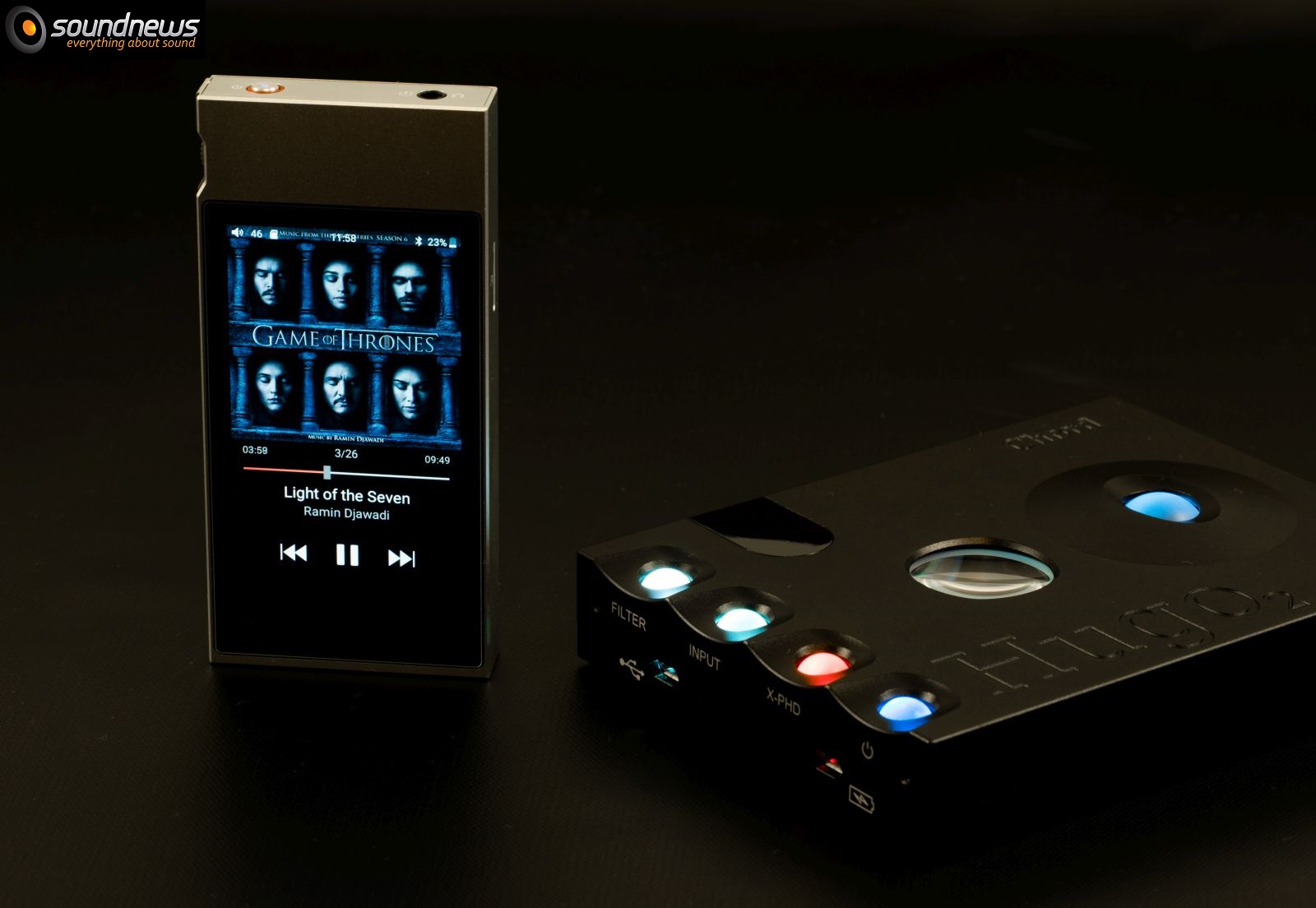
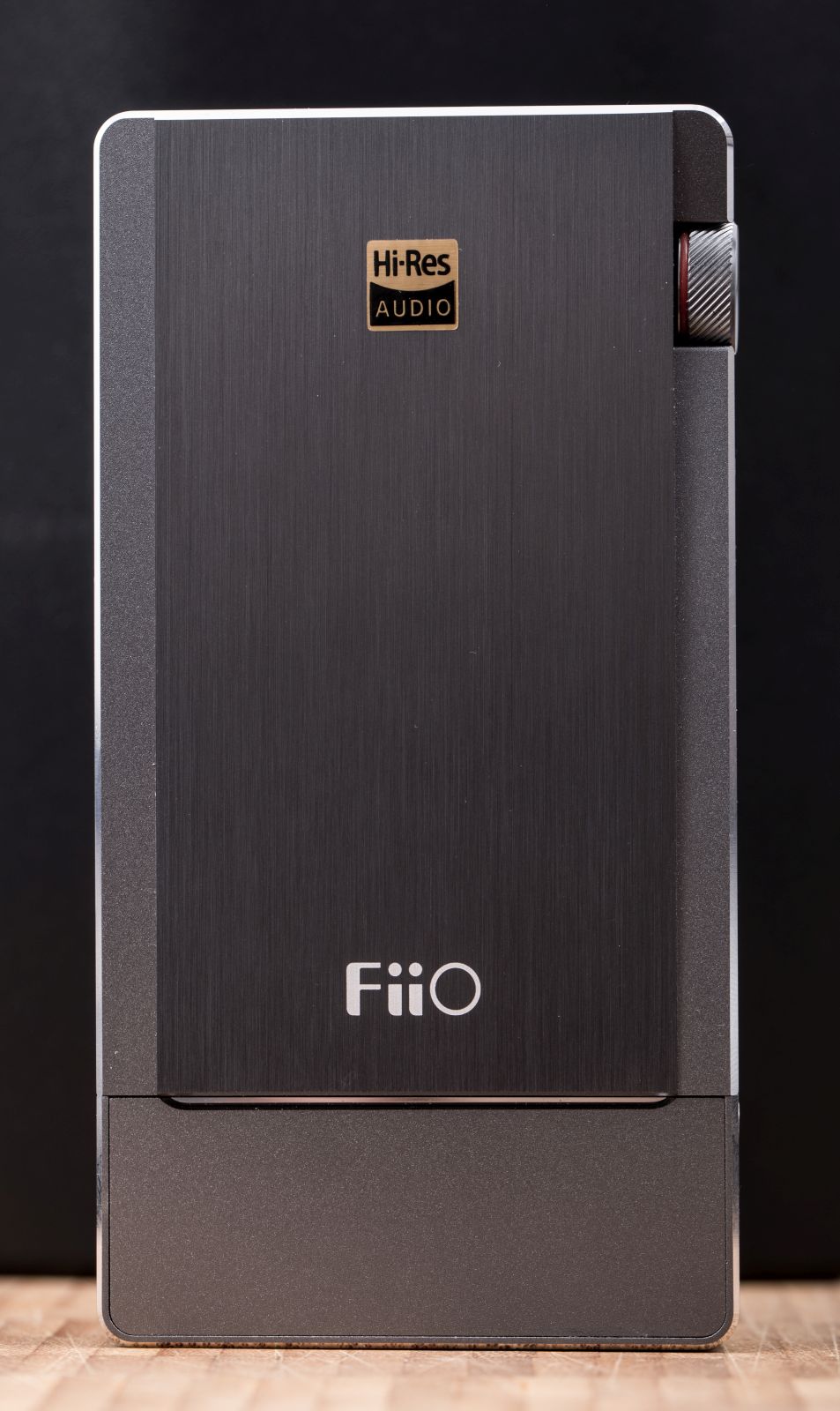
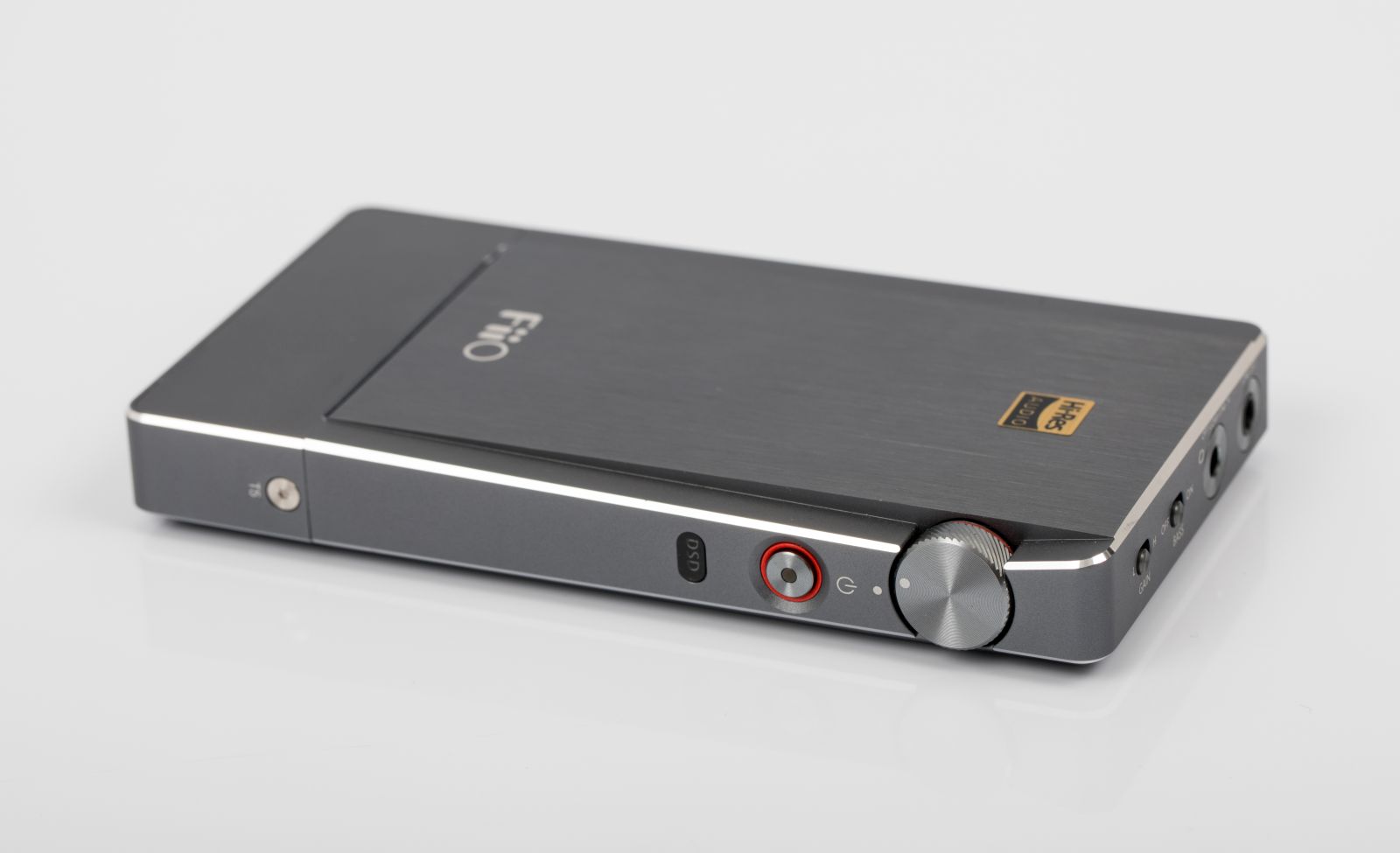
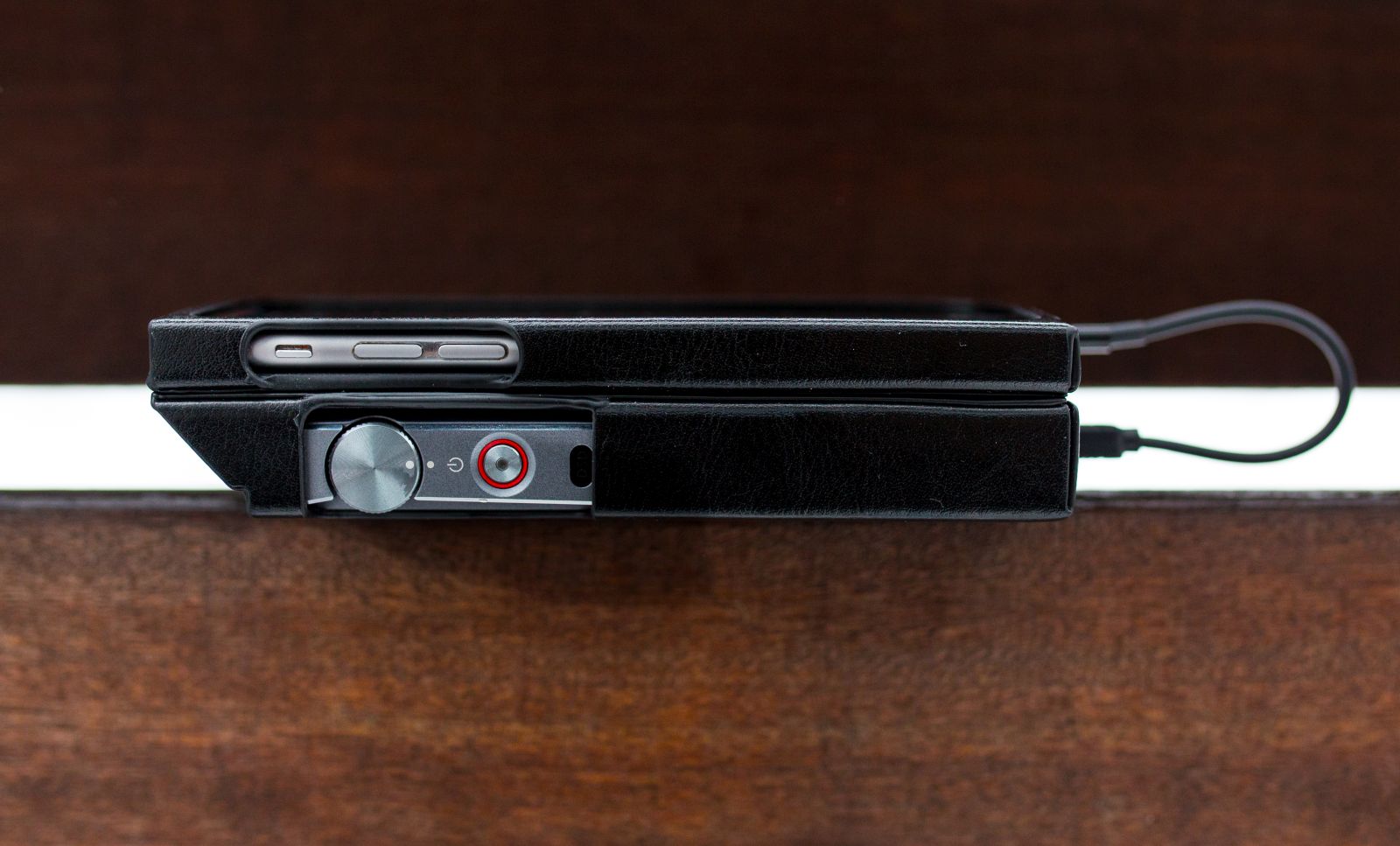
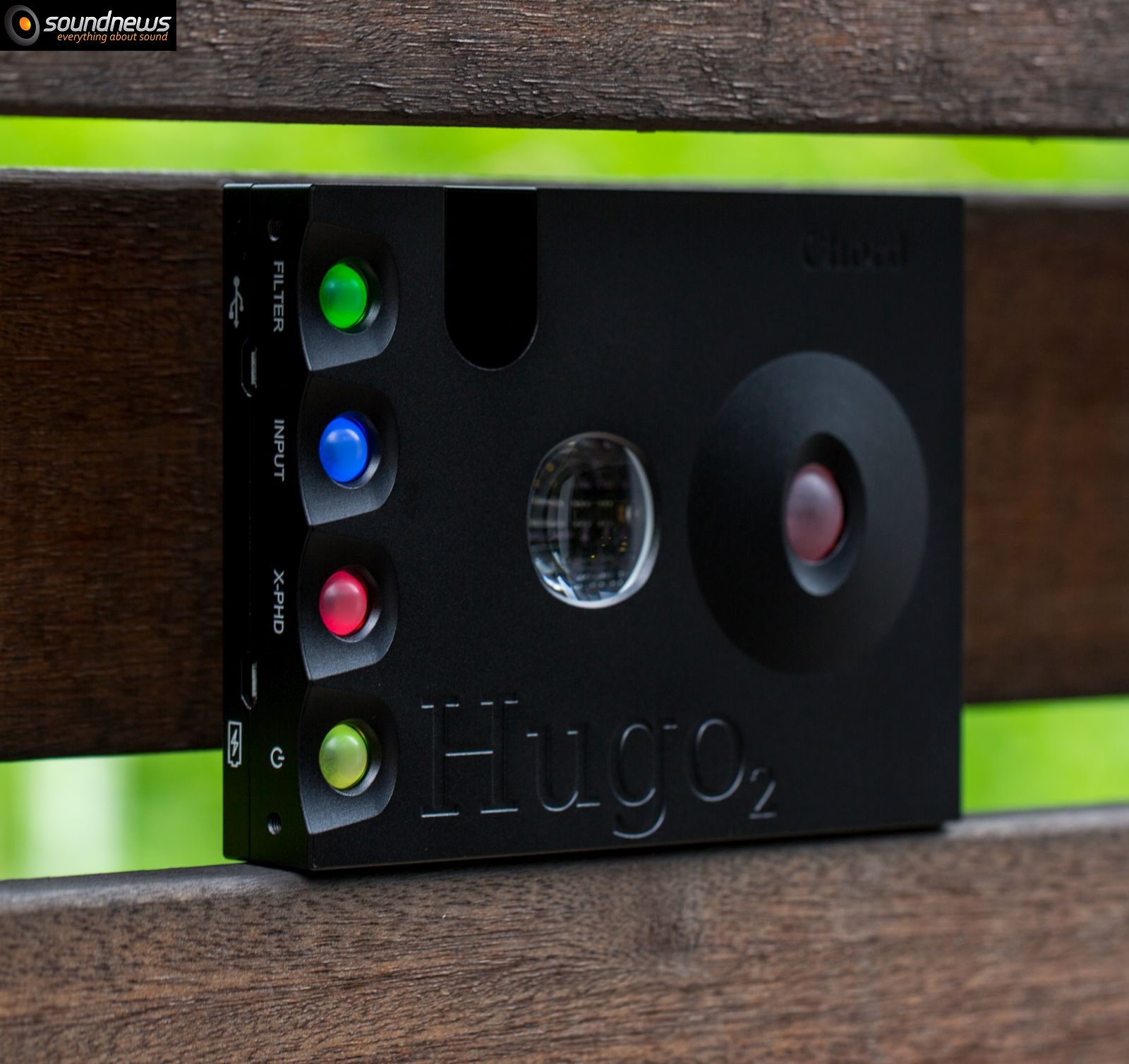
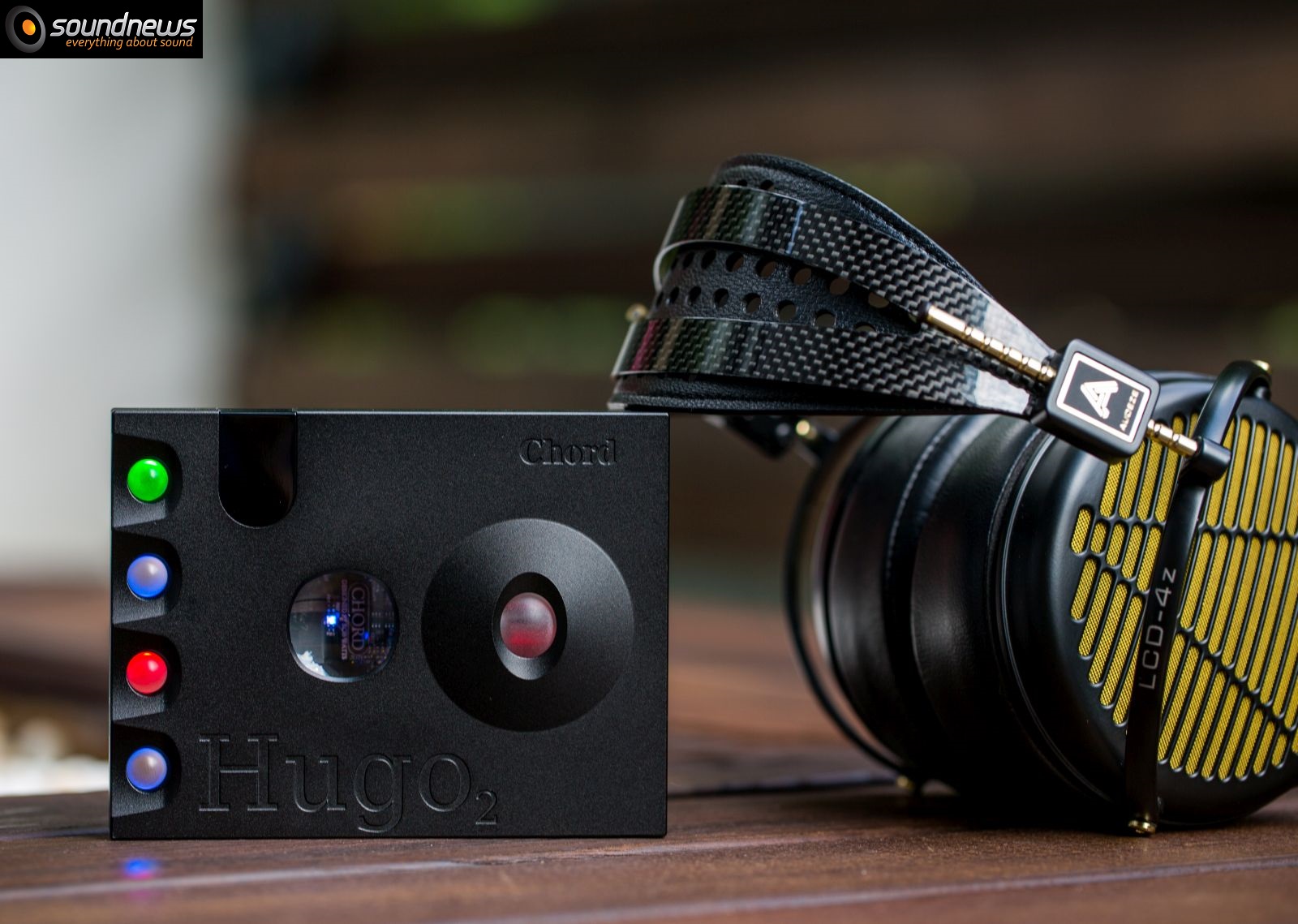
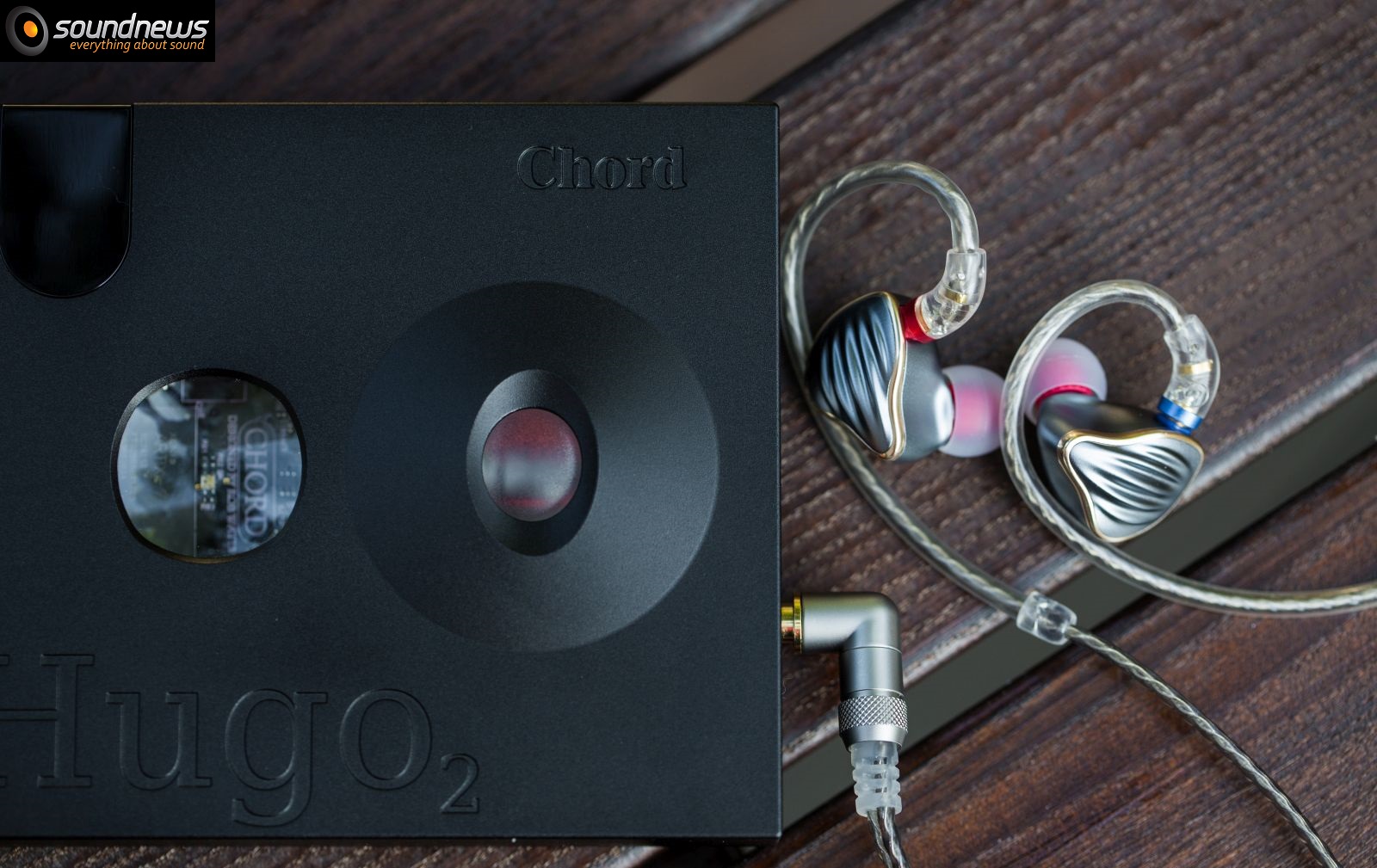
Chord Electronics Hugo2

7

Salut, ma numesc Hugo, imi place curcubeul si sunt un audioholic!

Salut Hugo, sunt Darku, imi plac berile nefiltrate si sunt si eu un a̶l̶c̶o̶o̶l̶i̶c̶ audioholic!

Patru ani in urma Rob Watts revolutiona piata DAC-urilor de mici dimensiuni introducand performantul DAC si amplificator de casti Chord Hugo.

Pana la acea vreme era de neconceput ca un DAC cat palma sa detroneze DAC-uri grele la propriu si la figurat. Le fel ca marea majoritate, si noi am fost impresionati de performanta micului Hugo, despre care am scris pe larg intr-o recenzie dedicata aici.

De-a lungul anilor, incet dar sigur Watts si-a cizelat propriul design introducand recent succesorul pe nume Hugo2.

Fata de prima generatie, Hugo2 vine cu multe schimbari notabile, majoritatea insa tin de performata, schimbarile estetice fiind destul de mici.

Design & Calitatea constructiei

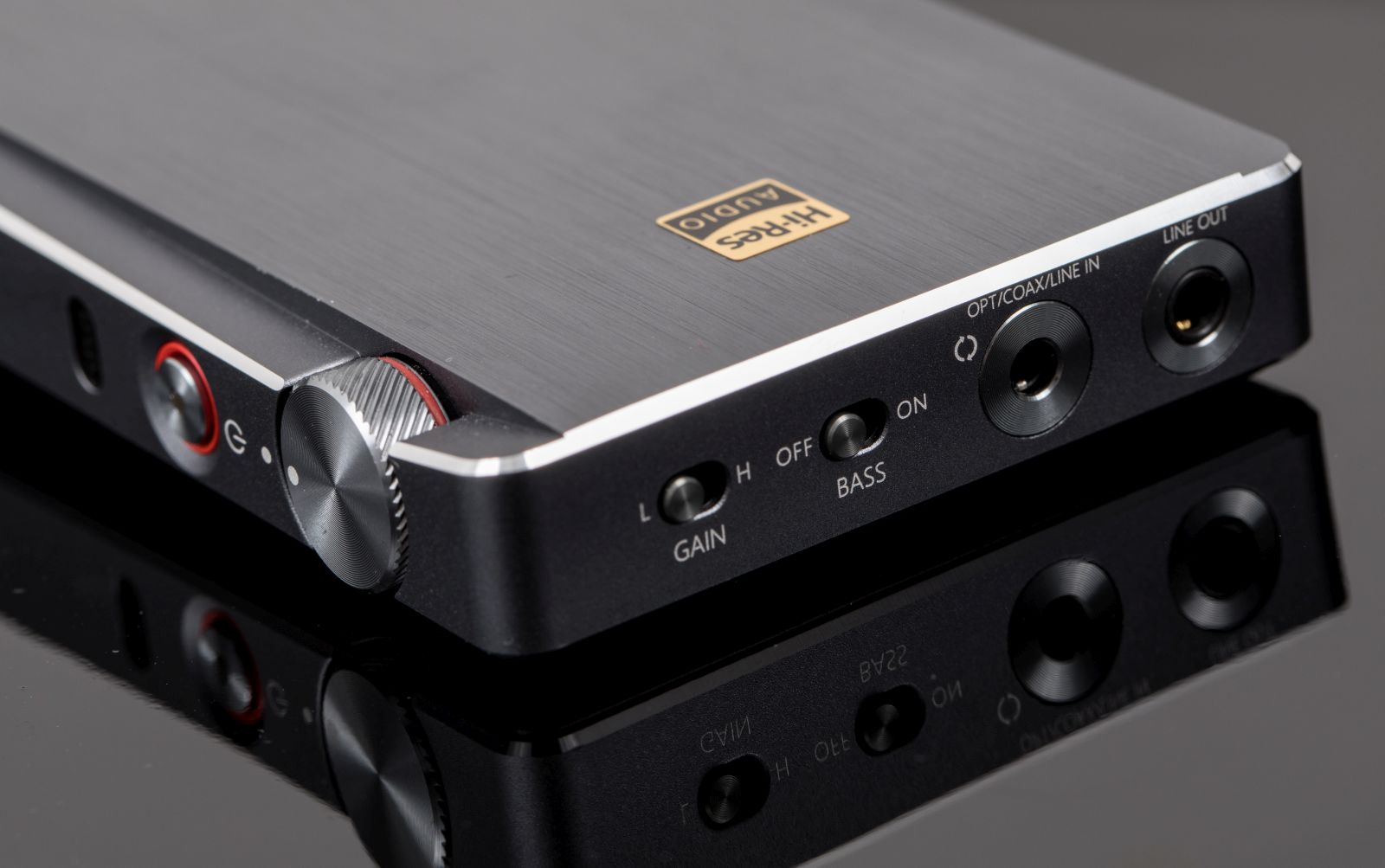
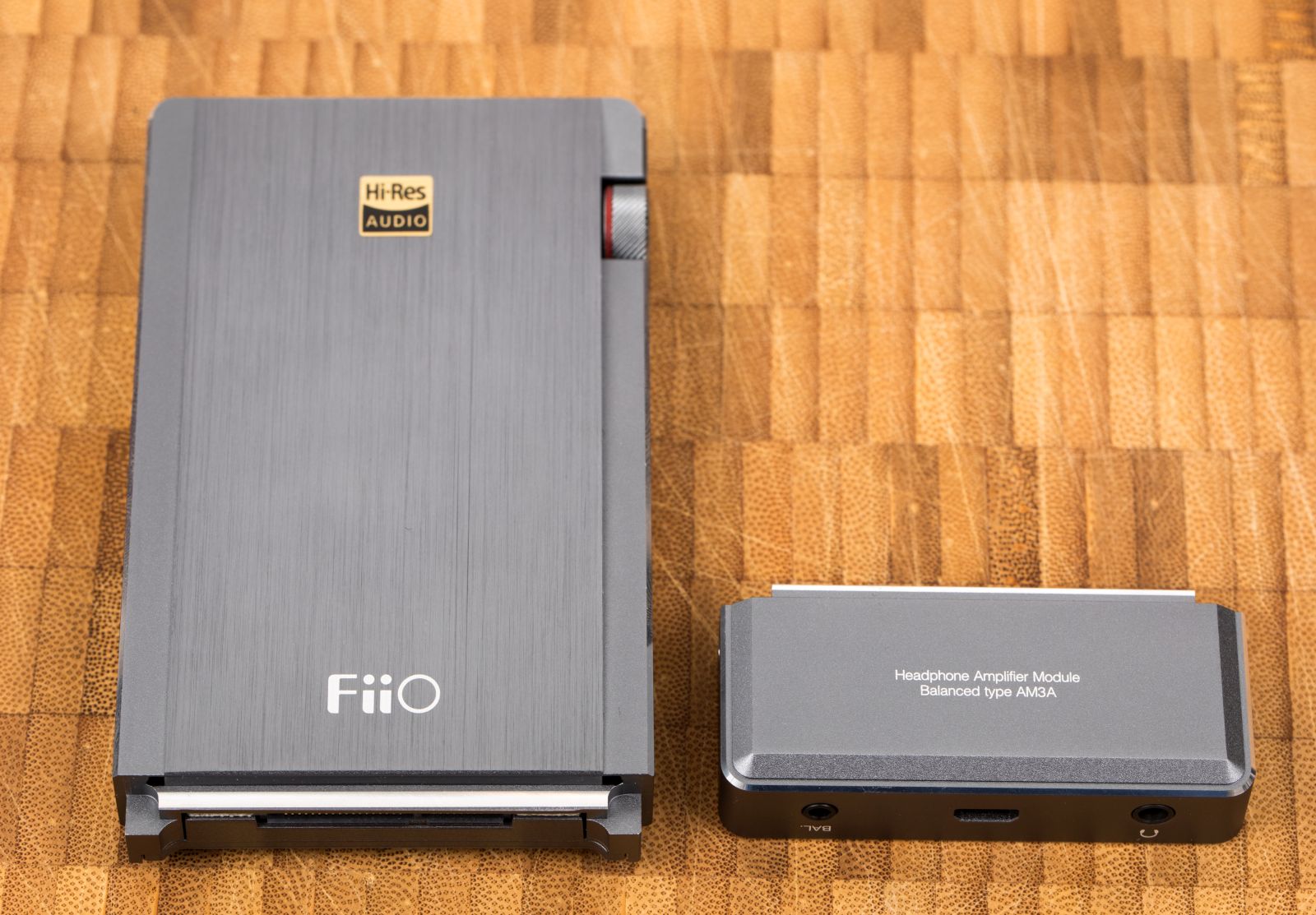
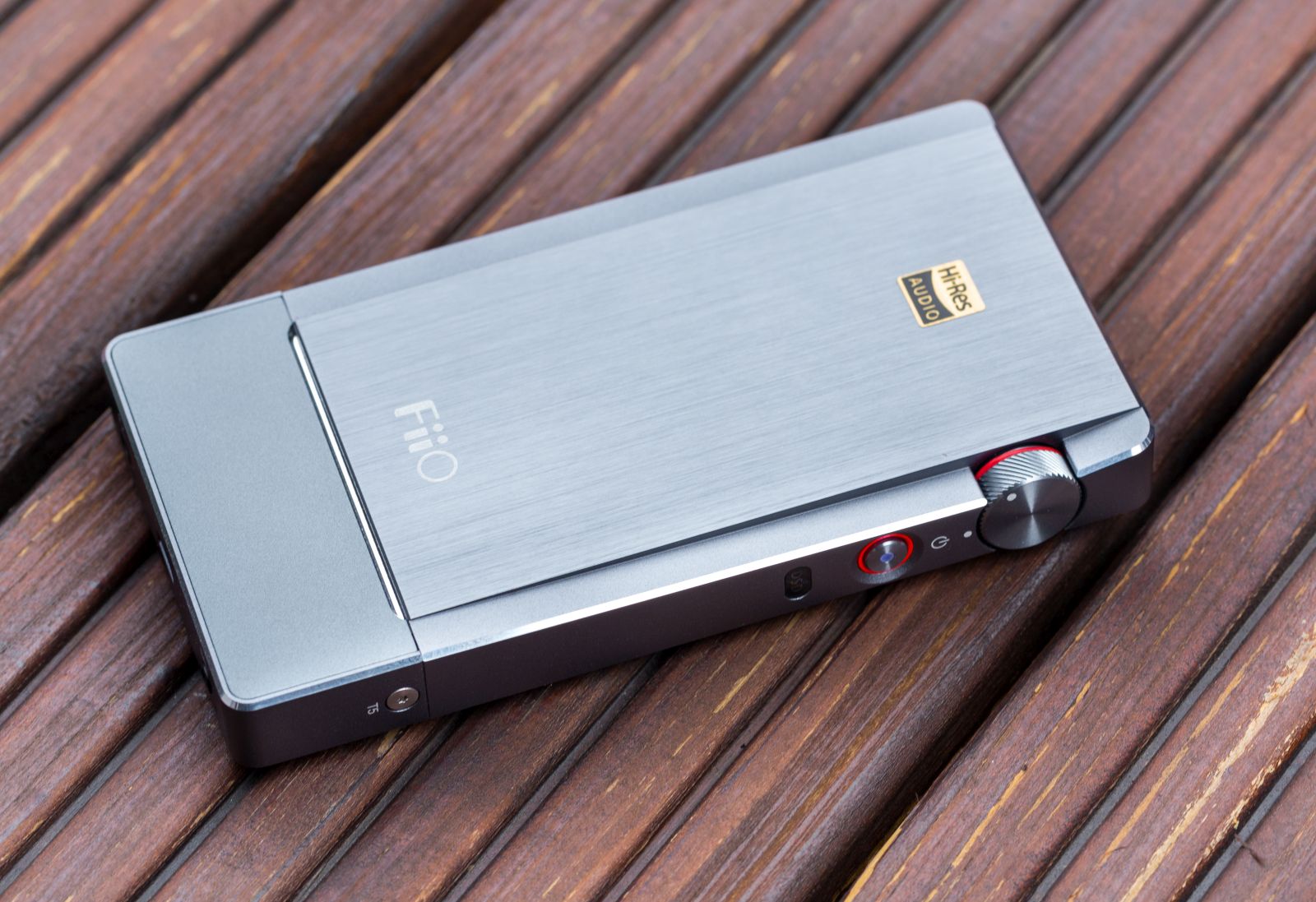
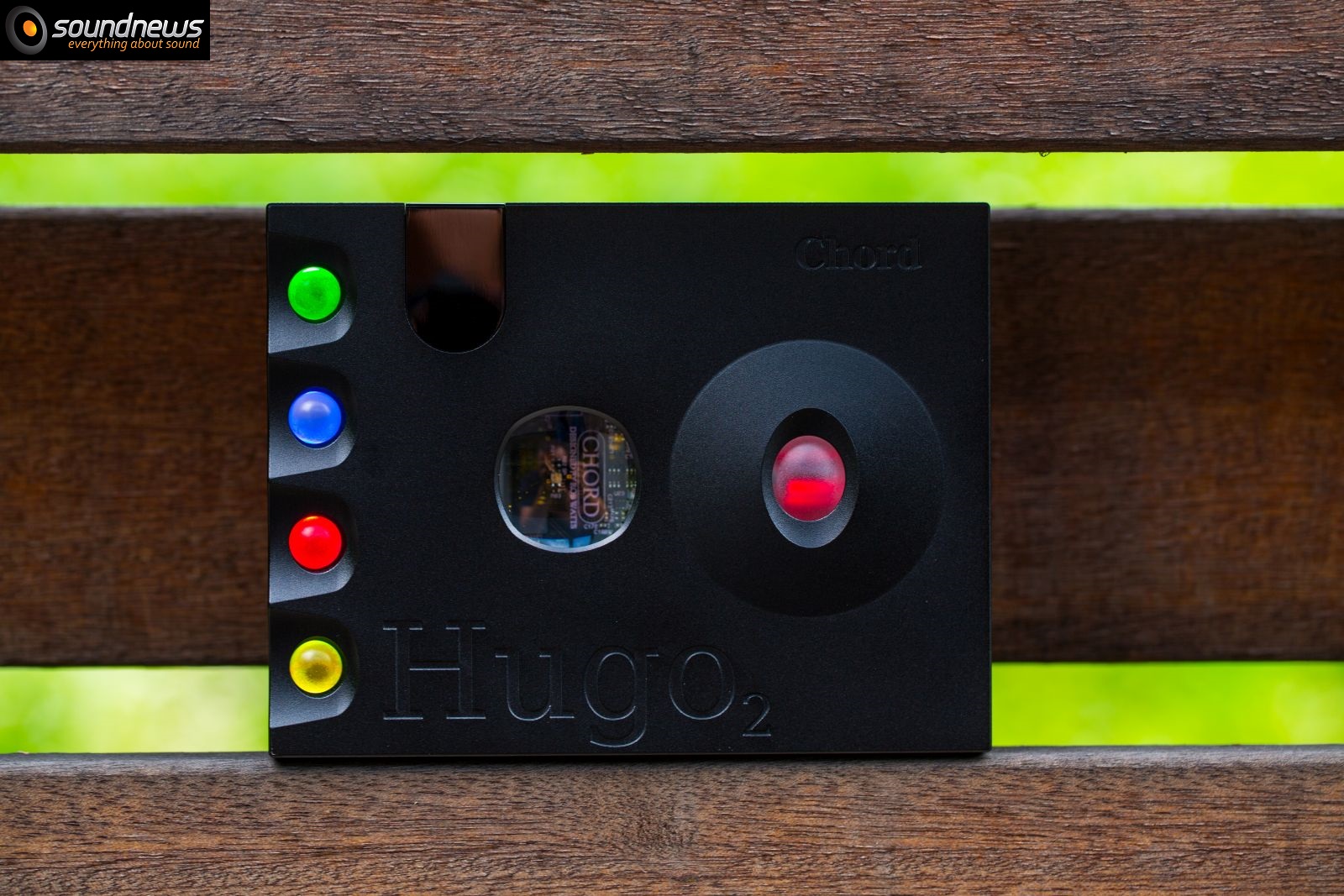
Ca si prima generatie Hugo, noul aparat este creat in totalitatea dintr-un bloc de alumiuniu avand forma unei caramizi.

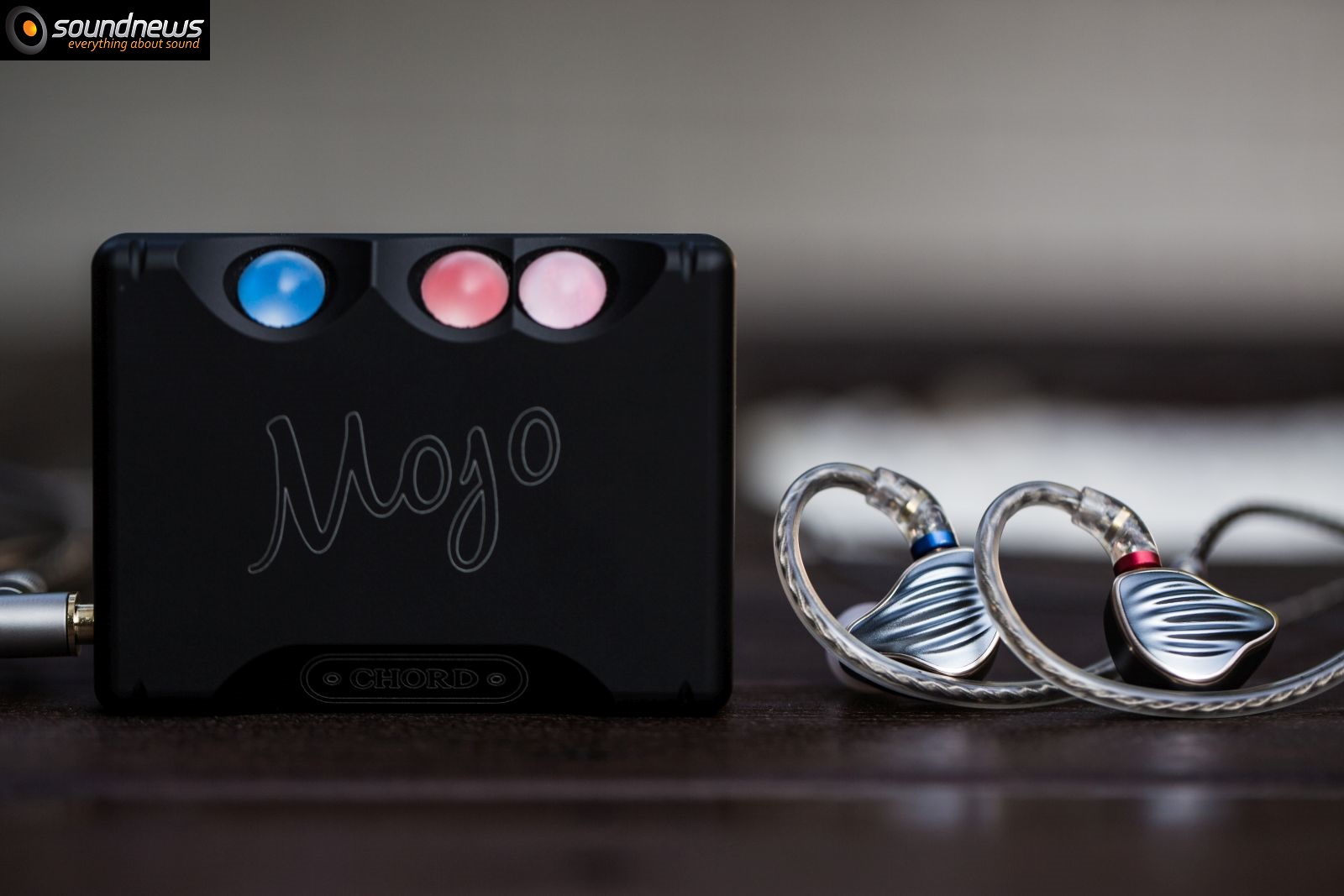
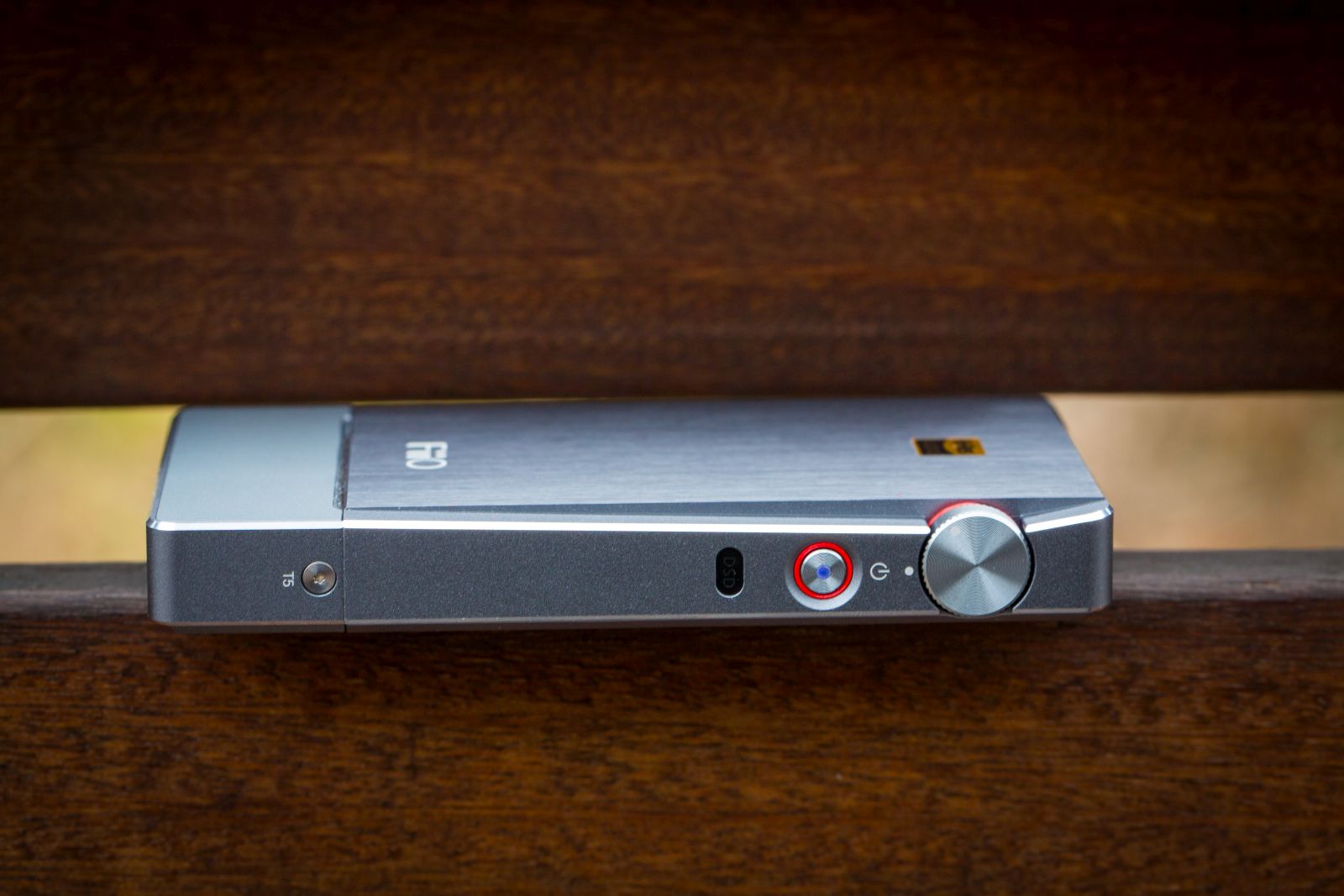
Nu s-a renuntat la curcubeul proiectat pe perete vazut seara tarziu, insa m-am bucurat enorm sa descoper butonul “DIM” de pe telecomanda, multumesc Rob, rugaciunile mi-au fost ascultate.

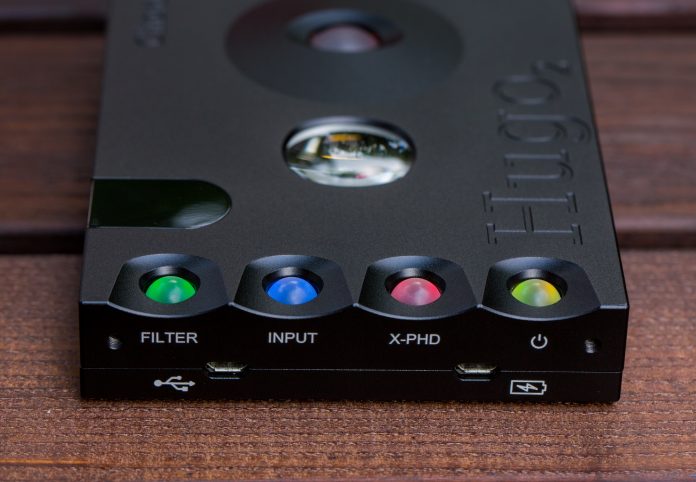
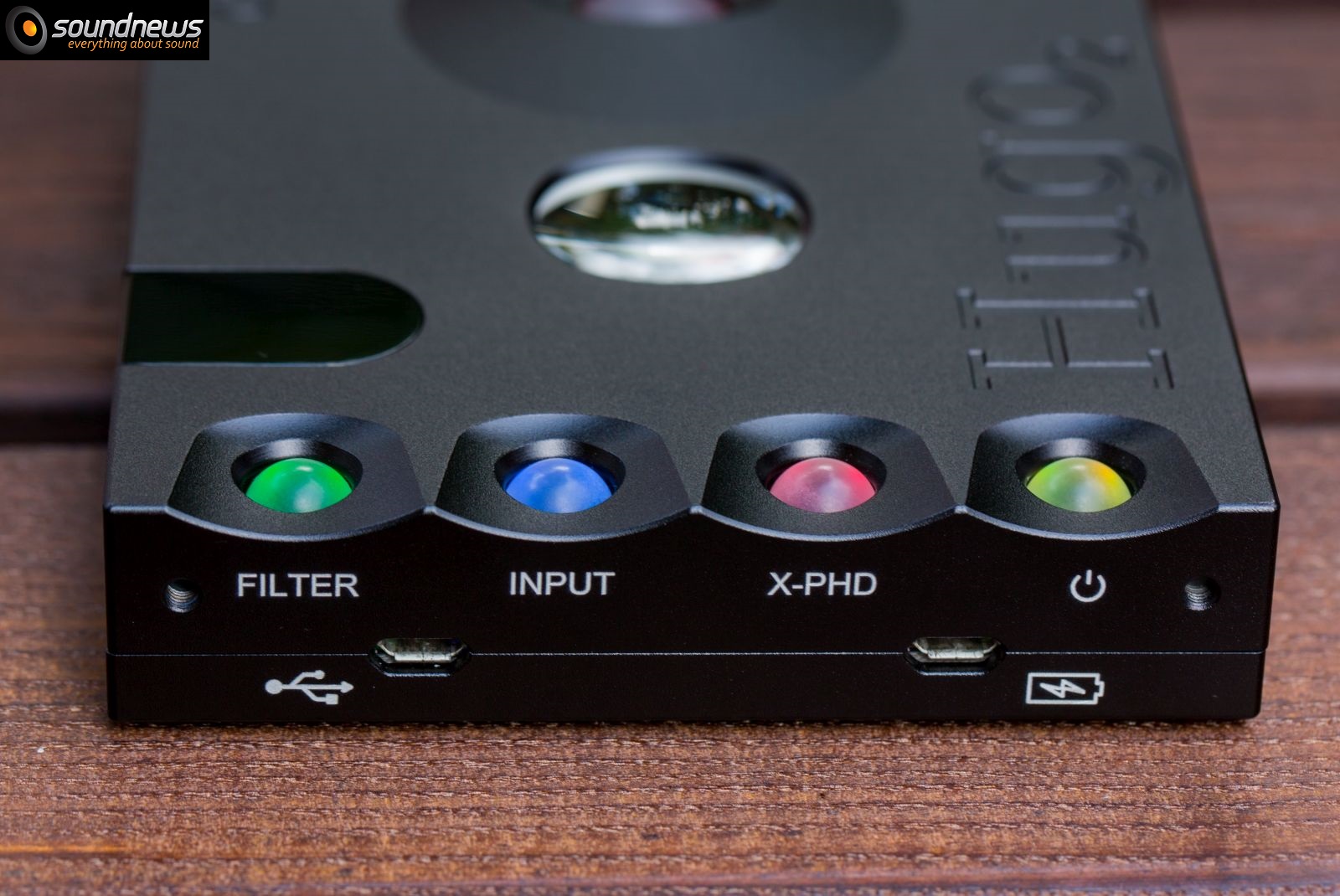
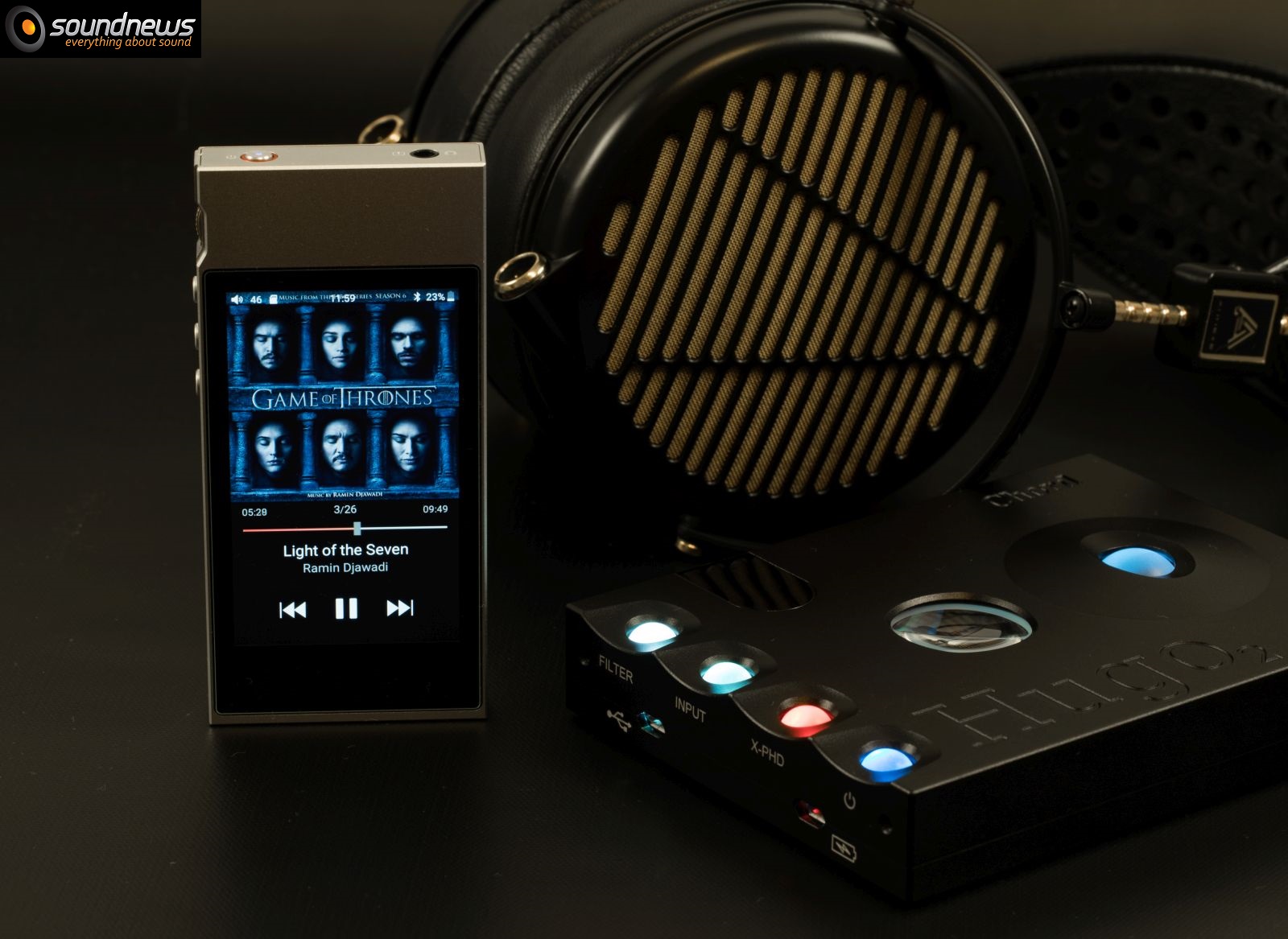
La redarea unei melodii, fiecare culoare a bilutelor de silicon indica de fapt parametri precum ar fi: bitrate-ul, daca e un fisier PCM sau DSD, daca este activ un filtru digital sau daca crossfeed-ul este pornit, chiar si rotita de volum isi schimba culoarea la cresterea/descresterea volumului.

Sub Capota

DAC-ul primei generatii Hugo folosea o putere de procesare de 26.000 taps datorita FPGA-ului Xilinx Spartan 6 programat de catre inginerii Chord Electronics. Noul Hugo2 ridica stacheta pana la 49.152 taps prin utilizarea celui mai nou chipset FPGA Xilinx Artix 7.

La momentul actual din tot portofoliul Chord Electronics doar DAC-ul high-end Chord Dave la pretul de 10.750 EUR ofera o putere de procesare superioara de 164.000 taps.

Amplificarea de casti a crescut pana la 1050 mW in 8 ohmi fata de 720 mW a primei generatii. A scazut drastic distoriunea armonica si astfel a crescut si SNR-ul de la 120 la 126 dB. De data aceasta la iesirea de linie si la amplificarea de casti se foloseste un etaj final de amplificare discret ce functioneaza mereu in clasa “A” capabil de pana la 5V Rms putere.

Aparatul stie sa redea nativ fisiere PCM pana la 32 bit/768 kHz cat si DSD512 (DSD x8) pe intrarea USB.
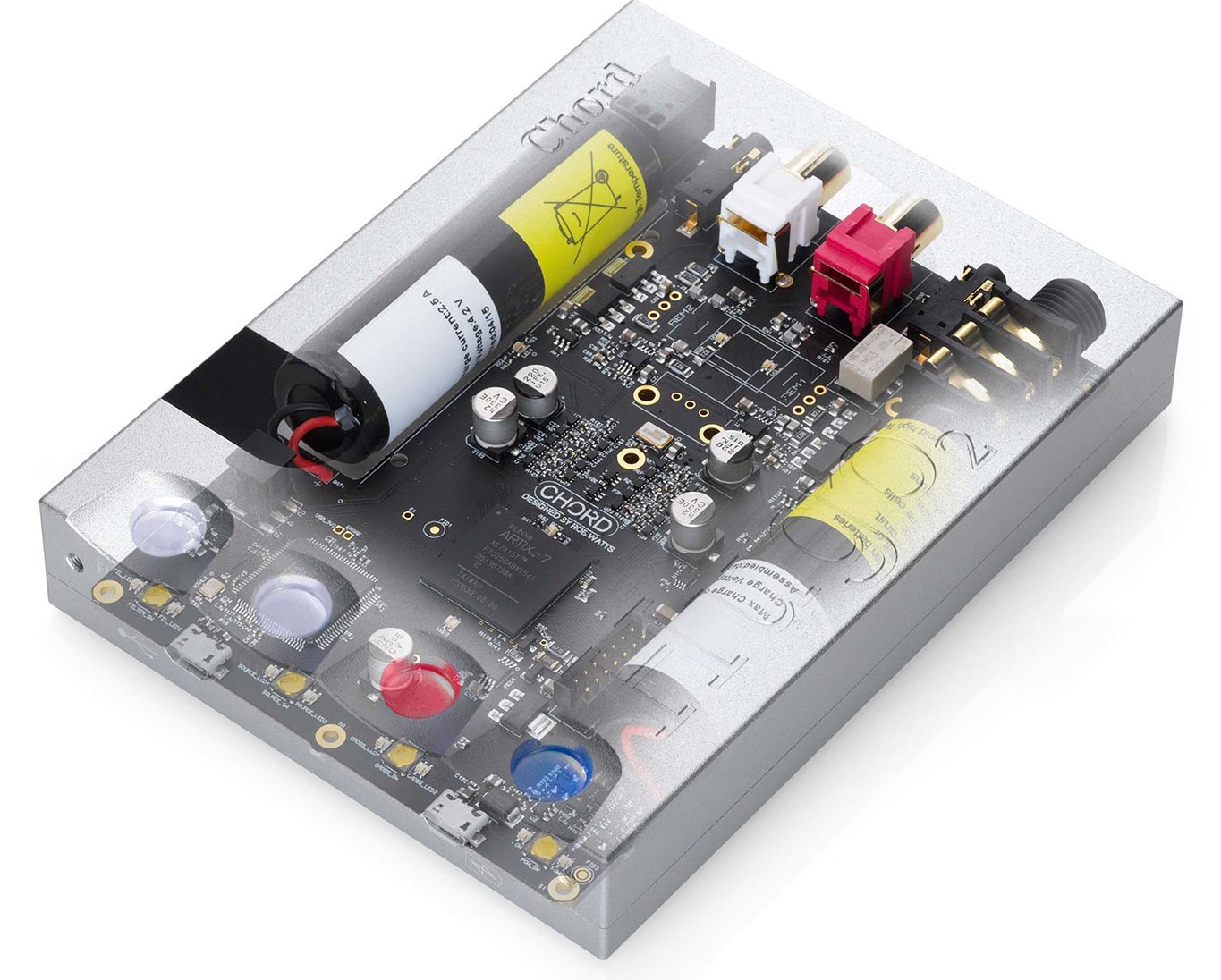
Hugo2 are 4 intrari digitale: microUSB, coaxial (pana la 32bit/384 kHz), optic (pana la 24bit/192 kHz) si Bluetooth prin Apt-X (pana la 16 bit/48 kHz) si 3 iesiri analog: de casti 3.5mm, de casti de 6.35 mm si o iesire de linie RCA.

Bateriile interne a lui Hugo2 au capacitatea de 2600 mAh si ofera o autonomie de aproximativ 7 ore la un volum mediu.

In cutie se gasesc o multime de accesorii precum: cablu microUSB, cablul microUSB catre microUSB OTG pentru a-l conecta la un smartphone, incarcatorul, cablul optic, cablul coaxial si o telecomanda simpla dar inteligenta.

Pe langa redarea nativa si directa a fisierelor PCM si DSD, producatorul ofera si 4 filtre digitale: “ultimate reference” adica semnalul pur si nealterat, “High frequency roll-off” pentru a taia putin din extremitatile de sus, “Warm” – pentru a induce o coloratura placuta auditiilor si “Warmer HF roll-off” – o combiantie a ultimelor doua filtre pentru un sunet si mai cald si pentru unii mai placut. In majoritatea testelor noastre am folosit primul filtru.

Daca se doreste utilizarea lui Hugo2 pe casti avem la dispozitie 4 filtre digitale de Crossfeed pentru a imita sunetul boxelor si pentru a mai reduce oboseala aurala. Mi-au placut nespus ultimele doua setari ale crossfeed-ului pe inregistrari mai vechi care au fost masterizate exclusiv pentru ascultatul in boxe. Exemple de astfel de inregistrari sunt multe: Elvis Presley, The Beatles, The Doors, Black Sabbath, Led Zeppelin, Deep Purple si lista continua.

V-am starnit curiozitatea sau inca nu?

Sa trecem la partea cea mai interesanta.
Performanta Audio

In primul rand am introdus Hugo2 in sistemul stereo format din DAC-ul Matrix X-Sabre Pro, amplificatorul integrat Cambridge Audio Azur 851A si boxele Audio Physic Tempo Plus. Ulterior am comparat micul Hugo2 cu X-Sabre Pro.

Prima impresie lasata este ca am de-a face cu un sunet extrem de rapid, ce are o lovitura puternica in piept si o precizie de invidiat. Mi-am amintit imediat de prestatia primei generatii Hugo – acel sunet vioi care agita tranzientii rapizi si care tine pasul cu orice urcus dinamic. Hugo2 mai are o fluiditate impresionanta care cumva leaga notele intr-un fel natural si placut.

Daca nu ati mai avut contact cu DAC-urile acestui producator englez, senzatia de jucarie noua este foarte evidenta iar in primele zile te simti ca in luna de miere. Insa dupa cateva zile de comparatie cu cu alte DAC-uri sau amplificatoare de casti, situatia nu mai arata chiar atat de roz.

Ascultand Rodrigo y Gabriela – Hanuman, Hugo2 a fost de departe cel mai impresionant DAC, tempo-ul energic si loviturile rapide in timpane sunt punctele forte a lui Hugo2. Pe de alta parte sunetul a devenit mai plat si scena mai putin adanca, basul se retragea mai rapid decat cat mi-as fi dorit. Retragerea notelor este prea rapida si desi tobele au o lovitura impresionanta ele se disipa prea rapid, artificial intr-un fel.
Prin comparatie X-Sabre Pro are un sub-bas mai prezent, redat pe mai multe substraturi care are si o scena mai larga si mai adanca.

Pe Hugo2 pe aceasta piesa am simtit un contur extraordinar al notelor, pe cand pe X-Sabre Pro textura notelor a iesit mai mult in evidenta, avand o greutatea ceva mai mare.

Dupa ce am trecut pe Nils Lofgren – Keith Don’t Go, Hugo2 m-a impresionat prin acuratetea si aerisirea buna a notelor dar din nou, scena putin gatuita tragea in jos prestatia aproape impecabila.

Extragerea detaliilor este la un nivel foarte ridicat si intr-adevar fiecare microdetaliu este o joaca pentru Hugo2 redand muzica cu o acuratete uluitoare.
Din pacate acuratetea si accentul mare pus pe contur si mai putin pe textura face ca prestatia sa fie putin mai artificiala. Oprirea brusca a vibratiei chitarilor si a tobelor diminueaza magia pe care o stiam.

Sunetul in general da senzatia de agitatie, viteza si precizie, nu face parte din sursele audio calme si relaxante, cu siguranta face parte din tabara opusa.

Ascultand cvartetul lui Dave Brubeck – Take Five a fost iarasi o prestatie revelatorie. Hugo2 mereu mi-a demonstrat ca este capabil de o precizie chirurgicala punand accent pe micile detalii peste care nu poti trece.

Din acest punct de vedere X-Sabre Pro nu a avut aceeasi dinamica exploziva si vioaie, pe de alta parte cel din urma a sunat mai larg si mai adanc oferind un dram de naturalete pe care nu l-am auzit pe Hugo2.

Per total Hugo2 nu suna deloc artificial sau uscat, mai degraba l-as cataloga ca o sursa audio foarte liniara si sincera. Hugo2 nu este deloc iertator si pune in evidenta orice imperfectiune a piesei in cauza.

De curiozitate am incercat cateva piese Led Zeppelin si The Doors…masteringul prost, echipamentele de inregistrare de la acea vreme si-au spus cuvantul, granulatia nu a putut fi mascata iar prestatia nu a fost una foarte placuta. Pe material de proasta calitate va suna neimpresionant, punand accentul exact pe defectele piesei.

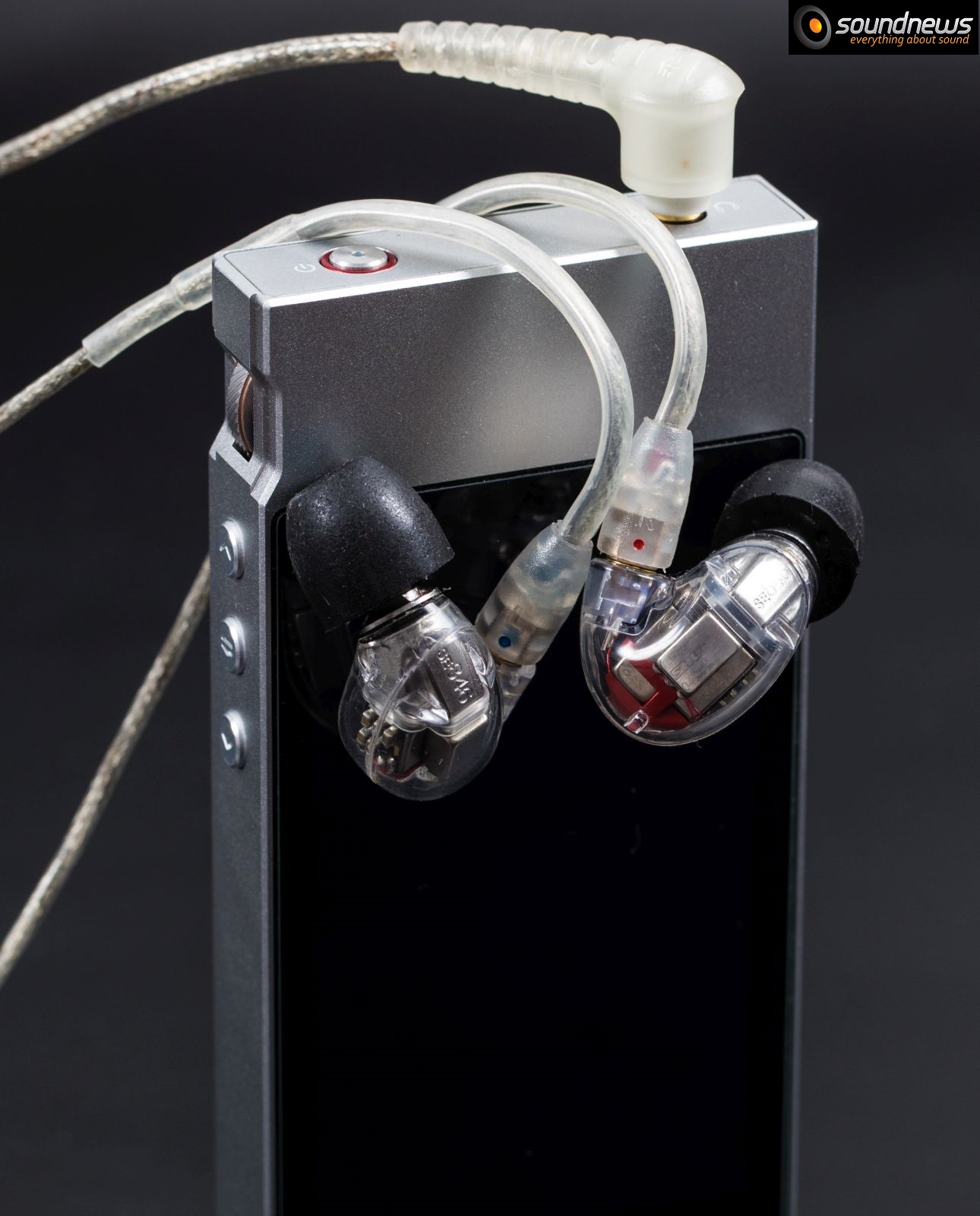
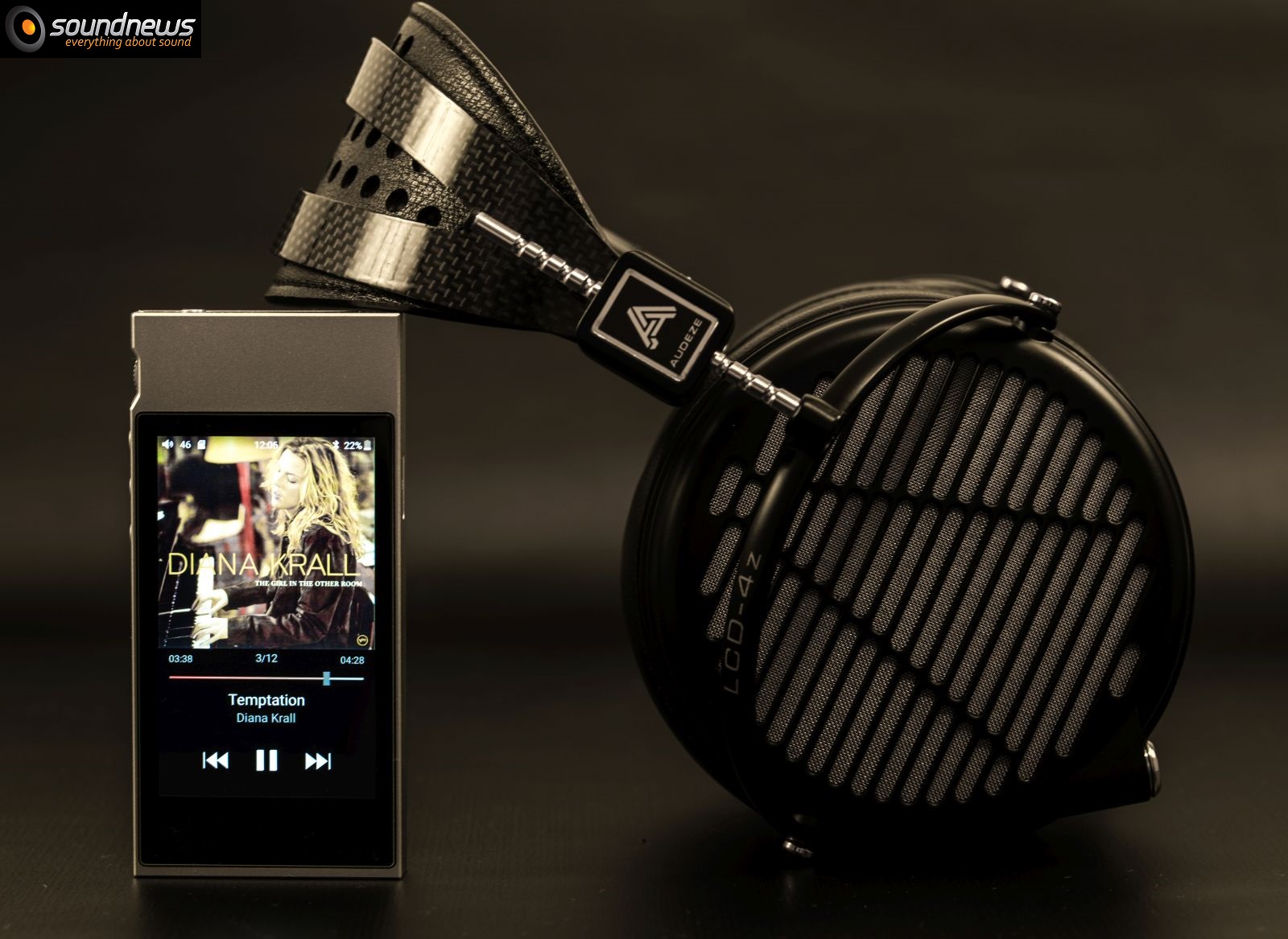
Cateva zile mai tarziu am decis sa il folosesc in sistemul desktop de casti, l-am comparat in special cu X-Sabre Pro + HeadAmp Gilmore Lite MK2, cu Burson Play (varianta basic) si putin cu FiiO Q5. Castile folosite au fost: Audeze LCD-4Z, LCD-4, Sennheiser HD660S si castile in-ear hibride FiiO FH5.

Ei, cum sa va spun… a aparut soarele pe cer si un zambet tampit pe fata.

Din punctul meu de vedere doar in modul DAC si amplificator de casti Hugo2 straluceste cu adevarat!

Am ramas mut pe orice melodie si pe orice stil muzical, posibil ca amplificarea in clasa “A” a adus un strop de naturalete si a largit simtitor scena gatuita pe iesirea de linie RCA.

In modul DAC/Amp mi-a placut si a detronat cu mare usurinta Burson Play, FiiO Q5 si schimba croseuri cu X-Sabre Pro cuplat la Gilmore Lite Mk2.
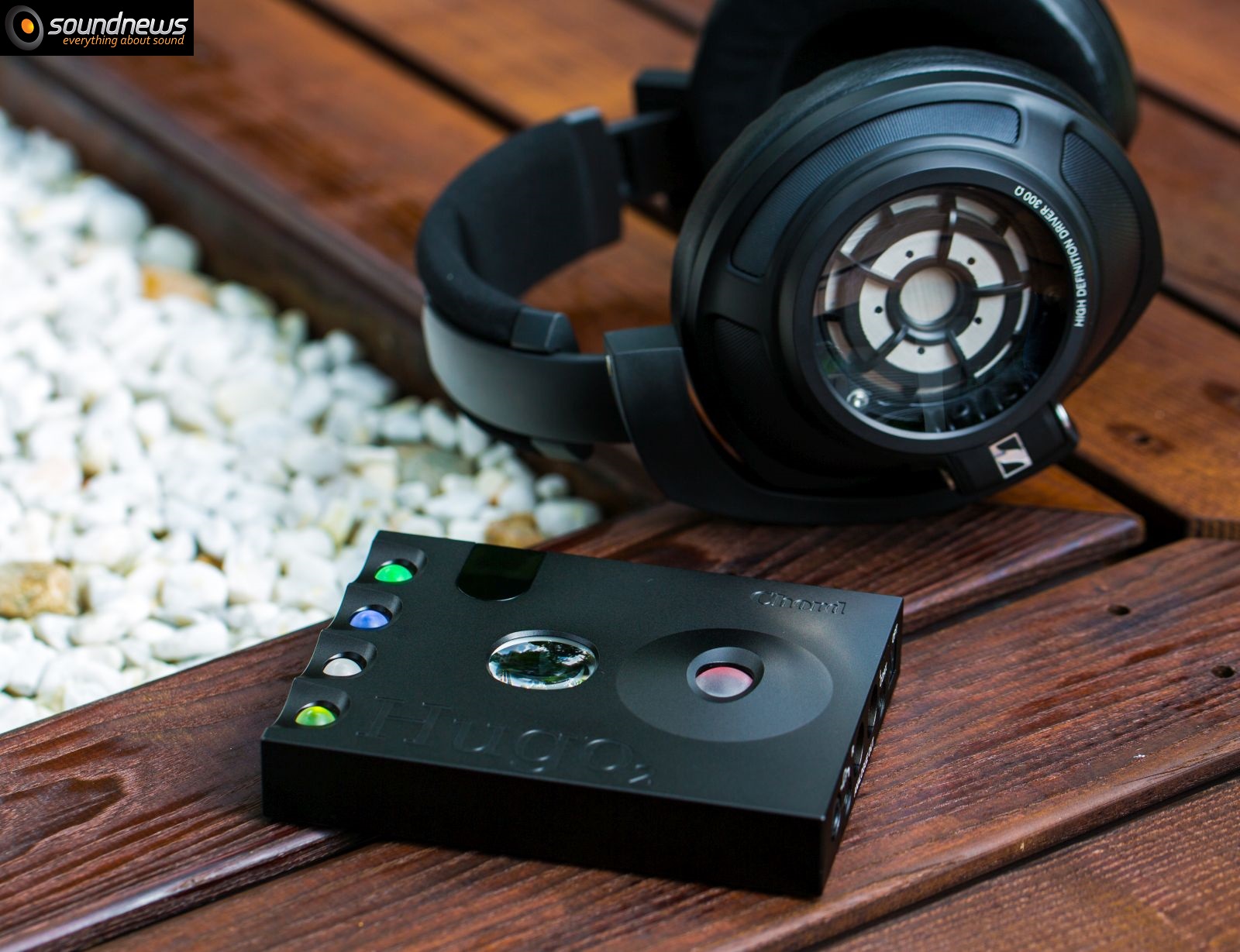
Mentionez ca amplificatorul de casti intern este foarte capabil, mi-a condus toate castile din acest test cu exceptia Audeze LCD-4 care deja stim ca au nevoie de un monstru de amplificator pentru a fi pilotate, nu m-a surprins acest fapt.

In shimb LCD-4Z si HD660S au sunat pline de viata cu multa rezerva de putere, avand si un headroom impresionant.

Daca ascultam piese inregistrate la o calitate superioara zambetul aparea imediat pe fata, cum treceam pe inregistrari vechi pline de granulatie si his incepeam sa injur in limba lui Shakespeare…Hugo2 si pe casti este neiertator si va taxa orice melodie de calitate dubioasa.
Muzica moderna autohtona gen Carla’s Dreams a sunat din nou extrem de vioi si dinamic, lovind neincetat in timpane, alaturi de LCD-4Z au inceput chiar sa imi placa piesele acestei formatii.

Cam pe la sfarsitul maratonului avand castile pe urechi deja de cateva ore am simtit ceva ce simtisem doar pe Sennheiser HE-1: un puternic tiut in ambele urechi. Datorita nivelului foarte jos al distorsiunilor armonice am urcat involuntar volumul castilor la un nivel critic la care nu ascult in mod normal. La capitolul distorsiuni Hugo2 este campion si greu de egalat, lipsa practic totala a lor te face sa tot urci volumul, asa ca mare atentie la decibeli!

De curiozate l-am conectat folosind cablul OTG la un FiiO M7 si la un smarphone din care am lansat aplicatia Tidal, combinatia a fost mega WOW, este de departe cea mai buna sursa de sunet mobila. Desi am ascultat o tona de playere si DAC-uri portabile, niciunul din ele nu se apropie de performanta lui Hugo2. Zambind ca un nebun si mergand pe jos pana la munca mi-am dat seama ca tin in mana cu siguranta cel mai capabil DAC/Amp portabil si probabil multi ani inainte asa si va ramane. Hugo2 e cu mult in fata oricarui player portabil de pe piata, indiferent de brand sau pret.
Concluzii

Hugo2 m-a impresionant nespus intr-un sistem desktop unde auditia in casti este prioritatea numarul unu. Poate cu usurinta surclasa sisteme grele formate din mai multe cutii si care pot fi si mai scumpe.

Va pilota orice casti dinamice si majoritatea castilor planar magnetice, nu are nici o urma de his pe iem-urile sensibile, e ceea ce trebuie pe casti.

Performanta DAC-ului este una de top si cu usurinta rivalizeaza prestatia DAC-urilor de peste 2000 EUR.

Intr-un sistem stereo unele chestii m-au deranjat precum scena inghesuita si mai putin adanca, cinelele care se opresc brusc si uscaciunea usoara a sunetului. insa toate aceste minusuri le-am cautat cu lupa, la o ascultare mai relaxata s-ar putea sa nu le observati, deoarece restul detaliilor acustice sunt executate excelent.
PRO:

  • Detaliu si transparenta de invidiat
  • Viteza si impact la cel mai inalt nivel
  • Raspuns liniar, fara gropi sau urcusuri
  • Amplificator de casti foarte potent
  • Includerea filtrelor digitale si a crossfeed-ului

CONTRA:

  • Mai putin impresionant pe boxe datorita scenei restranse
  • Unele sunete (cinele, clopote, tobe) pot suna artificial
  • Nerecomandat daltonistilor

Echipamente folosite pentru recenzie:

  • DAC-uri: Chord Hugo2, Matrix X-Sabre Pro + X-SPDIF2, FiiO Q5
  • Amplificatoare casti: HeadAmp Gilmore Lite MK2, Burson Play
  • Amplificator integrat: Cambridge Audio Azur 851A
  • Boxe: Audio Physic Tempo Plus, KEF LS50W
  • Casti: Audeze LCD-4, LCD-4Z, Sennheiser HD660S, FiiO FH5

FiiO FH5 – The Best so far

10

FiiO never ceases to amaze me, few months ago I was testing their new flagship IEM: the F9, a few months later their new F9 PRO flagship and now they done it again with the FH5. I would not be shocked if at this very moment they are already tinkering with a new flagship IEM, FiiO is on fire and I like that.

FH5 sets apart from the other IEMs they done in the past, from the moment you unpack them you start to understand they are surely in the big boy category with this one. Unboxing experience was like a much higher priced IEM, I’m glad they are making time into thinking better ways to carefully pack a premium product.

Package Contents

FH5 comes in a nice and quality packaging that actually surprised me a bit; especially the 11 pairs of ear-tips put in a foam sheet that shows exactly how each category of ear-tips will sound, so you no longer need to guess if this enhances the bass, the voices or the treble.

In total 12 pairs of ear tips are supplied with them, 3 sizes for 4 different categories of ear tips as follows:

Balanced ear tips (standard black silicone ones), Vocal ear tips (transparent with red sound tube), Memory foam ear tips (black foam ones) and the bass ear tips (black silicone with red sound tube).

I do prefer the Memory foam ones as they isolate better and sound most neutral to me with just a slight boost in the lows.

In the package can be also found a big transparent waterproof case and a fabric pouch that I use most of the time when I travel because it’s smaller and easier to carry around.

Technology inside the FH5

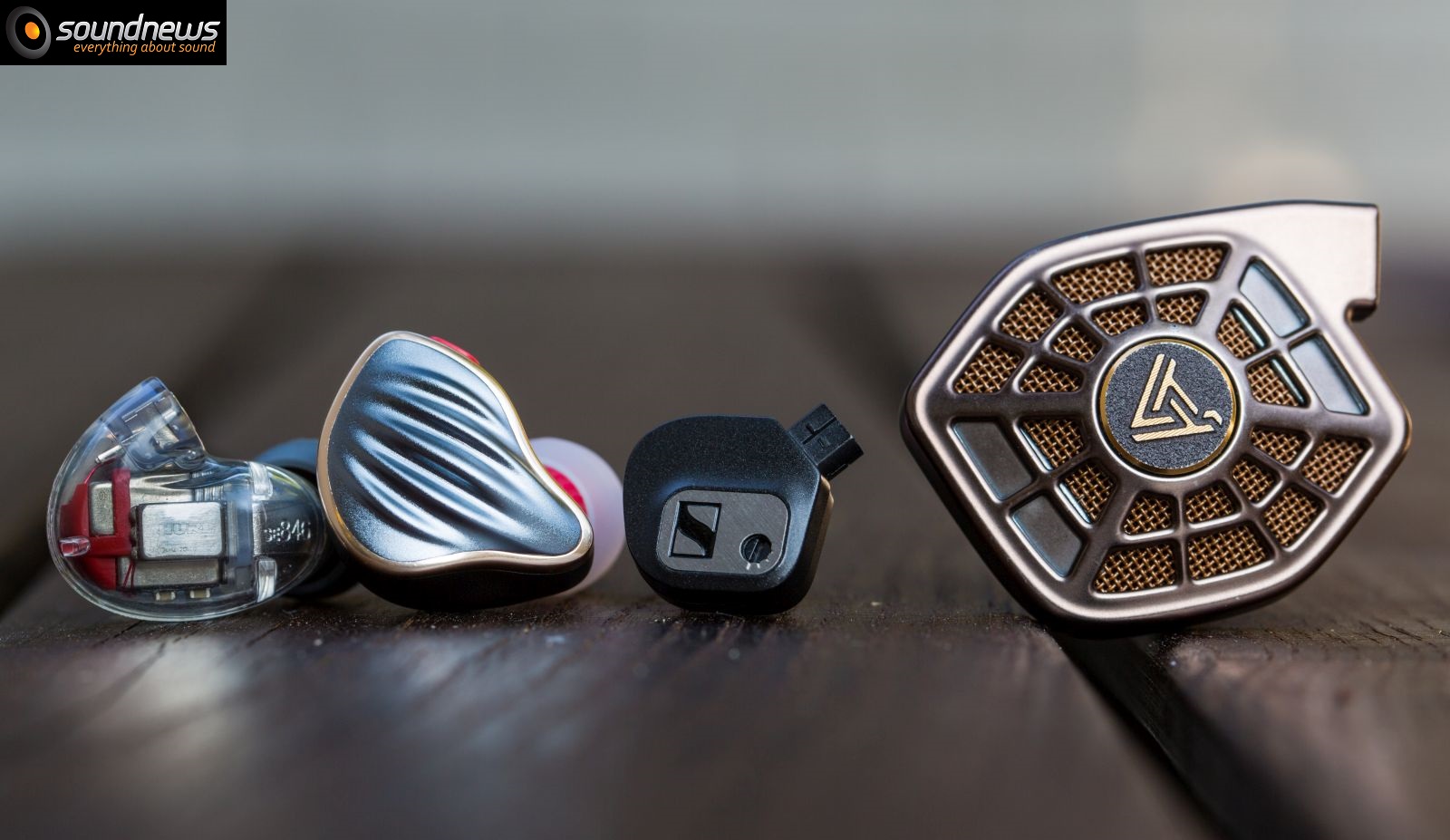
As with later FiiO IEMs, FH5 is entirely made by the FiiO engineers that many times already showed us that they can create quality in-ear monitors such as F9, F9 PRO and FH1.

FH5 is again a hybrid design that uses 3 balanced armatures to render mids and treble and a powerful dynamic driver to take care of the bass.

Now here’s the catch: the dynamic driver of FH5 has the same size as the FH1 of 10 mm that was notorious for really good bass response. By Comparison F9 series have a 9.2 mm dynamic driver that did well with bass but not great in some situations.

To make bass even deeper and more controlled besides the big 10 mm drivers they also developed what they are calling S.TURBO technology that mimics the work of a dedicated subwoofer with a turbine inspired design that really makes wonders with the bass.

Three bore design (one bore for bass, one for mids and one for treble) is also a novelty for FiiO that is being used in high-end IEMs around the globe.

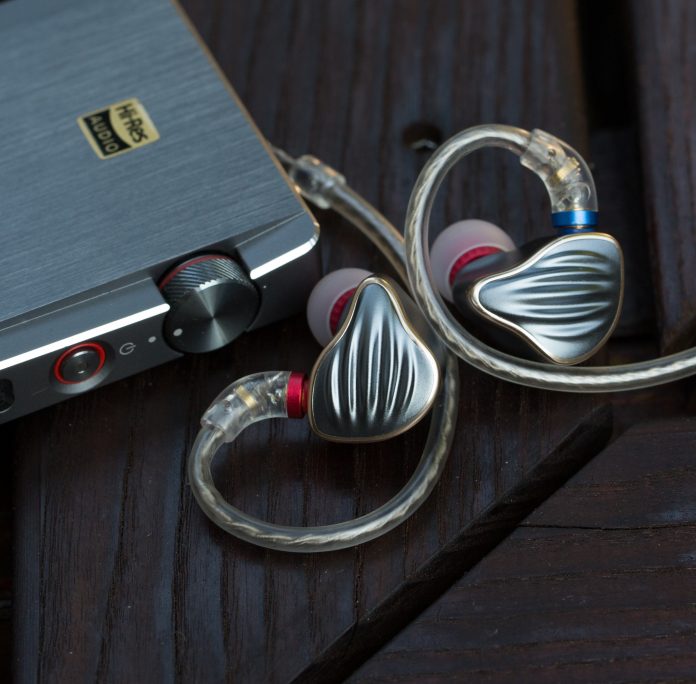
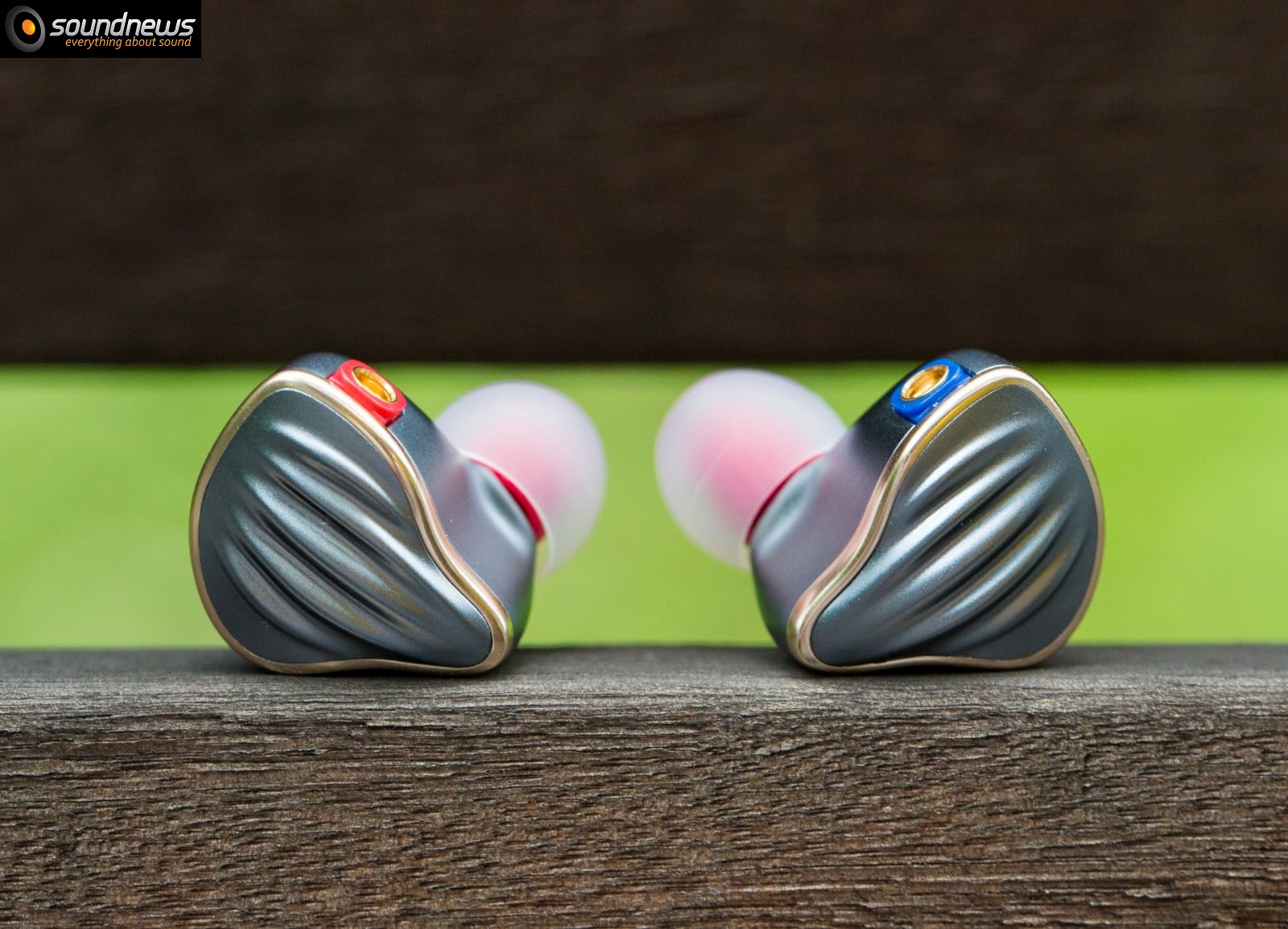
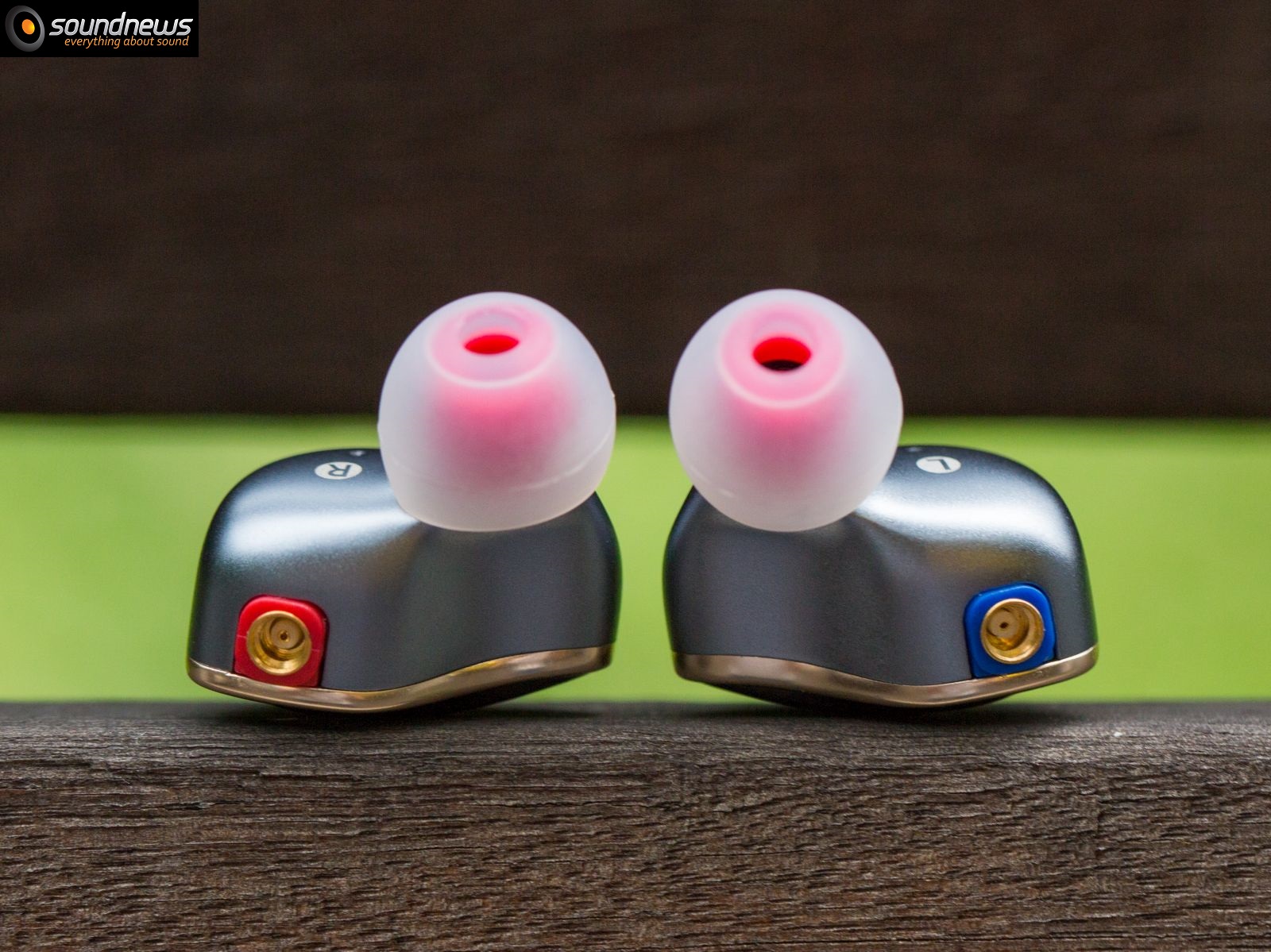
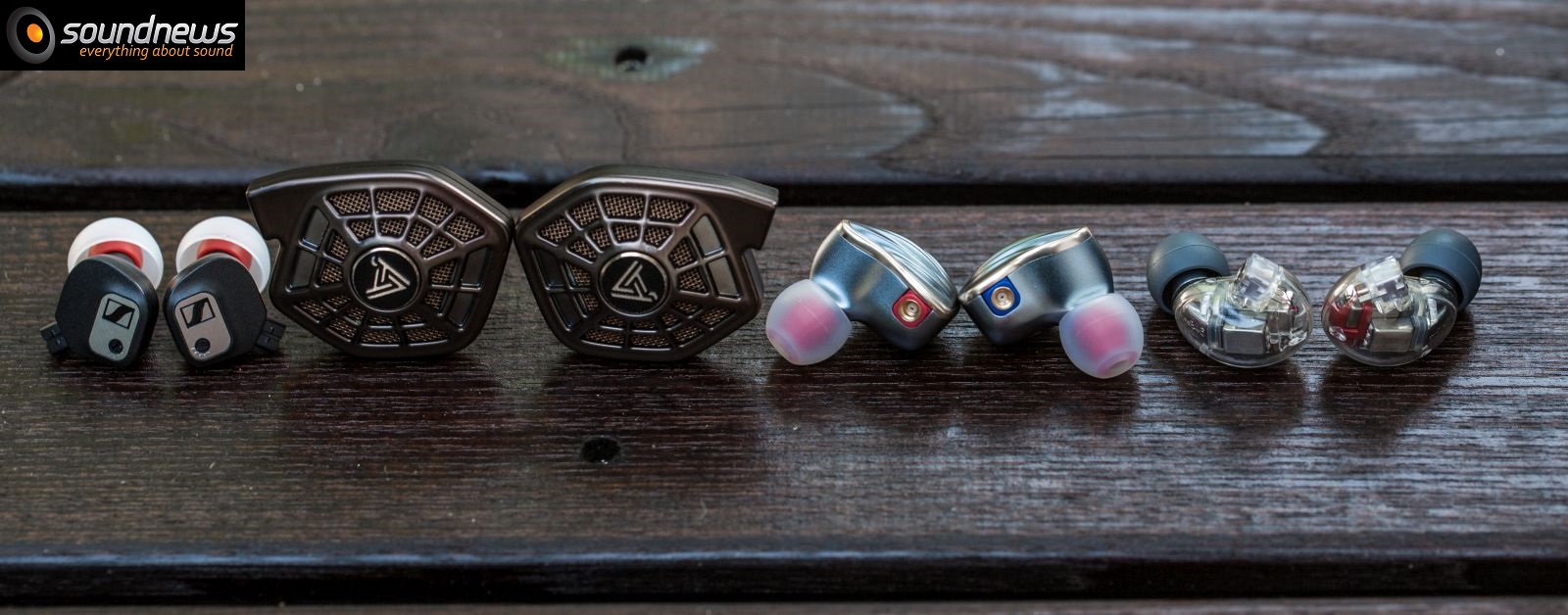
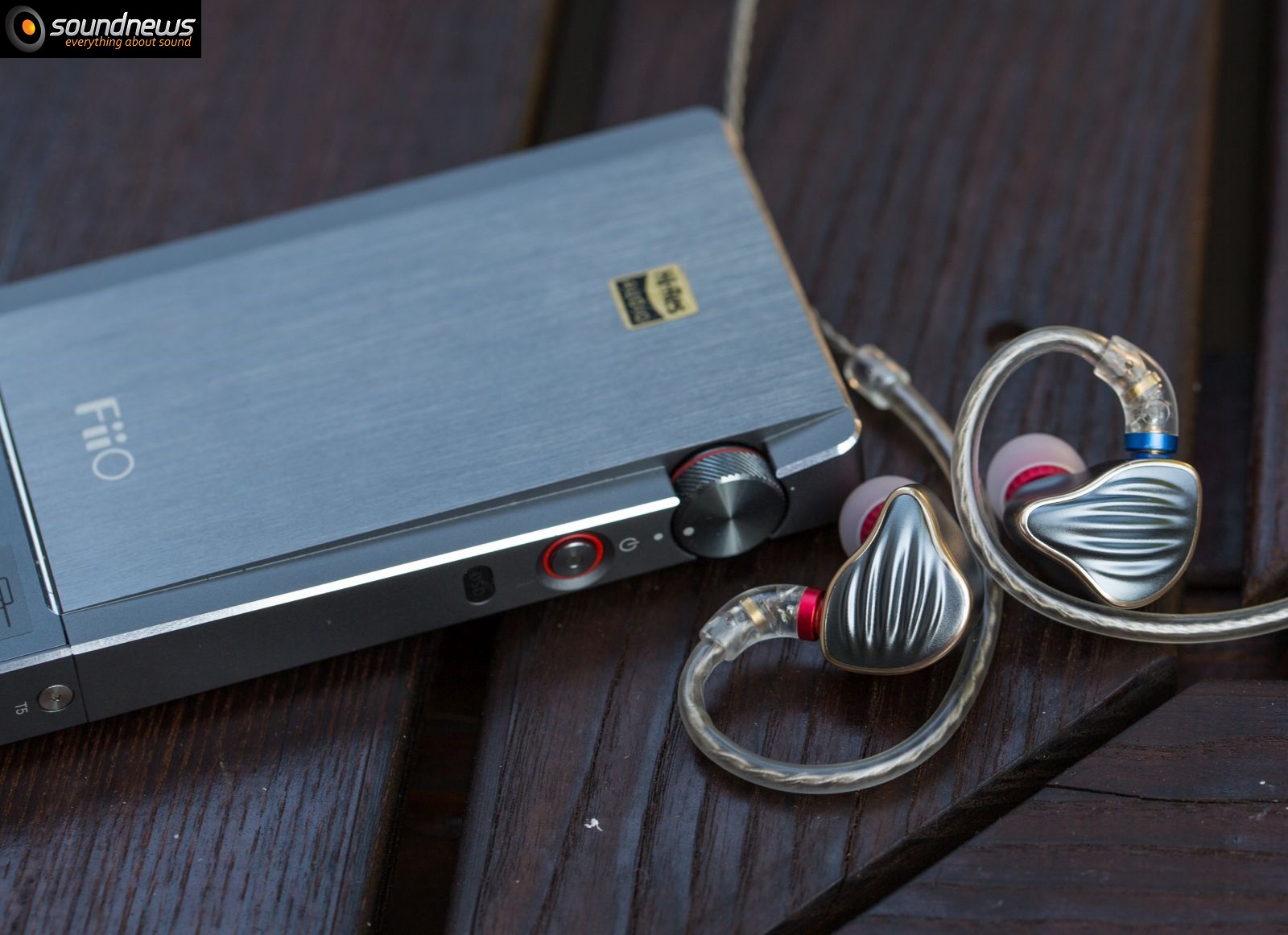
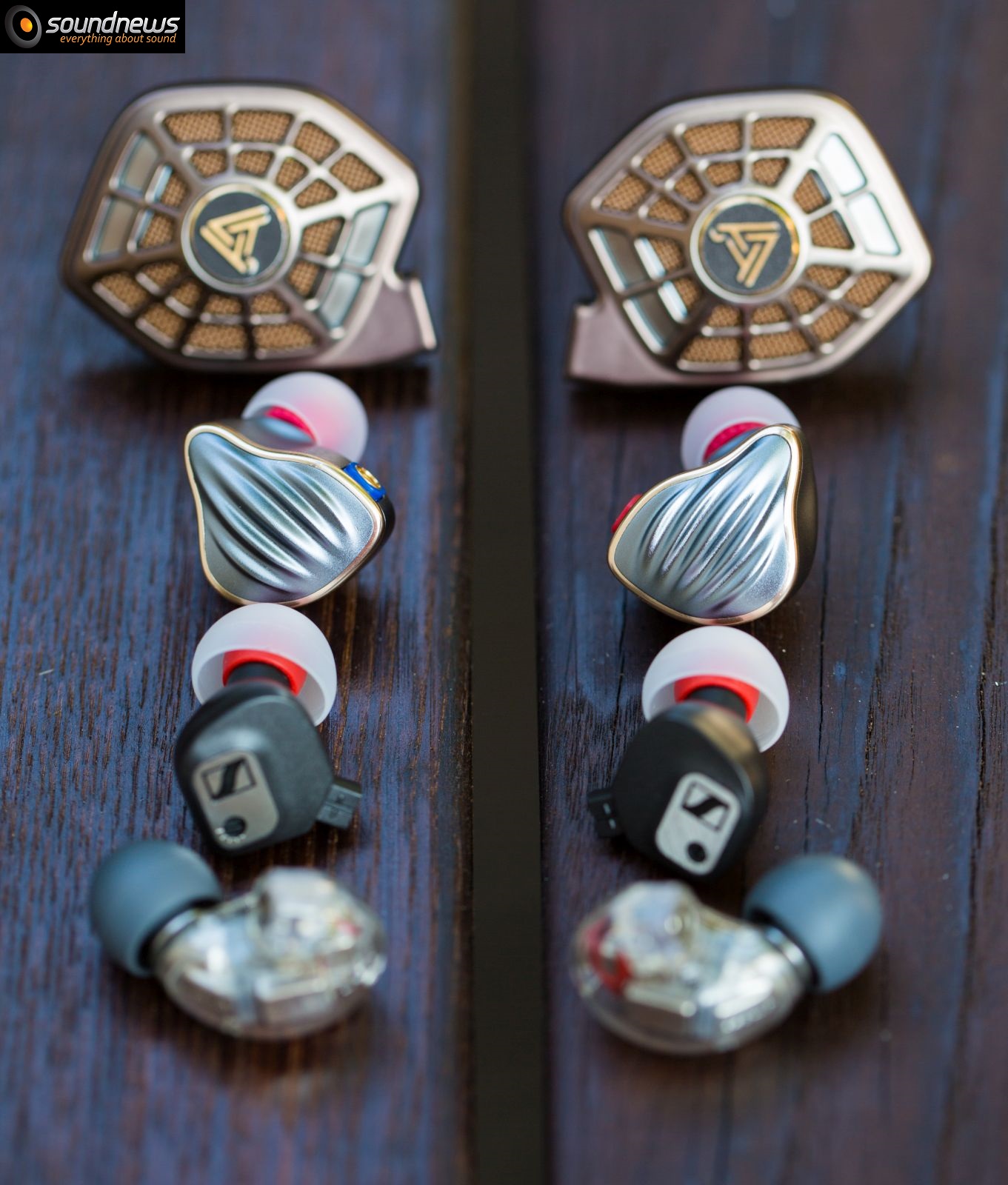
The shell on first appearance seems much bigger to house all those larger balanced armature drivers including a bigger dynamic one and the S.Turbo subwoofer and again resembles a custom IEM somehow. The shell is machined entirely with CNC technology from blocks of aluminum giving them a premium feel to the touch and to the eyes.

The cable that is only one in the package is much sturdier and much more resistant than the one found on the F9 series or on FH1. It’s more rigid; it’s thicker and uses high-purity mono-crystalline silver-plated copper (SPC) wire for higher quality signal transfer that minimizes distortion and signal transmission loss for best sound quality possible.

If you already own a DAP that has a balanced output I highly recommend buying a separate cable such as LC-2.5B (2.5 mm balanced) or the LC-4.4B (4.4 mm balanced) to use it with the FH5, it makes a big positive difference compared to the SE connection.

FH5 to this date are the most sensitive IEMs from FiiO, having an impedance of only 19Ω and a whopping sensitivity of 112 dB per 1 mW they can be powered by pretty much everything that has a headphone jack.

However there is another catch: because of their very revealing nature and high sensitivity they are pretty picky of the quality and the noise floor of the source. They can reveal hiss and hum of devices you thought have a crystal clear background. For example they hiss a bit with FiiO’s own X5 MKIII, with Sony NW-WM1Z and they hiss more with a Burson Play and with some other desktop headphone amplifiers, be warned about that.

So my friends, lets get to the most interesting part of the review.

Sound Quality

Well, well, I really was expecting this kind of sound quality from FH5 as they blown me away at the first listen. They are by far the best IEM FiiO designed and can easily outmatch higher priced IEMs from other manufacturers.

They have deep and layered bass, great mids with clear and vibrant voices, a good treble extension and a great separation of the notes portraying an out of head presentation due to well spread soundstage. Did I catch your attention already?

I paired FH5 with FiiO’s latest DAP: the M7 that has a very low noise floor and a very black background without traces of noise. M7 also have a very honest and revealing sound so the match was perfect with FH5 and I can easily describe how FH5 are actually sounding.

At 112dB/mW it was an easy task even for the underpowered M7, so volume was never past 50% almost all the time even on demanding classical pieces.

The bass response reminded me a bit of F5 and FH1, but this time bass is much more controlled, it goes deep, presenting multiple layers of it and it decays in a natural way, not too fast and not too slow.

The bass turbine really wakes up the bass on higher quality electronica.

Daft Punk , Infected Mushroom and The Prodigy was a real treat to listen.

FH5 have a much higher impact and kick into eardrums compared to F9 series and that makes me quite happy of the overall sound signature.

Lower extremities are not cut this time, for example when listening The Prodigy – Invisible Sun there are few bass notes that makes butterflies in my stomach, a thing that never happened with F9 series.

I do find the bass not only deep but also very controlled due to its fast rises in dynamics.

The upper bass notes seems a bit more pronounced than the sub-bas, its especially heard on groovy jazz tracks where double-bass is present.

Transition from bass to midrange is done in a natural way so the flow keeps going without stuttering or dips.

Lower midrange sometimes sounds a bit suppressed by the bass notes, but that is the case only on bassier tracks.

Overall the voices are clear and have the right amount of vibration; violins and guitars have the needed zing and pitch. Most of the time they sound full but on rare occasions few voices do sound like they are sitting further away from the listener, bass comes forward more often. Upper midrange in my opinion does not have this problem.

Treble sounds crispy and can bite sometimes, but it’s not bright at all.

Treble is also airy with lots of air between the notes, cymbals and drums never sound crowded, they always sound like two separate entities.

There might be a slight roll off in the upper treble as it always sounds clear and detailed but never fatiguing which I find to be a bit weird, balanced armatures always sounded a bit fake to me due to sharp trebles but it is not the case with FH5.

There is a good tonal balanced across all frequencies and I think FiiO really nailed this time with FH5.

Due to its fast and airy nature, resolution is at a high level, FH5 do sound detailed with a good extraction of small micro-details.

In this respect there is nothing to reproach about FH5.

Overall the sound is clean, fast, has good extension, hits hard and lifts your mood, what more can you ask for?

Soundstage is good but not great, sincerely it is quite hard to make an in-ear monitor that sounds wide and spread with drivers that are sitting millimeters away from your eardrums. I find the depth to be better than the soundstage. I can easily look deeper into the mix with FH5 however the width and height of the stage is limited and cannot compete with an open-back design for example.

However for an IEM design it is quite impressive as it is.

Comparisons

FH5 vs F9 PRO

FH5 have a much better tonal balance with better rendition of bass notes and midrange. Vocals sound meatier and sweater on FH5. Bass also goes lower and has more layers of it. FH5 is more natural sounding, less harsh; you could call it a meatier sound.

F9 PRO is better in the upper treble where is doesn’t roll off as fast, however for me it becomes a bit fatiguing after some time. FH5 sounds also deeper, portraying a better depth and I can look easier into the mix. With better-layered bass and more presence into midrange and with a higher micro-details extraction the FH5 overall is a better earphone to me.

FH5 vs FH1

Ok, I know this is not a fair comparison as FH1 is much cheaper. Also four drivers VS two drivers is not fair as well.

However the bass response of FH1 almost stands shoulder to shoulder to the one of FH5. FH5 have a better control over the drivers, bass notes on FH1 are looser and sound one-note sometimes, a thing that never happened on FH5.

The overall sound signature is quite similar, but FH5 has a much better treble response and a more textured midrange. Both sound natural and easy on the ear with no listening fatigue at all.

Due to much faster sound on FH5, every vibration of the notes is decaying faster showing a better texture of every note. FH5 is crystal clear; FH1 is a bit muddy in comparison. There is no denying it, FH5 is completely on another league, a much higher one.

Conclusion

Great packaging, lots of accessories inside, great design, great craftsmanship and most importantly a great sound, all those words represent the FiiO’s FH5.

FH5 again raised the bar not only in FiiO’s portfolio but also in affordable high-end IEM market.

Great sound should not cost a fortune and I thank FiiO for that, this is how it should be done.

Competition? For now just watch and learn.

PROS:

  • Awesome packaging with a good selection of accessories
  • Quality craftsmanship, fit and finish
  • Great tonal balance between all the frequencies
  • Great depth, good soundstage
  • Impressive bass response
  • Sweet and natural midrange
  • Clear and extended treble without being harsh
  • Lots of air between the notes
  • Strong kick, impressive speed
  • Awesome price for the sound performance we get

CONS:

  • Soundstage is a bit limited
  • A balanced cable is no longer found in the package

Equipment used for review:

  • DAPs: FiiO M7, X5 MKIII, Sony NW-WM1Z
  • DACs: Chord Hugo2, Mojo, Matrix X-Sabre Pro + S/PDIF 2, Burson Play, FiiO Q5
  • Headphone amplifiers: Headamp Gilmore Lite Mk2, HeadAmp Pico Power, Burson Play, Chord Hugo2, Mojo, FiiO Q5
  • Headphones: FiiO FH5, F9 PRO, FH1, Shure SE846, Audeze iSine20, Sennheiser IE80

Jucăușul Burson Play

3

Mereu am am avut ganduri pozitive legate de echipamentele Burson Audio. Probabil se datoreaza faptului ca acum sapte ani publicam prima recenzie pe acest website, adica pentru propriul Burson HA-160D. Mi-a placut mult acel aparat care de fapt mi-a dat startul carierei de recenzor.

Ceva mai tarziu am testat si am scris despre viitoarele modele precum HA-160DS, Soloist, Timekeeper, despre puternica statie de testat amplificatoare operationale Lycan si desigur despre Conductor. Ultimul aparat m-a impresionat din nou si am fost nevoit sa-l achizitionez folosindu-l in anii ce au urmat pana am descoperit lumea balansata, trecand pe o sursa si amplificator separat balansat.

Aveam o viata simpla atunci, mult mai simpla. Aveam 160D-ul si ulterior Conductor, doua perechi de casti si cam atat. Sunetul era bun, viata mergea inainte, nu ma ingrijorau cablurile RCA sau alte prostii.

Din fericire echipa Burson Audio nu a dormit in toti acesti ani si a lansat un trio de aparate noi si simple precum noul Burson Play care este un simplu DAC si amplificator de casti. In afara de Play, au fost lansate Fun si Bang; Fun este un amplificator dedicat de casti si Bang este un amplificator de putere pentru boxe pasive.

Pe moment primul pe lista este Play care m-a delectat in ultimile trei saptamani.

Nu numai ca mi-a trezit amintiri frumoase legate de inceputurile audiofile dar chiar am inceput sa imi amintesc de semnatura Burson, daca va intrebati daca exista asa ceva in familia Burson.

Dupa cum ne sugereaza numele Play are o semnatura sonica pozitiva care iti ridica dispozitia si care este destinat nu doar audiofililor dar si gamerilor.

Sincer vorbind ma joc si eu cand timpul imi permite, sunt un fan Blizzard asa ca joc in majoritatea cazurilor Heroes of the Storm sau Overwatch.

Voi testa Play si ca o statie audiofila amplificand flamandele casti planar-magnetice dar si ca o sursa pentru jocuri.

Sub capota

Ce avem noi aici este un DAC si un amplificator de casti de calitate ce poate fi si preamplificator, construit cu simt de raspundere si la standarde ridicate.

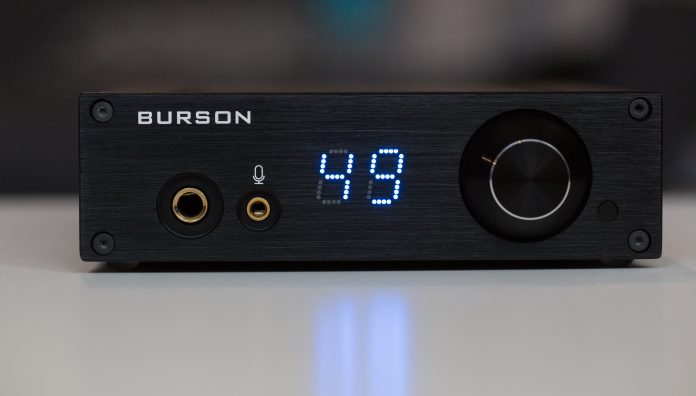
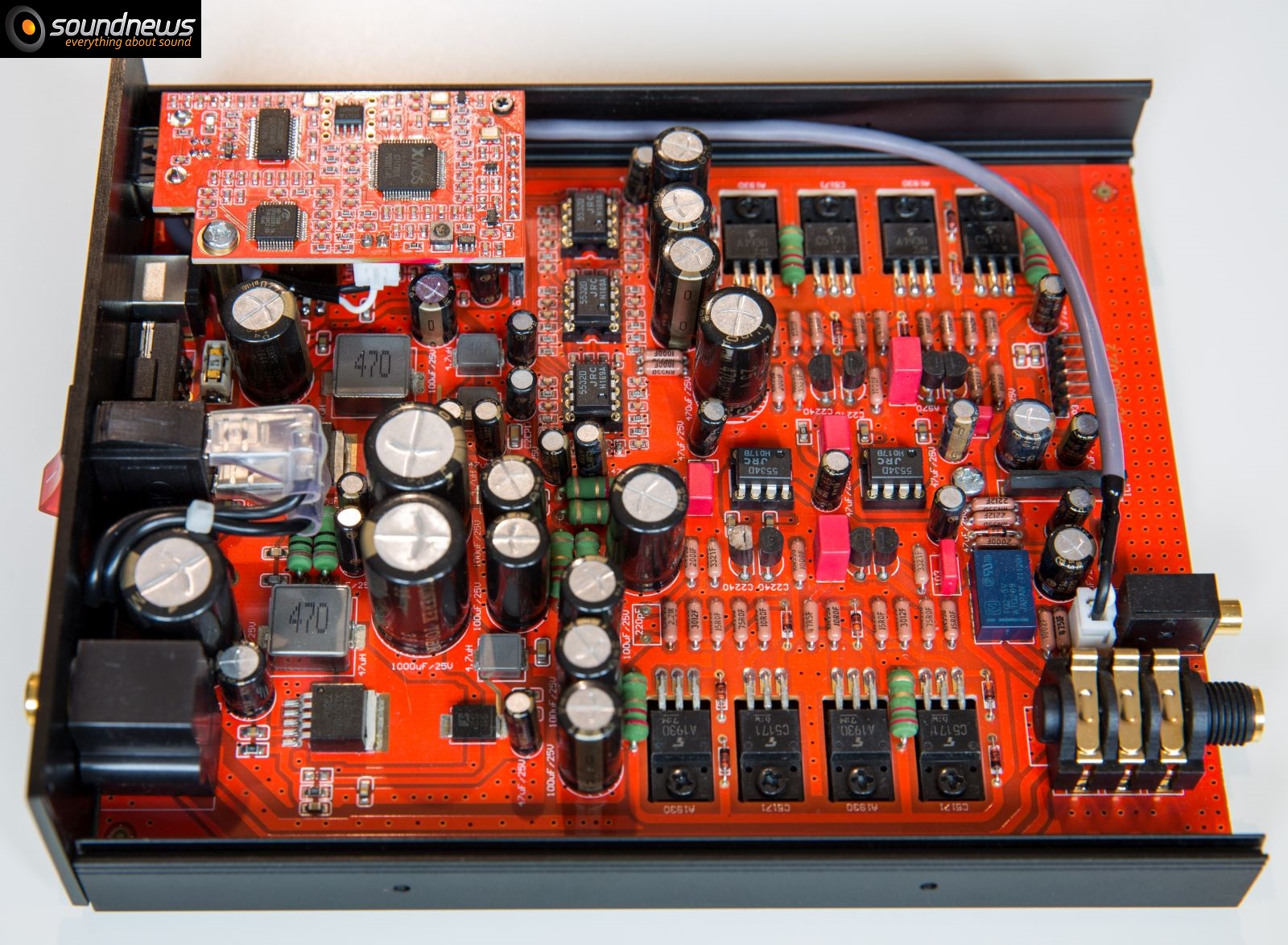
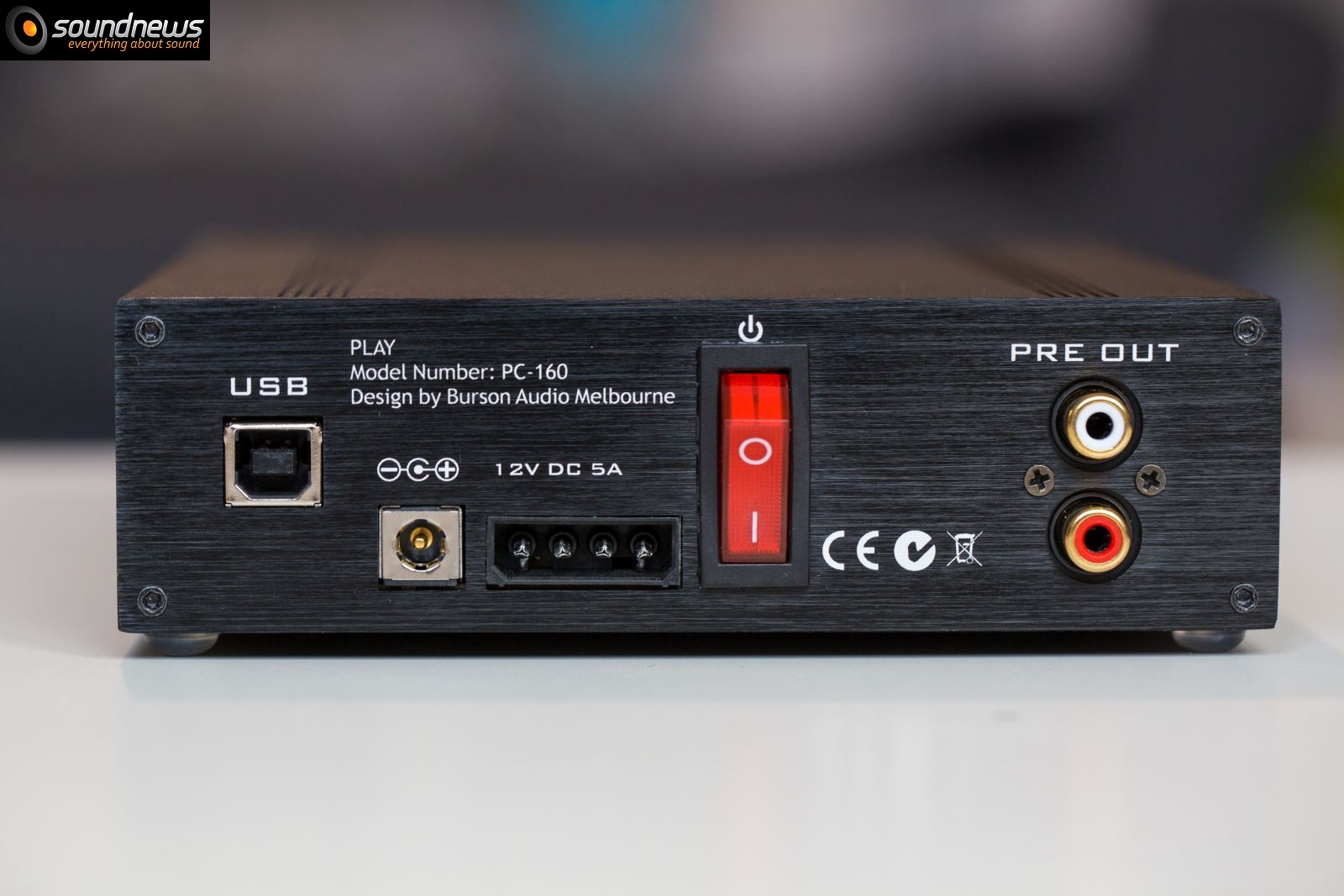
Atentie, sa nu va duca in eroare de dimensiunile mici pe care le are. Designul si formele sale au fost concepute in jurul PC drive bays de 5.25” (de ex. cum sunt unitatile optice DVD-RW.) asa ca Burson Play poate fi integrat in orice PC gaming sau chiar si in carcasele PC normale small, mid sau full tower care au cel putin un singur drive bay de 5.25”. In acest caz poate fi alimentat de un singur cablu molex de 4 pini care vine direct de la sursa de alimentare a PC-ul iar lucrul imbucurator este ca nu ar trebui sa va faceti griji cu privire la calitatea sursei de alimentare, deoarece Burson s-a gandit deja la acest aspect in avans si a integrat un regulator de tensiune astfel incat calitatea sursei de alimentare a PC-ului va avea un impact minim asupra calitatii sunetului.

Play poate fi folosit si ca un dispozitiv extern asa cum l-am utilizat, fiind alimentat de o sursa de alimentare in comutatie externa.

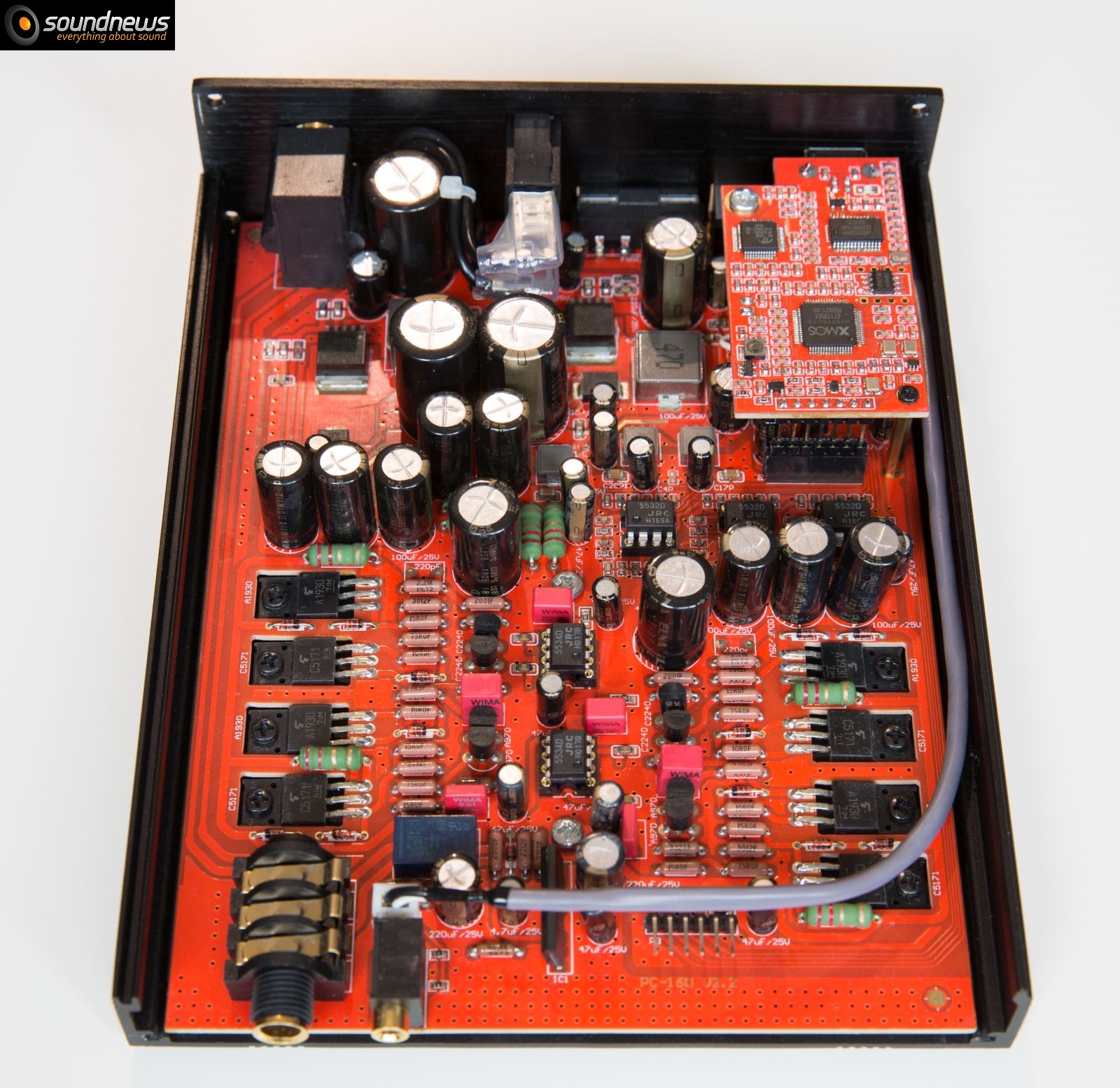
Sub capota DAC chip-ul folosit este deja veteranul ESS 9018 capabil sa decodeze material PCM pana la 32 bit/386 kHz dar si material DSD256 (DSD x4).

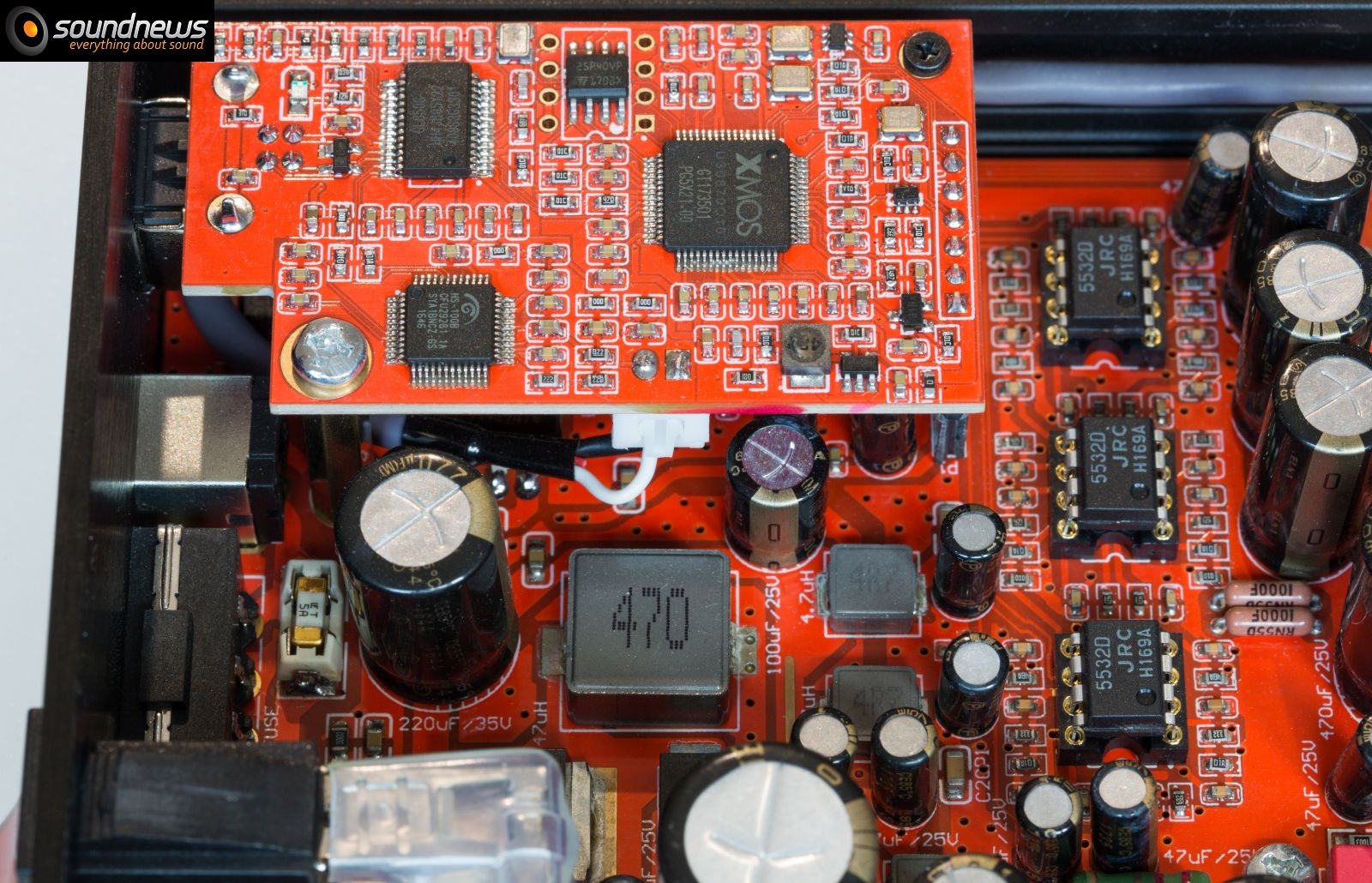
Receptorul semanului USB este un XMOS de calitate superioara, s-au dus zilele in care pierdeam conexiunea USB din cauza implementarii slabe a receptorului USB si a driverilor nefinalizati. XMOS este mult mai usor de implementat si suna destul de bine, asa mai merge Burson.

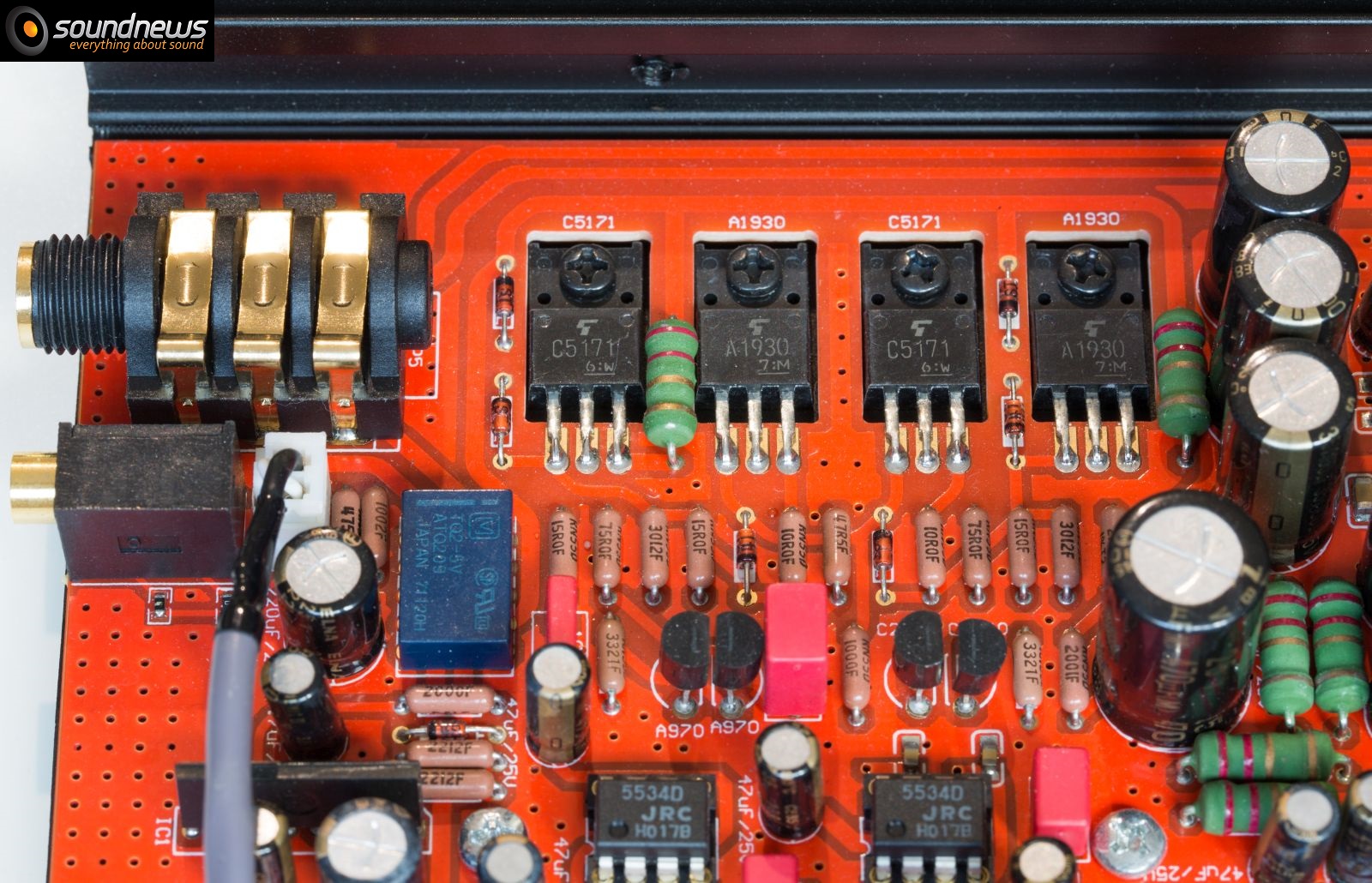
Desigur starurile show-ului sunt circuitele integrate dezvoltate de Burson care mereu functioneaza in magicul circuit in clasa A, care stau la baza amplificatorului de casti si a preamplificatorului alimentate de trei seturi revolutionare de alimentare Max Current Power Supplies (MCPS) dezvoltate de Burson. Play chiar pare a fi unul din cele mai puternice amplificatoare de casti dezvoltate vreodata si pot atesta acest lucru, daca poate amplifica o pereche de Audeze LCD-4 si a facut-o cu usurinta, atunci poate amplifica orice set de casti.

Cum o sugereaza si numele Play este un vis pentru jucausii care vor sa tuneze sunetul dupa propriul plac folosind o gama variata de amplificatoare operationale (op-amp-uri de acum inainte).

Play se vinde in 4 variante: cel basic care foloseste op-amp-uri NE5532, cel care foloseste op-amp-urile V5i dezvoltate de Burson, ultimele 2 variante folosesc cele mai performante op-amp-uri discrete V6 Classic sau V6 Vivid. Ultimele 2 variante au in pachet si o telecomanda metalica.

Noi am primit la test varianta cheala Basic, ideala pentru tarile Est Europene insa nu va faceti griji, chiar in aceasta varianta ne-a impresionat destul.

Joaca-te cu mine

Sa tercem la partea cea mai interesanta a recenziei.

In primul si in primul rand am fost putin inspaimantat ca poate conduce serios, autoritar si cu ceva rezerva de putere o pereche de Audeze LCD-4 si credeti-ma LCD-4 nu sunt o sarcina usoara.

Pe la 70-80 volum din 100 am redat cu succes jazz si clasica, mai mult de atat si devenea insuportabil. Cu siguranta are cojones si multa rezerva de putere pentru vasta majoritate de casti.

Avem ultima revizie (Rev 2.2) care merge binisor chiar si cu mini cascutele de tip IEM. Prima revizie avea cateva probleme legate de zgomotul de fond dar pot spune ca acele probleme au fost (partial) rezolvate si ca functioneaza la parametrii normali.

Numai pe ultrasensibilele si hibridele FiiO FH5 am auzit un his ce se aude in surdina si numai in liniste totala, dupa ce dau play hisul dispare si nu il mai detectez. In termeni absoluti exista un his minuscul dar nu este ceva care ar deranja un ascultator ordinar.

Folosind FH5 volumul e situat intre pozitia 7 si 12, mai mult de atat devine dureros, din nou rezerva de putere este incredibila.

Impedanta de iesire de 8 Ohmi este cam maricica astfel castile cu impedanta joasa de </= 16 ohmi vor suna putin mai lesinat avand un control mai slab asupra difuzoarelor.

Alte casti testate au fost Audeze LCD-4Z (cele de impedanta joasa) si Sennheiser HD660S, ambele s-au prezentat excelent in toate circumstantele.

In afara de puterea de iesire impresionanta, tot acest pachet ca un DAC/Amp merge surprinzator de bine, sunetul per total este curat, are o scena bine imprastiata, o adancime buna si un control bun asupra difuzoarelor. Aproape ca am uitat cat de bine poate suna un combo DAC/Amp.

Cu siguranta semnatura Burson Audio este prezenta pentru ca nu aud nici o urma de sibilanta sau uscaciune. Stiu ca are integrat un ESS Sabre si totusi suna natural, usor si relaxant, are un ton bogat si o fluiditate buna. Testam totusi varianta Basic, deja imi imaginez cat de bine ar suna varianta full-options V6 Vivid/V6 Classic.

Ce m-a bucurat din nou este natura revelatorie a aparatului, usurinta cu care fiecare piesa este redata, Play mi-a redat cu brio toate genurile muzicale.

Adam Agee & Jon Sousa – Paddy Fahey’s a sunat incredibil de natural si placut, fiecare nuanta si detaliu ascuns precum usoara lovitura a piciorului care misca atat de putin aerul s-a auzit cu usurinta, mixul dintre chitari si vioara nu a sunat niciodata aglomerat sau murdar. Mediile au stralucit cu adevarat pe aceasta piesa si cred ca punctul forte al acestui aparat se afla in aceasta zona a frecventelor care imi da senzatia de sunet carnos si plin de textura.

Lara Ruggels – Snowflake mi-a demonstrat adancimea, marimea si uniformitatea scenei cat si tonul natural de care este capabil.

Cred ca Play are un echilibru tonal destul de bun, care imi arata nu doar o prestatie carnoasa si plina de substanta dar si mici subtilitati, microdetalii ascunse in mixul creat.

Si pe aceasta piesa vocea cat si chitara au sunat uimitor de bine si nu exista cu adevarat nimic de reprosat.

Trecand la ceva mult mai energic precum Infected Mushroom – Becoming Insane mi-a aratat adevaratul atu al dispozitivului care este puternicul impact in timpane, marea viteza si lovitura de care este capabil. Nu iese niciodata din tempo; tine pasul chiar si cu o piesa atat de rapida si aglomerata.

Combina-l cu o pereche de casti planar-magnetice si headbang-ul devine inevitabil pe electronica.

M-au lovit straturi si substraturi de bas, tocmai de aceea cred ca pasul, ritmul si timing-ul sunt la un nivel inalt pe Play.

Desi Burson a dezvoltat aparatul in special pentru gameri, se descurca la fel de bine si pe muzica, mai bine decat anticipam.

Ascultand W.A. Mozart – Serenade No.13 in G Major (Allegro) am auzit o scena bine imprastiata prin care ma pot plimba imaginar destul de usor, adancimea ei a fost din nou impresionanta. Apreciam cu usurinta distanta dintre mine si orchestra. Inaltele au fost clare si stralucite fara sa ma deranjeze prea mult, astfel incat nu am auzit deloc asprime pe toate piesele de test

Lansand jocurile Heroes of the Storm si Overwatch si activand „Headphone mode” m-a facut sa apreciez jocurile si mai mult datorita localizarii mai precise a coechipierilor si cel mai important a inamicilor mei. De fapt am diminuat volumul in aceste jocuri deoarece Play loveste prea tare in timpane si fiecare efect special sau impuscatura imi distragea atentia prea mult de la actiune.

Comparatie cu Gilmore Lite Mk2

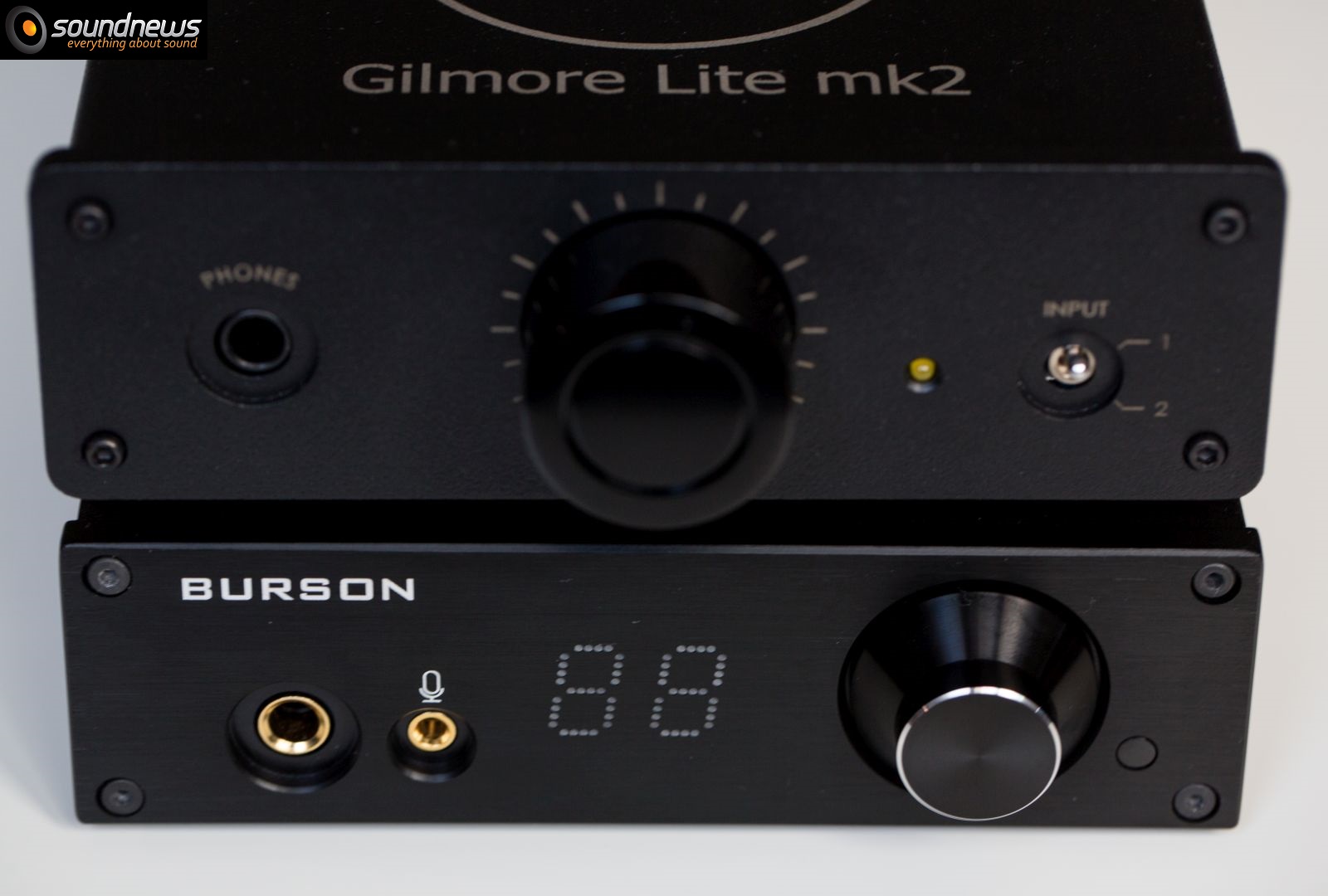
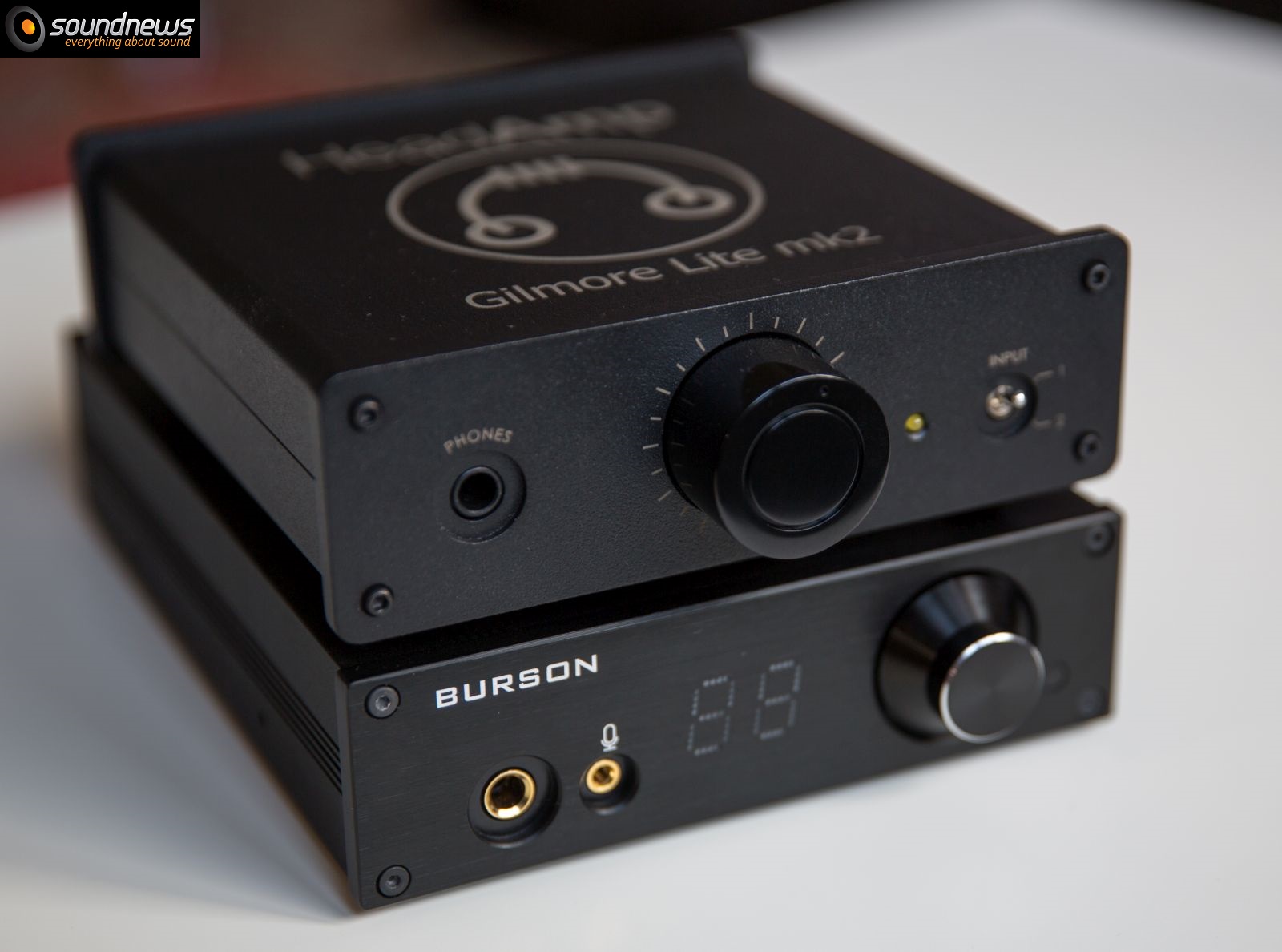
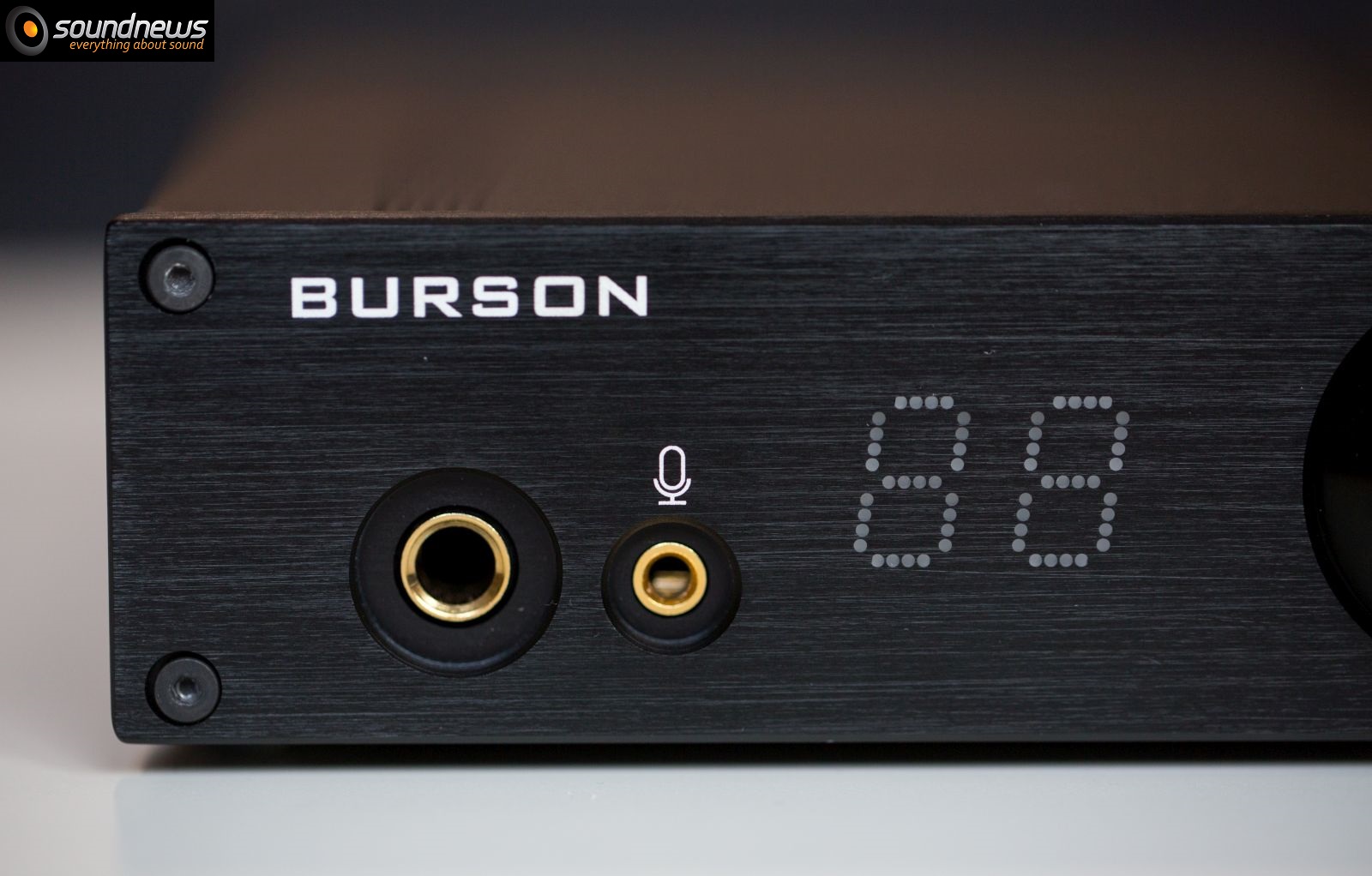
Burson Play Basic costa 300 USD si HeadAmp Gilmore Lite Mk2 se vinde cu 500 USD, de asemenea Gilmore Lite este doar un amplificator de casti fara DAC integrat, deci nu este o comparatie corecta insa cu toate acestea ne va arata adevarata natura si capacitatile pe care Play le poseda.

Ambele au aproximativ aceleasi dimensiuni si ambele functioneaza in clasa A pentru cea mai buna calitate a sunetului.

Burson Play are (mult) mai multa putere, la 70% din volum conduce lejer LCD-4 ceea ce este uluitor, Gilmore Lite nu este capabil sa amplifice LCD-4 intrand in clipping si distorsionand prea mult. Pe de alta parte amplificand sensibilele FH5 hibride Gilmore Lite este mult mai bun neavand nici un dram de his si prezentand un control absolut asupra difuzoarelor castilor.

Pentru casti dinamice Burson va avea o lovitura mai puternica si un sunet ceva mai natural facand ascultarea oricarei piese o adevarat placere fara oboseala aurala. Gilmore Lite insa este ca o lupa semnaland orice microdetaliu sau imperfectiune ascunsa, suna de asemenea mai liniar si cateodata plictisitor sau obositor datorita naturii sale foarte revelatorie.

Asa ca intr-un final este o remiza, in functie de gustul sau starea Dvs de spirit, unul este mai bun decat altul. Imi plac ambele pentru ceea ce sunt, vorbind strict de calitatea audio  Gilmore Lite este mai tehnic dar cu mai putina putere, Play este mai muzical si mult mai puternic. Decizia va apartine.

Concluzii

Daca as spune ca am fost impresionat de Burson Play ar fi o mare subevaluare pentru ca mi-a demonstrat ca echipamentele care suna foarte bine nu ar trebui sa coste o avere si chiar mi-a schimbat perceptia privind echipamentele audio in general, din cauza preturilor exagerate pe care le poarta majoritatea echipamentelor.

Pentru un simplu DAC si amplificator de casti desktop pentru gaming, redare muzica si inregistrari Burson Play castiga cea mai mare recomandare pana in acest moment. Este atat de bun si ceva in plus.

PRO:

  • Lovitura, impactul si viteza incredibila
  • Sunet natural ce are si o buna fluiditate
  • Destul de liniar, fara gropi sau urcusuri
  • Amplificator de casti potent si foarte puternic
  • Scena bine imprastiata si destul de adanca
  • Calitatea ridicata a constructiei, un aparat 3 in 1, versatil si usor de utilizat
  • Cel mai bun raport calitate/pret testat vreodata in categoria DAC/Amp

CONTRA:

  • Impedanta ridicata de iesire nu se impaca bine cu castile de tip IEM
  • His auzit in surdina pe casti ultrasensibile

Echipamente folosite pentru recenzie:

  • Casti: Audeze LCD-4, LCD-4Z, Sennheiser HD660S, Momentum 2, FiiO FH5
  • DAC: Matrix X-Sabre Pro + X-SPDIF 2, Burson Play
  • Amplificator de casti: HeadAmp Gilmore Lite Mk2, Burson Play
  • Boxe: Audio Physic Tempo Plus
  • Amplificator integrat: Hegel H190, Cambridge Audio Azur 851A

Burson Play – The Playful One

5

You know what? I have a soft spot for Burson Audio gear. And that’s because 7 years ago I was publishing my absolutely first review on this website and that review was for my own Burson HA-160D. I loved that thing very much, it actually kickstarted my career as a reviewer.

Later on I tested and written about their future designs like HA-160DS, Soloist, Timekeeper, about their powerful op-amp testing station Lycan and of course about Conductor. The later one I again purchased and used for the following years and it was my go to audiophile headphone testing machine just before moving into the balanced land with a separate balanced source and amplifier.

My life was easier that time, much easier. I had my 160D and later my Conductor, two pairs of headphones and that was it. Sound was great; life was moving on, no worries about quality RCA cables or other quibbles.

Fortunately Burson Audio was not sleeping all these years and released a plethora of new devices and I really do love their kind of back to the roots vibe, especially their new Burson Play is exactly that: a simple DAC and headphone amp combo. Besides the Play, Fun and Bang were also released; Fun is a dedicated headphone amplifier and Bang is an integrated speaker amplifier. Hopefully I’ll do reviews at least for two of those devices.

For now my review is concentrated around the Play, which I was immensely enjoying for the last 3 weeks or so.

It not only brings back good memories about inception of my career but I actually started to remember the Burson sound signature, if you are wondering if this type of thing really exists in the Burson family.

As it’s name suggests Play have a very joyful and mood lifting sound signature designed not only for audiophiles but this time for gamers as well.

Truth to be told I game myself too when time permits, I’m a Blizzard fan so I play mostly their Heroes of the Storm and Overwatch games.

I will test the Play both as an audiophile hub powering my hungry planar magnetics and as a gaming audio source powering the same headphones.

Under the hood

So what do we have here is a very good build DAC and headphone amp combo plus a dedicated preamp for a power amp.

Please do not be fooled by its small-ish footprint. Actually its shape and design was made around the 5.25” PC drive bays, so Burson Play can be integrated in any tower gaming PC or in regular small, mid tower or full tower cases that have at least one 5.25” drive bay. In this case it can be powered by a single molex 4 pin cable that goes directly from your PC power supply and you really should not worry about the quality of your power supply because Burson already thought about that in advance and integrated a voltage regulator inside so that your PC’s power supply will have a minimal impact on sound quality.

Play can also be used as an external device as I was planning to do, being powered by a simple SMPS external power supply.

Under the hood the DAC chip used is the veteran ESS 9018 capable of decoding PCM material up to 32 bit / 386 kHz and DSD material up to DSD256 (DSD x4).

The USB receiver is a quality XMOS one, gone are the days when I was losing USB connection due to poor USB implementations and drivers. XMOS is much easier to implement and sounds pretty good too, way to go Burson.

Of course the stars of the show are the Burson developed ICs always working in the magical class A circuitry powering the headphone amplifier that are fed by three sets of revolutionary Max Current Power Supplies (MCPS) developed by Burson, the Play is really one of the most powerful headphone amplifiers in the world.

And I can attest that, if it can power a set of Audeze LCD-4 and it did, then it can power any headphone in the world.

Play as again its name suggests is an op-amp rollers dream as you can literally play with a ton of different op-amps and tune it to your liking.

The Play is being sold in 4 variants: the basic one that uses NE5532 op-amps, the one that uses Burson branded V5i op-amps, the one that uses much more advanced discrete op-amps such as V6 Classic or V6 Vivid. The latter two are also offered with a heavy-duty remote control.

I have the basic, skinny, Eastern-Europe friendly Play but please don’t worry, in it’s stock form it already impressed me enough.

Play with me

Lets get to the most interest part shall we.

First and foremost I was a bit in awe that it can properly drive with authority with lots of headroom to spare a pair of Audeze LCD-4 and believe me that is not an easy task.

At around 70-80 volume I can play even jazz and classical pieces with ease, past that and it becomes painful to listen. It surely has enough drive and power reserve for a vast majority of headphones.

I have the latest revision (Rev 2.2) that also works great with IEMs. First revision had few problems with noise and clean background but I can safely say those issues are gone and it works as intended.

My FiiO FH5 hybrid IEMs have a faint, low-pitched hum but only in complete silence, after I press play I cannot hear it anymore. In absolute terms there is a very slight hum but it is not something that should bother an ordinary listener.

Powering the FH5 volume sits between 7 and 12, more than that and it’s painful, again it has a lot of power reserve.

Output impedance is a bit high at 8 Ohms so low and ultra-low impedance headphones will have a looser sound with a weaker control over the drivers.

Other headphones that were tested were Audeze LCD-4Z (the low impedance ones) and Sennheiser HD660S, both performed good with flying colors under all circumstances.

Besides the power output that impressed me, this whole thing as a DAC/Amp works surprisingly well, the sound overall is clean and clear with a wide soundstage, with a great depth and great control over the headphone drivers. I almost forgot how good a small DAC/Amp can sound.

The Burson sound signature is certainly here because not a single hint of shrillness or brightness can be heard. I know there is an ESS Sabre inside it and still it sounds natural, easy on the ear with a good flow and a rich tone to it.

And I am testing the basic version here; I’m already imagining how good the full-fledged V6 Vivid/Classic should sound then.

What also made me happy is the revealing nature and easiness of every song heard on Play. I enjoyed all music genres with no apparent weaknesses whatsoever.

Adam Agee & Jon Sousa – Paddy Fahey’s sounded incredibly natural, very enjoying, every little nuance in the song, like the soft toe tapping that moved so little air was easily heard, the mix of violin and guitar never seemed crowded or muddy. The midrange really shined on this song and I believe the strength of the Play is exactly in the midrange section where it shows lots of textures and meat to the bone.

Lara Ruggels – Snowflake showed lots of depth around all the notes, an evenly spread soundstage and a natural tone to it.

I believe Play have a quite good tonal balance showing not only a meaty and full of substance sound but also subtleties and micro-details hidden in the mix.

The voices and guitars again sounded astonishingly good and there is truly nothing to reproach on this song.

Moving on to something much more energetic like Infected Mushroom – Becoming Insane showed me the real strength of the Play and that is a strong impact into my eardrums and great speed and kick that it is capable of. It never stays out of tempo; it keeps up even with such a fast and crowded track.

Pair the Play with a nice pair of planar magnetic headphones and a headbanging becomes inevitable on electronica.

Layers and sub-layers of bass hit me, what’s why I believe the pace, rhythm and timing are on a high level on the Play.

Although Burson designed the Play mainly for gamers, believe me with music it works really well, better than I anticipated.

Moving on to W.A. Mozart – Serenade No.13 in G Major (Allegro) showed a wide spread soundstage that I can walk by easily with my imagination, depth was also good, I was easily appreciating the distance between the orchestra and me. Trebles were crisp and biting without bothering me too much, so no harshness whatsoever could be found on all test tracks I tried it with.

Launching Heroes of the Storm and Overwatch and activating the “headphone mode” made me appreciate my games even more because of great localization of my friends and more importantly of my foes. I’m actually lowering volume setting in those games because Play hits really hard on every shot or special effect and it distracts me too much with its strong kick into eardrums.


Comparison with my Gilmore Lite Mk2

Burson Play Basic costs 300 USD and the HeadAmp Gilmore Lite Mk2 goes for 500 USD, also the Gilmore Lite is only a headphone amplifier without a DAC section, so its not a very fair comparison however its an enlightening one showing the true capabilities and nature of the Play.

Both have the same footprint and both are working in Class A circuitry for the best possible sound quality.

Burson Play has a LOT more power, at 70% volume it powers my LCD-4 and that is astonishing, Gilmore Lite goes out of power with LCD-4 and starts clipping and heavily distorting. However when powering very sensitive earphones like my FH5 hybrids, Gilmore Lite is much better having no hiss at all and also presents a better control over the drivers.

For dynamic headphones, Burson will have a stronger kick and a somewhat more natural sound making every track easy to listen with no listening fatigue. Gilmore Lite however is like a magnifying glass showing every good or bad in a recording, it sounds also more linear and kind of boring sometimes and a bit fatiguing due to its very revealing nature.

So in the end it’s a draw, depending on your tastes or mood one is better than another; I like both for what they are. Strictly in terms of SQ, Gilmore Lite is more technical but weaker, Play is more musical and much more powerful. Pick your poison my friends.

Conclusion

To say what I was mighty impressed by the Burson Play would be a great understatement because it showed me that great sounding gear should not cost a fortune and many times it made the rethink my strategy regarding audio gear in general, because of the aberrant prices most of the gear is selling for.

For a simple desktop DAC/Headphone amp used to play music, recording or gaming Burson Play gains my highest recommendation to this date. It is that good and some more.

PROS:

  • Great kick, impact and speed on all tunes
  • Natural sound with a great flow
  • Quite linear with no dips or rises across all frequency response
  • Very potent and powerful headphone amp section
  • Spread soundstage and quite deep as well
  • Quality construction, 3 in 1 device, versatile and easy to use
  • Best price to performance ratio I have ever tested in a DAC/Amp

CONS:

  • High output impedance is not that great with IEMs and other low impedance headphones
  • Slight hum in very sensitive earphones

Equipment used for review purposes:

  • Headphones: Audeze LCD-4, LCD-4Z, Sennheiser HD660S, Momentum 2, FiiO FH5
  • DAC: Matrix X-Sabre Pro with X-SPDIF 2, Burson Play
  • Headphone Amplifiers: HeadAmp Gilmore Lite Mk2, Burson Play
  • Speakers: Audio Physic Tempo Plus
  • Integrated Amps: Hegel H190, Cambridge Audio Azur 851A

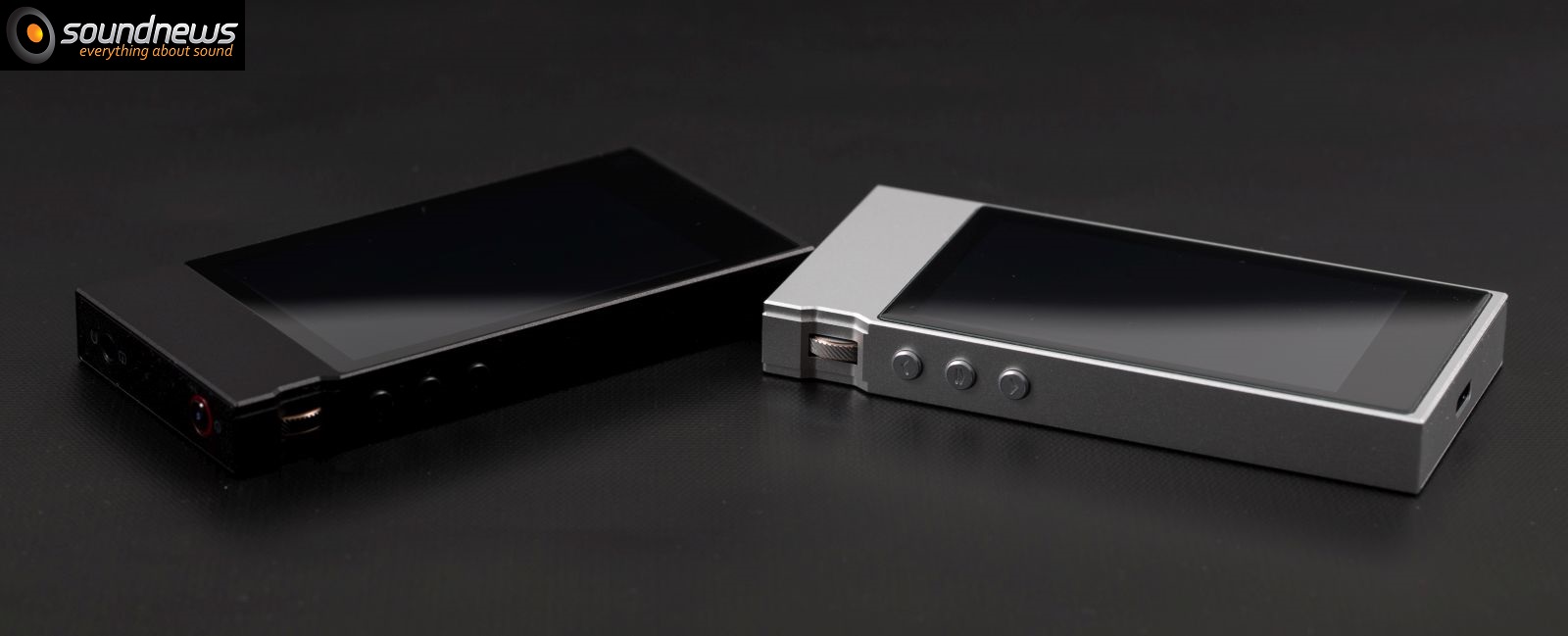
FiiO M7 – Portable Hi-Fi version 2.0

0

FiiO redesigned their entire line of portable DAPs and M7 is first from this newborn series.

At first inspection I realized that M7 is completely different from other DAPs rooted in X series of portable players, it’s surely a product destined and carefully mastered not only for audiophiles but for simple users as well. Due to newest Bluetooth technologies such as Aptx-HD and ultra performing LDAC codec, incorporation of a FM Radio receptor and of a much simpler to use Android 7 OS, M7 becomes an interesting device for anybody that has a minimal interest in sound quality.

All the changes went into the right direction and I predict it will be a successful portable DAP.

Design & Construction quality

I like its design quite much; the return to aluminum unibody design is welcome. New look is sleek and quite simple, very similar to a metal brick. My friend Savu complains of sharp edges, but it doesn’t bother me at all, on the contrary, I love bricks (Lego Technic fan right here).

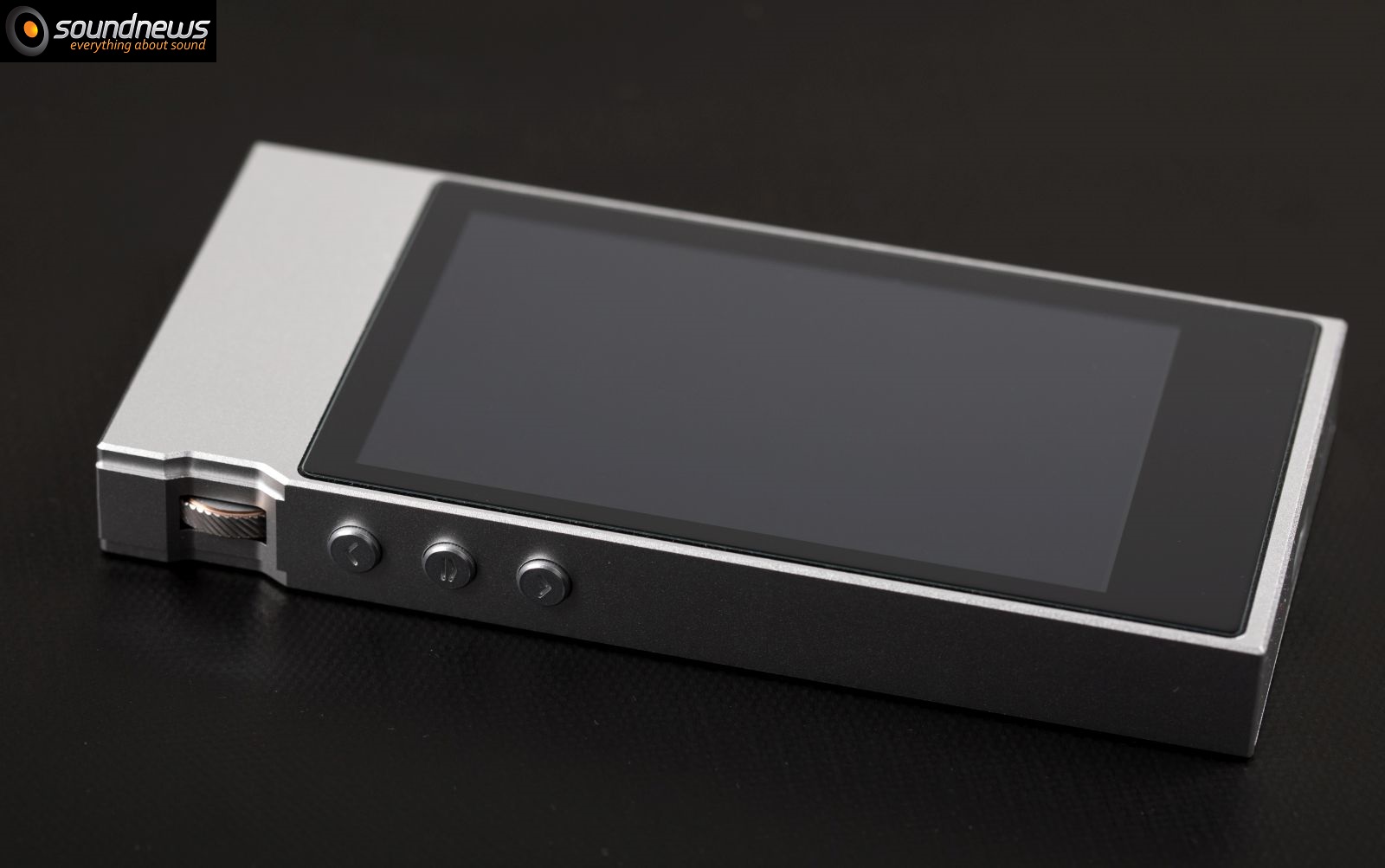
Physically it’s smaller, lighter and thinner than X3 MKIII and X5 MKIII, very comfy to hold in hand and fairly ergonomic due to its small size.

As with its predecessors, the 3.5 mm jack has a double function: it can be a normal headphone out or a clean line-out of 1.2 V Rms. Unfortunately, coaxial digital transport has been dropped, for this feature you will need an X5 MKIII or X7 MKII.

At the bottom a USB-C connection can be found for charging and data transfer. The USB-C port is long awaited and welcomed on these devices, I anticipate that the maker is already working on the development of K5’s successor, hope to see it as soon as possible.

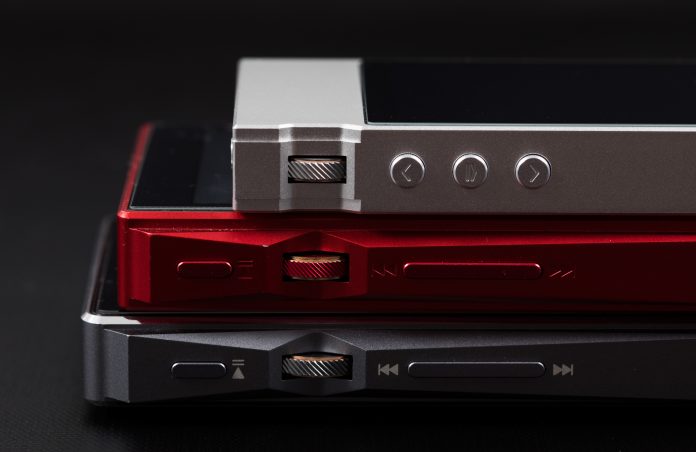
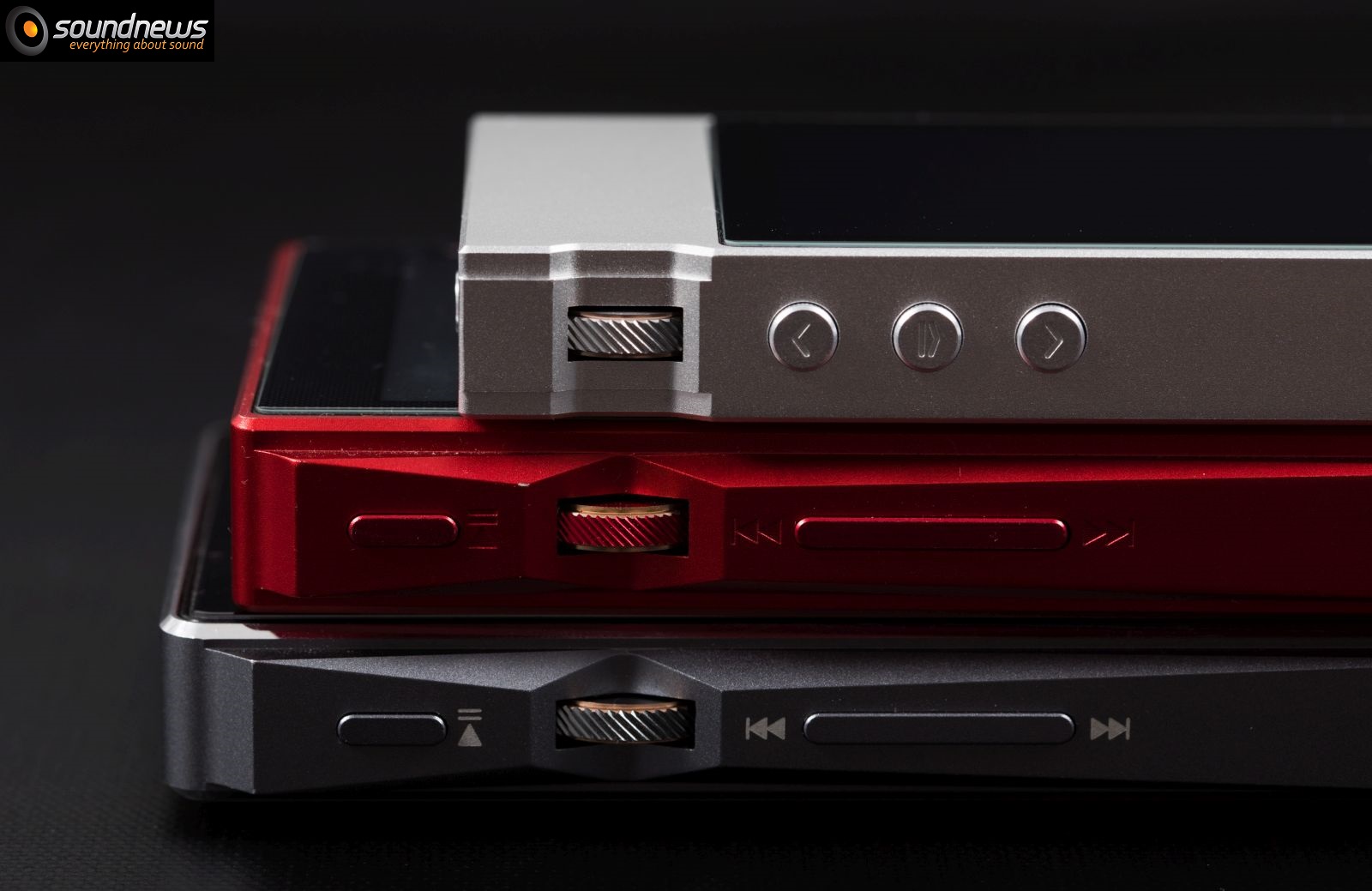
On the left a digital volume wheel is located that offers 60 steps and another 3 buttons for play/pause, next and previous track, a long press will quickly scroll the track forward or backward. On the right side is a microSD slot that holds cards up to 512GB of memory, and on the top we find the On/Off button and the 3.5mm jack.

The 3.2″ touch screen is large enough to easily read the information on it and is small enough to extend battery life up to 20 hours. The display uses an IPS matrix that has the resolution of 480 * 800 pixels, the viewing angle is quite good and the brightness is decent even on sunny days. Instead contrast and the fine gradation of the colors is a bit off, but after all it was not made for viewing pictures or movies, I can live with that.

I have nothing to reproach, construction quality is at a high level, design is simplistic, it’s small and portable, so far I like everything I see.

Under the hood

As I was saying M7 uses a customized version of Android 7 tuned by FiiO engineers, it’s very different from what I’ve seen on X5 MKIII or on X7 MKII.

Third party apps cannot be installed, the one and only app that can be opened is FiiO Music.

Device is powered by the dual-core Exynos 7270 clocked between 1 – 1.4 Ghz (at 14nm manufacturing process) and has a RAM memory of 768 Mb.

Originally seeing the specifications, I was a bit nervous that it will move slower than other FiiO players, but I’m happy to confirm that it’s actually the fastest player in the entire FiiO portfolio. It moves fluently, without stuttering, including the playback of DSD 64 files is devoid of hiccups.

Digital to analog converter duties are handled by a single ESS Sabre 9018Q2C which is currently the flagship mobile chip in the US manufacturer’s portfolio

This converter also handles the line-out and headphone-out stages, so the audio signal we hear in the headphones comes directly from the ES 9018Q2C without going through separate integrated circuits – an ideal thing to provide the cleanest possible sound.

A novelty in the FiiO portfolio are the new Bluetooth 4.2 standards such as AptX-HD developed by Qualcomm and LDAC developed by Sony, the latter can offer an impressive bit rate of up to 999 Kb / sec which is already considered a lossless signal.

Although a coaxial or optical output is no longer present, the M7 can send a digital signal through the USB-C port to a better converter such as Q5 using a custom cable such as FiiO CL06.

The manufacturer also decided to include a radio receiver for FM 76 – 108 Mhz bands that basically includes all the radio bands around the world.

Although the battery has only 1180 mAh, due to the low power consumption of the M7, it has an impressive 20-hour autonomy and 40 days of standby. Against 8-10 hours of the X7 MKII I think 20 hours are more than enough.

The amplification stage is part of the ES9018Q2C SoC and as a result the headphone amp does not impress as much as the X series players do. The M7 offers up to 70 mW in 16 Ω and up to 40 mW in 32 Ω. For reference, an iPhone 6s has 26 mW in 32 Ω.

Graphical User Interface (GUI)

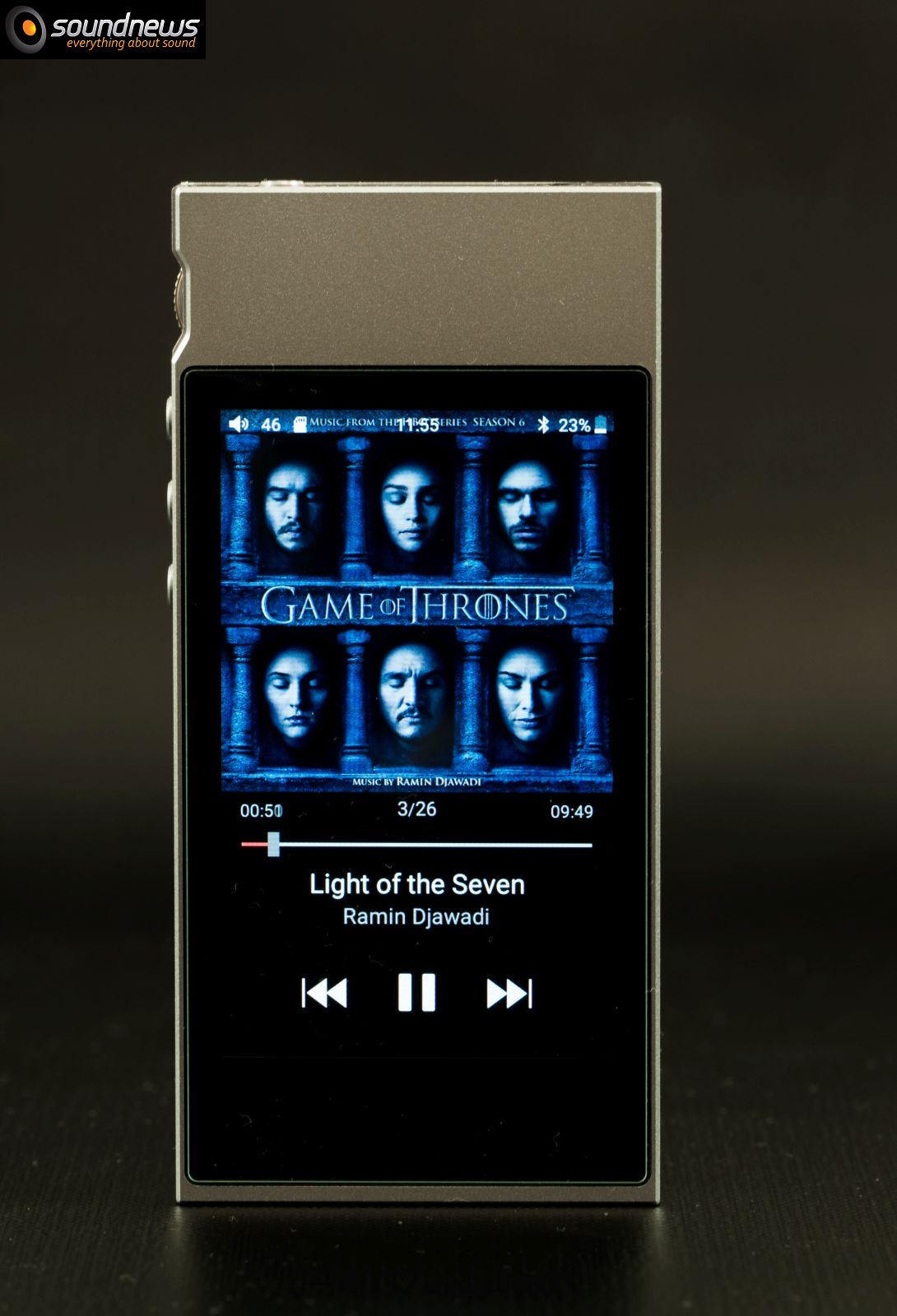
From the first turn on of M7 I realized that GUI has undergone great changes to be easier to use for regular listeners, not just for the audiophiles. Detailed audio settings can only be accessed from FiiO Music app, I see that the gain setting was dropped. Being a touch screen device, many shortcuts were used, as swiping from different parts of the screen can turn you back to the main menu or to the main folder where audio files are located, I recommend consulting the user manual to know them all.The graphical interface is definitely much simpler than the one found on the X series and I hope this interface will also be ported to the successors of X3, X5 and X7.

Let’s get now to the most interesting part.

Audio Performance

Although at the first inspection I didn’t give it much chance because of small dimensions and specs, but I was pleasantly impressed by the sound quality inversely proportional to its size.

I don’t really know what mumbo-jumbo was done by the FiiO engineers, maybe it’s the All-in-One ESS SoC, maybe it’s the FPGA processing power, maybe its because of the 6 layer PCB that kills part of the cross-talk, but thanks to all those aspects sound quality is in pretty high league, strictly for me it sounded clearer than X3 MKIII and X5 MKIII.

Sounds unreal, but its strong point is exactly a high level of detail extraction, the airy presentation of the notes and a great speed and impact into the eardrums that it is capable of.

Using the FH5 in-ears of the same manufacturer, volume was about half, more than that and it becomes painful.

Although FH5 sounds very clear and are quite demanding toward a very clean headphone output, on M7 even on highest volume not a single hiss or background noise is heard. Background is black as it can be, it’s a very gratifying to those that want to use M7 with balanced armatures IEMs, custom made or hybrid.

Sennheiser HD660S is quite a difficult task for M7 and yet at maximum volume it sounded fairly alive and dynamic, this small fella can power demanding headphones but don’t expect miracles on other desktop sized headphones. For majority of portable headphones, be it over-ear or in-ear M7 is very capable and doesn’t need a separate headphone amp.

FH5, F9 PRO, SE846 and Momentum 2.0 were driven with authority with tons of headroom and lots of power reserve.

On electronic music it jumps at me the speed and attack it is capable of, from this point of view it is again better than X3 MKIII and even than X5 MKIII.

The crisp and airy presentation further enhances the feeling of good speed and impact, when sub-bass strikes it is felt like a train hits you, the sensation is very satisfying.

Infected Mushroom – Groove Attack gets an incredible impact and some explosive dynamics, I want it or not headbanging is already happening …

The same track proves me that the bass is exactly what the doctor ordered and I’m not referring only to the mid-bass, but to the sub-bass as well that goes deep down really fast, hits and retires right away. I feel that the bass is a bit overdone, but not by much, enough to lift your mood, but not so much as to bother you. The purist in me says it has a good dose of quality and some extra topping in quantity.

Bass to mids transition is smooth, same thing happens from mids to treble. Frequency response seems linear with a slight bass boost.

Mids sound clear, well defined, the air between voices is present, voices are not syrupy but not dry either. Typical to ESS Sabre chip-set the focus was put more on the outline of the notes, inclusive to mids and less on tangible weight of those notes.

I can’t attest it’s a very natural sound, but clinical it isn’t as well, quite hard to categorize such a thing, M7 is somewhere in the middle. For example X3 MKIII tends more to musicality and to a natural tone, X7 MKII is in the opposite camp of linearity and absolute precision, M7 is exactly between them, having a little bit of everything.. Still its presentation goes towards X7 more than to X3, M7 has a resolving nature that I can speak of freely in a desktop DAC.

On faster music of any kind M7 is simply a joy to listen, precision and speed stands out immediately, it made me goose bumps on rare occasions, elements that modern smartphones are only dreaming about.

Treble and the rest of the spectrum is clean, lower and higher registers are also present, cymbals are heard very clearly without the disturbing reverb that is so present on low quality sources. Treble has a good presence, it withdraws fast without being mushy, a thing that I really can’t stand.

Shortcomings of the old recordings can be easily heard and unfortunately can not be masked, M7 will emphasize all the details you want or not in a recording.

The grain on some vintage rock albums is there too, the smoke of the old studios can be felt as well without too much effort.

Overall, I think it’s a honest audio source that does not hide anything, which has enough power for the portable headphones and which has an incredible level of dynamics considering the size. If I take into account portability and excellent battery life, I find it quite hard to match.

At the end I did some experiments, for example I connected a pair of Audeze LCD-4Z to M7. Although this DAP is clearly not on the same level with the this particular headphone, the LCD-4Z was surprisingly well driven. The sound experience was good, but the WOW factor was missing, that sound that makes you shrill and you should expect from a pair of headphones that are on the short list of the best in the world.
I went to the next level and I connected the M7 to a Chord Hugo2. The best description of this combo: it was a bomb. M7 is an incredibly good transport, about Hugo2 we will discuss in the next episode. I give you one single tip, Hugo2 is quite expensive and yet inexpensive for what it offers, it’s a bargain.

Comparisons

Although I would not want to cannibalize FiiO DAPs in the same price range, it is imperative to do so.

M7 vs X3 MKIII

Both players are sold at the same amount of money, and yet cheese are two quite different devices.

X3 MKIII offers (much) more power, driving absolutely without problems a pair of HD660S, M7 suffers here and there on some passages on some tracks.

X3 MKIII offers besides a SE 3.5 mm output a balanced 2.5 mm output as well and can be used as a USB DAC, a feature that is missing on M7. If power is your thing then X3 would be a better choice.

Strictly in terms of sound quality M7 is better than X3 on almost all aspects.

The M7 sounds more technical, cleaner and more detailed, sounding a bit more spacious in width, giving even more air between the notes. The M7 sounds faster, more explosive in a way, the X3 is a bit lazy, which pretty much affects rising of dynamics generally used on fast music. All frequency spectrum is more linear on the M7, by comparison X3 sounds a bit dirty as if a curtain covers the music. It’s not a huge difference, but noticeable and it’s a well-documented difference on several portable and desktop headphones. We also used exotic solutions such as Audeze iSine 20 and Shure SE846.

M7 vs X5 MKIII

X5 III is more expensive and much more advanced with many additional features such as streaming, third-party apps support, a better headphone amp even more powerful than on X3.
The pinnacle is that in terms of SQ M7 sounds a little cleaner, airier and a little more linear.The X5 III is slightly more musical and natural, but it loses the correct rendering of the treble, cutting a little out of highers registers. M7 sounds more complete, with better presence in the sub-bass area, with clearer treble without any lower or higher registers being cut.

X5 III sounds deeper and wider, sound-stage is more spread out, a very pleasant effect on jazz and classic music, I suppose it is due to the much more advanced headphone amplifier stage. By comparison M7 sounds more intimate and shy, it sounds pretty wide and sound-stage is quite good, but not at the X5 III level. If I would not take into account the superior power of the X5 III and its Wi-Fi streaming capabilities then I consider the M7 about on the same level as X5 III, some stuff sounded better on the M7 and some on the X5 III.

Conclusions

M7 exceeded my expectations and from now on I will not judge a book by its cover.

The M7 is exactly what a portable DAP should be: it’s small, ergonomic, simple to use, has excellent battery life and most importantly sounds extraordinary.

Construction quality is at a high level and I really have nothing to reproach, I would like the successor of X3 to go in the same direction, comparatively I think that X3 MKIII failed at the design direction…

I’m curious to know why they abandoned the Infinity Sound motto, more exactly the balanced 2.5mm headphone out and why the USB DAC has been dropped, I will also miss the coaxial output to use it as a digital transport.

But if all of these extra features do not interest you then M7 is very capable and comparable to more expensive DAPs or audio sources. FiiO M7 can be purchased at 200 USD, a fair price for what it offers.

PROS:

  • Clean sound with good detail extraction
  • Airy presentation
  • Intimate but deep sound
  • Linear freq response with a slight bass boost
  • Good balance between technicalities and musicality
  • Presence of new Bluetooth standards as AptX-HD and LDAC
  • Small dimensions, easy to use GUI, good battery life
  • The right price for its performance

CONS:

  • Lack of USB DAC, balanced and coaxial out
  • Limited power on less efficient headphones
  • A leather case is no longer included in the package

Equipment used for review:

FiiO M7, X3 MKIII, X5 MKIII, F9 PRO, FH5, Sennheiser HD660S, Momentum M2.0, Audeze LCD-4Z, iSine 20, Shure SE846, Chord Hugo2.

FiiO M7 – Hi-Fi versiunea 2.0

3

FiiO au regandit complet gama playerelor portabile, iar M7 este primul lansat din aceasta serie.

La o prima inspectie imi dau seama ca M7 este complet diferit fata de celelalte playere din seria X, nu este un produs adresat strict audiofililor, avand ca tinta un public mai larg. Datorita noilor tehnologii Bluetooth precum AptX-HD si ultraperformantul codec LDAC, incorporarea receptorului Radio FM si implementarea sistemului de operare bazat pe Andoid 7 mult simplificat, M7 este un produs accesibil pentru oricine are un minim interes pentru calitatea audio.

Schimbarile au mers intr-o directie buna si prevad ca va fi un player portabil de succes.

Design & Calitatea constructiei

Imi place nespus de mult noul design, revenirea la corpul unibody din aluminiu este binevenita. Noul look e destul de banal si simplu deoarece arata exact ca o caramida din metal . Colegul Savu se plange de unghiurile ascutite, pe mine insa nu ma deranjeaza deloc acest aspect, din contra, iubesc caramizile!

Fizic este mai mic, mai usor si mai subtire decat X1 MKIII si X3 MKIII, foarte comod de tinut in mana si destul de ergonomic datorita dimensiunilor reduse.

Ca si la predecesorii sai jack-ul de 3,5 mm are o functie dubla: poate fi iesire normala amplificata de casti sau iesire curata de linie de 1.2V Rms. Din pacate s-a renuntat la transportul digital coaxial, pentru aceasta functie veti avea nevoie de X5 MKIII sau de X7 MKII.

In partea de jos gasim conexiunea USB-C pentru incarcare si transfer date. Portul USB-C este mult asteptat si binevenit pe aceste aparate, preconizez ca producatorul deja s-a pus pe treaba dezvoltand succesorului dock-ului K5, sper sa il vedem cat de curand posibil.

In partea stanga se gaseste rotita digitala de volum care ofera 60 de pasi si cele 3 butoane pentru redare/pauza, urmatoarea si anterioara melodie, o apasare lunga va derula rapid inainte sau inapoi melodia. In partea dreapta se gaseste slotul microSD ce suporta carduri de pana la 512 Gb memorie, iar in partea de sus gasim butonul de pornire/oprire si jack-ul de 3,5 mm.

Ecranul touch de 3.2” este suficient de mare pentru a citi usor informatia pe el si suficient de mic incat sa prelungeasca durata bateriei pana la 20 de ore. Ecranul foloseste o matrice IPS ce are rezolutia de 480 * 800 pixeli, unghiul de vizibiltate este bunicel si luminozitatea decenta chiar si in zilele insorite. La contrast si gradarea fina a culorilor sta putin mai prost, insa pana la urma urmei nu a fost creat pentru vizionarea pozelor sau a filmelor, pot trece peste acest aspect.

Nu am ce sa-i reprosez, calitatea constructiei este la un nivel inalt, design-ul e simplist, este mic si portabil, pana acum imi place tot ce vad.

Sub capota

Dupa cum spuneam M7 foloseste sistemul de operare Android 7 foarte customizat de catre inginerii FiiO, totusi este foarte diferit de ceea ce am vazut pe X5 MKIII si X7 MKII.

Aplicatiile terte nu se mai pot instala, unica aplicatie care se poate lansa este FiiO Music.

Dispozitivul este condus de catre procesorul dual-core Exynos 7270 tactat intre 1 – 1.4 Ghz (la un proces de fabricatie de 14 nm) iar memoria RAM este de 768 Mb.

Initial vazand specificatiile aveam mari emotii ca aparatul se va misca mai lent decat celelalte playere FiiO insa ma bucur sa confirm ca este de fapt cel mai rapid player din tot portofoliul FiiO. Se misca fluent, fara sacadari, inclusiv redarea fisierelor DSD 64 este lipsita de sughituri.

Convertorul digital catre analog este ESS Sabre 9018Q2C care momentan este capul de serie a chip-urilor mobile din portofoliul producatorului american.

Acest convertor se ocupa si de etajul de iesire de linie si cel de casti, astfel semnalul audio care il vom auzi in casti iese direct din ES 9018Q2C fara a mai trece prin circuite integrate separate – un lucru ideal pentru a oferi un sunet cat mai curat posibil.

O noutate in portofiliul FiiO sunt noile standarde Bluetooth 4.2 cum ar fi AptX-HD dezvoltat de Qualcomm si LDAC dezvoltat de Sony, cel din urma putand oferi un bitrate impresionant de pana la 999 Kb / sec ceea ce este deja considerat semnal lossless.

Desi o iesire coaxiala sau optica nu mai este prezenta, M7 poate trimite semnal digital prin portul USB-C catre un convertor mai bun ca de exemplu Q5 folosind un cablu custom precum FiiO CL06.

Producatorul a decis si includerea unui receptor radio FM 76 – 108 Mhz care practic include toate benzile radio din jurul lumii.

Desi bateria are doar 1180 mAh, datorita consumului mic al electronicelor M7 are o autonomie impresionanta de 20 de ore si de 40 zile in modul standby. Fata de 8-10 ore ale lui X7 MKII cred ca 20 de ore sunt mai mult decat suficinte.

Etajul de amplificare face parte din SoC-ul ES9018Q2C si ca urmare amplificarea de casti nu impresioneaza atat de mult cum o fac playerele din seria X. M7 ofera pana la 70 mW in 16 Ω si 40 mW in 32 Ω. Pentru referinta un iPhone 6s are 26 mW in 32 Ω.

Interfata Grafica

De la prima pornire a lui M7 mi-am dat seama ca interfata a suferit mari modificari pentru a fi pe intelesul tuturor, nu doar al audiofililor. Cele 6 bule indica din start ce dorim sa facem. Setarile audio detaliate se pot accesa doar din FiiO Music, observ ca nu mai putem selecta doua nivele de gain. Fiind un ecran tactil se folosesc multe scurtaturi, gen glisarea din diferite parti ale ecranului te poate intoare la meniul principal sau la folderul principal in care se afla fisierele audio, recomand consultarea manualului pentru a le invata pe toate.

Interfata grafica este cu siguranta mult mai simpla decat cea gasita pe seria X si sper ca aceasta interfata va fi portata si pe noile generatii X3, X5 cat si X7.

Sa trecem acum la partea cea mai interesanta.

Performanta Audio

Desi la o prima inspectie nu i-am dat prea multe sanse din cauza dimensiunilor mici si a specificatiilor, am ramas placut impresionat de calitatea sunetului invers proportionala cu dimensiunea sa.

Acum habar n-am ce mumbo-jumbo au facut inginerii FiiO, poate e de vina SoC-ul ESS All-In-One, poate e de vina procesarea custom FPGA, poate e placa de baza in 6 straturi ce elimina o parte din cross-talk, insa datorita tuturor acestor aspecte sunetul este intr-o clasa superioara, strict pentru mine suna mai cristalin decat X3 MKIII si X5 MKIII.

Pare ireal, insa punctul forte a lui M7 este exact nivelul ridicat al detaliului, aersirea foarte buna a notelor si viteza + impactul in timpane de care este capabil.

Pe castile in-ear FH5 ale aceluiasi producator, volumul era situat cam la jumatate, mai sus de atat devenea dureros.

Desi FH5 sunt foarte rezolute si pretentioase cand vine vorba de o iesire curata de casti, pe M7 chiar si la volumul maxim nu se aude nici un his si nici un zgomot de fond. Fundalul e negru ca taciunele, este un lucru foarte imbucurator pentru cei care vor sa foloseasca M7 cu armaturi balansate sau cu IEM-uri custom sau hibride.

Sennheiser HD660S sunt o sarcina destul de grea pentru M7 si totusi la volumul maxim sunau destul de viu si dinamic, aparatul poate duce chiar si sarcini mai dificile dar nu va asteptati la minuni pe castile desktop. Pentru majoritatea castilor portabile, fie ele over-ear sau in-ear M7 este foarte capabil si nu are nevoie de amplificare separata de casti.

FH5, F9 PRO, SE846 cat si Momentum 2.0 au fost conduse autoritar, cu tone de headroom si cu multa rezerva de putere.

Pe muzica electronica sare mult in evidenta atacul si viteza de care este capabil, din acest punct de vedere din nou este peste X3 MKIII si chiar peste X5 MKIII.

Sunetul cristalin si aerisit amplifica si mai mult senzatia de viteza si impact al sunetului, cand loveste sub-basul parca da metroul peste tine, senzatia e foarte satisfacatoare.

Infected Mushroom – Groove Attack capata un impact incredibil si o dinamica pur si simplu exploziva, vreau nu vreau headbang-ul e deja in toi…

Aceeasi piesa imi demonstreaza ca basul este exact ce mi-a recomandat doctorul, si nu ma refer doar la mid-bas, dar si la sub-bas care coboara adanc, loveste si se retrage imediat. Simt ca basul este putin accentuat, dar nu cu mult, indeajuns incat sa iti ridice dispozitia insa nu atat de mult incat sa te deranjeze. Puristul din mine zice ca are o doza buna de calitate si un extra topping la cantitate.

Tranzitia de la bas la medii este foarte lina, acelasi lucru se intampla si de la medii la inalte. Raspunsul in frecventa pare liniar cu o mica accentuare a basului.

Mediile suna clar, sunt bine delimitate, aerul dintre voci este prezent, vocile nu sunt siropoase dar nici uscate. Tipic chipsetului ESS Sabre accentul s-a pus mai mult pe conturul notelor, inclusiv a mediilor si mai putin pe greutatea tangibila a acestor note.

Nu pot spune ca este un sunet foarte natural, dar nici clinic nu este, greu sa cataloghez asa ceva, M7 este undeva pe la mijloc. Spre exemplu X3 MKIII tinde mai mult spre tabara muzicalitatii si a sunetului natural, iar X7 MKII in tabara opusa, a liniaritatii si a preciziei absolute, M7 este undeva la mijloc, avand cate putin din toate ..totusi prestatia tinde mai multe spre X7 decat spre X3, M7 are o rezolutie despre care pot discuta lejer la un DAC desktop de renume.

Pe muzica rapida de orice soi M7 este pur si simplu un deliciu, precizia si viteza ies imediat in evidenta, dupa care observi imediat dinamica ridicata ce iti face pielea de gaina, elemente la care doar viseaza telefoanele mobile actuale.

Inaltele ca si celelalte frecvente se aud curat, extremitatile sunt si ele prezente, cinelele se aud clar fara reverbul deranjant prezent pe sursele audio ieftine. Inaltele din nou au o prezenta perfecta, se retrag destul de repede fara a crea terciul murdar de care personal fug ca dracul de tamaie.

Deficientele inregistrarilor vechi se aud si din pacate nu pot fi mascate, aparatul va accentua toate detaliile dorite sau nu din inregistrare.

Granulatia pe albumele rock vintage este prezenta, fumul vechilor studiouri este si el prezent, nu foarte accentuat dar se aude fara mult efort.

Per total mi se pare o sursa audio sincera care nu mascheaza nimic, ce are o rezerva destula de putere pentru castile portabile, ce poseda o dinamica incredibila avand in vedere dimensiunile pe care le are. Daca iau in calcul portabilitatea si autonomia excelenta deja mi se pare greu de egalat.

La sfarsit am facut si cateva experimente, de exemplu am conectat o pereche de Audeze LCD-4Z la M7. Desi playerul nu este la nivelul castilor, discutam totusi de un model de peste 4000 Euro, LCD-4Z au fost surprinzator de bine pilotate. Experienta sonora a fost buna, dar a lipsit acel factor WOW, acel sunet care te lasa cu gura cascata si pe care-l astepti dintr-o pereche de casti care se afla pe lista scurta a celor mai bune din lume.

Am trecut la nivelul urmator si am conectat M7 la un…Chord Hugo 2. Cea mai buna descriere a acestui combo este…bomba. Micul M7 este un transport incredibil de bun, iar de Hugo 2…vom discuta in episodul urmator. Va dau un singur tip, Hugo 2 este foarte scump si totusi ieftin pentru ceea ce ofera. Chiar ieftin.

Comparatii

Desi nu as vrea sa canibalizez playerele FiiO din aceeasi gama de pret, este imperativ necesar sa fac acest lucru.

M7 vs X3 MKIII

Ambele playere sunt comercializate la aceeasi suma de bani si totusi sunt doua aparate destul de diferite.

X3 MKIII ofera (mult) mai multa putere, conducand absolut fara probleme HD660S, pe cand M7 mai sufera pe ici colo pe unele pasaje si unele melodii.

X3 MKIII ofera pe langa iesirea SE de 3.5mm ofera si o iesirea balansata de 2.5 mm, si poate fi utilizat ca DAC USB, functie care lipseste din M7. Daca puterea este ceea ce va doriti X3 este o alegere mai buna.

Strict din punct de vedere al calitatii sunetului M7 este peste X3 la mai toate capitolele.

M7 suna mai tehnic, mai curat si mai detaliat, suna putin mai spatios pe latime oferind si mai mult aer intre note. M7 suna mai rapid, mai exploziv intr-un fel, X3 este ceva mai lenes, lucru care afecteaza destul de mult urcusurile dinamice folosite in general pe muzica rapida. Tot spectrul de frecventa este mai liniar pe M7, prin comparatie X3 suna putin murdar de parca o cortina acopera muzica ascultata. Nu este o diferenta uriasa, dar sesizabila si bine documentata pe mai multe modele de casti potabile si desktop. Am folosit inclusiv solutii exotice precum Audeze iSine 20 si Shure SE846.

M7 vs X5 MKIII

X5 III este mai scump si mult mai avansat avand multe functii suplimentare precum streaming, instalare de aplicatii terte, amplificare si mai potenta decat cea gasita pe X3.

Culmea este ca sonic M7 suna putin mai curat si mai aerisit, putin mai liniar chiar.

X5 III este usor mai muzical si mai natural, insa pierde la redarea corecta a inaltelor, taind putin din extremitati. M7 are sunet mai complet, sub-bas mai prezent si inalte mai cristaline fara extremitati taiate.

X5 III suna mai adanc si mai larg, scena mai imprastiata, un efect foarte placut pe jazz si clasica, presupun ca se datoreaza etajului mult mai avansat de amplificare a castilor. La acest capitol M7 suna mai intim si mai timid, suna destul de imprastiat si scena este destul de buna, dar nu la nivelul lui X5 III. Daca nu as lua in calcul puterea superioara a lui X5 III si capabilitatile de streaming prin Wi-Fi atunci consider M7 cam la acelasi nivel cu X5 III, unele chestii fiind mai bune pe M7 si unele pe X5 III.

Concluzii

M7 mi-a intercut asteptarile si de acum inainte nu voi mai judeca o carte dupa coperta sa.

M7 este exact cum ar trebuie sa fie un player portabil fara multe brizbrizuri: este mic, ergonomic, simplu de utilizat, are o autonomie excelenta si cel mai important suna extraordinar.

Calitatea caramizii de aluminiu este la un nivel inalt si chiar nu am ce sa-i reprosez, mi-as dori ca si succesorul lui X3 sa mearga in acceasi directie, comparativ cred ca X3 MKIII a dat-o putin in bara la capitolul design…

Sunt curios de ce au abandonat motto-ul Infinity Sound adica mai exact iesirea balansata de 2.5mm de casti si de ce USB DAC-ul a fost lasat in paragina, imi va fi dor si de iesirea coaxiala pentru al folosi pe post de transport digital.

Insa daca toate aceste functii suplimentare nu va intereseaza atunci M7 este foarte capabil si comparabil cu playere sau surse audio mai scumpe.

FiiO M7 poate fi achizitionat la pretul de 1050 lei, nici prea ieftin, nici foarte scump, un pret corect pentru ceea ce ofera.

PRO:

  • Sunet cristalin cu o extragere buna a detaliilor
  • Aerisirea buna a tuturor notelor muzicale
  • Sunet intim dar adanc
  • Spectrul liniar cu o usoara coloratura pe bas
  • Echilibrul tonal bun intre tehnicalitati si muzicalitate
  • Prezenta noilor standarde Bluetooth AptX-HD si LDAC
  • Dimensiuni mici, interfata simpla de utilizat, autonomie buna
  • Pret corect raportat la performantele acustice

Contra:

  • Lipsa USB DAC-ului, a iesirii balansate de casti si a celei coaxiale
  • Putere limitata pe casti mai putin eficiente
  • Husa din piele nu mai este inclusa in pachet

Echipamente folosite pentru recenzie:

FiiO M7, X3 MKIII, X5 MKIII, F9 PRO, FH5, Sennheiser HD660S, Momentum M2.0, Audeze LCD-4Z, iSine 20, Shure SE846, Chord Hugo 2.

Test comparativ cu boxe de raft (buget 4000 lei)

14

Salutare prieteni.

Mi-am incalzit deja urechile si am trezit neuronii ascultand muzica buna din testul comparativ cu boxe de raft pana in 2000 RON pe care il gasiti aici

Sper sa nu ma omoare curiozitatea cea care a omorat pisica, dar deja am ochit boxe de 2 ori mai scumpe si uite ca asa am ajuns la un nou test de boxe.

Cum am facut si data trecuta am decis sa folosim electronice din gama superioara.

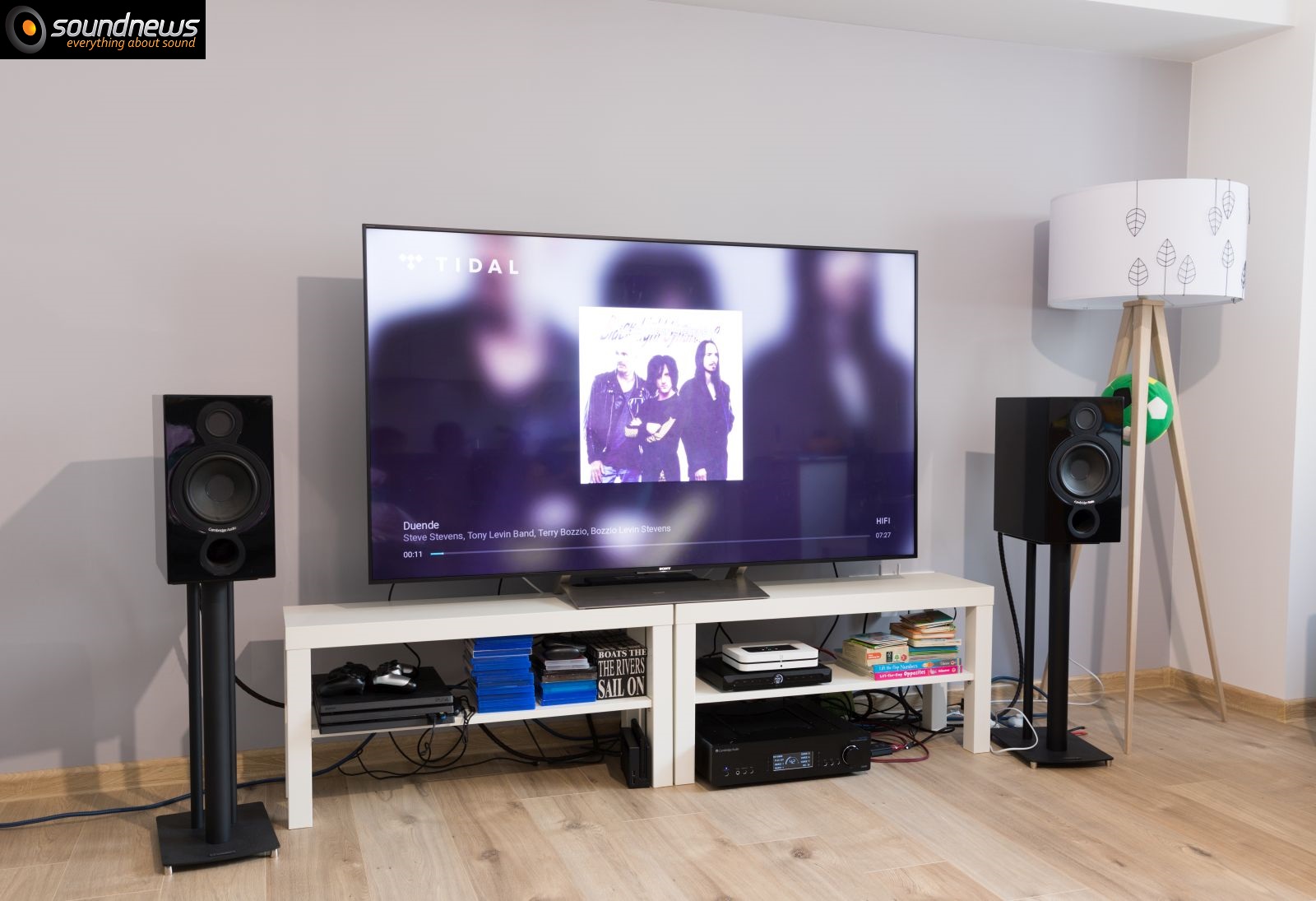
Electronice folosite pentru test:

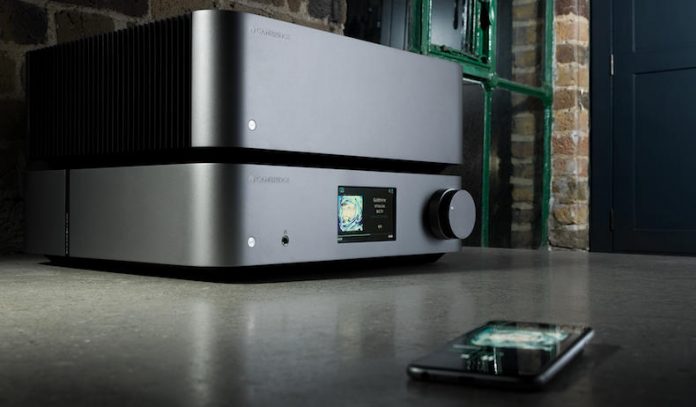
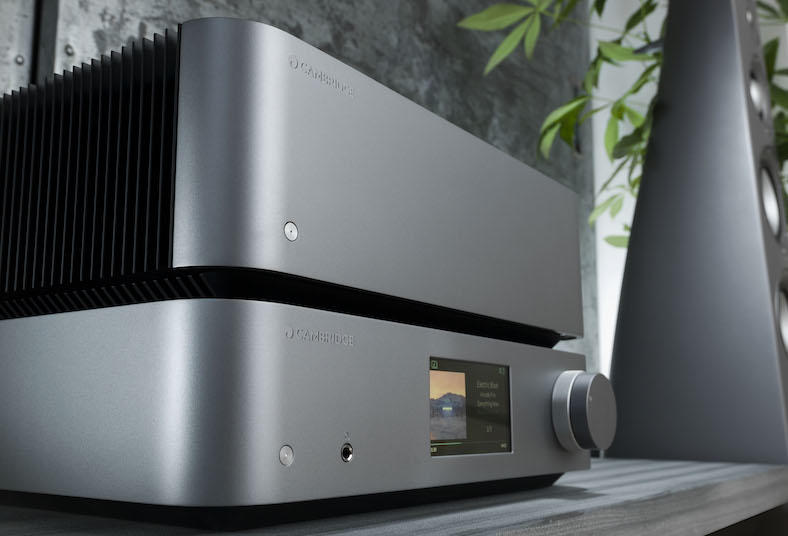
Pe langa DAC-ul Matrix X-Sabre PRO si amplificatorul integrat Cambridge Audio Azur 851A am decis sa facem un upgrade si la transportul digital care pana la acest moment a fost un Chromecast Audio ce imi transmitea semnalul optic din TV pana la DAC. L-am schimbat cu un streamer minune: Bluesound Node 2, care mi-a imbunanatit performanta audio si mi-a indeplinit toate fetișurile precum MQA, conectare wireless la PC/HDD extern, control simplu prin aplicatia de pe telefon, acces la majoritarea serviciilor de streaming precum Tidal/ Spotify/ Deezer/ etc si multe alte functii (DAC extern, amplif casti) pe care inca nu le-am testat.

Conectica a ramas aceeasi, am folosit cabluri QED Reference, Audioquest Type4 si Kimber PR8

DAC-ul si amplificatorul au un sunet rezolut si precis, punand accentul pe extragerea minutioasa a detaliilor, pe dinamica exploziva si oferind un sunet vioi.

Boxele testate au fost:

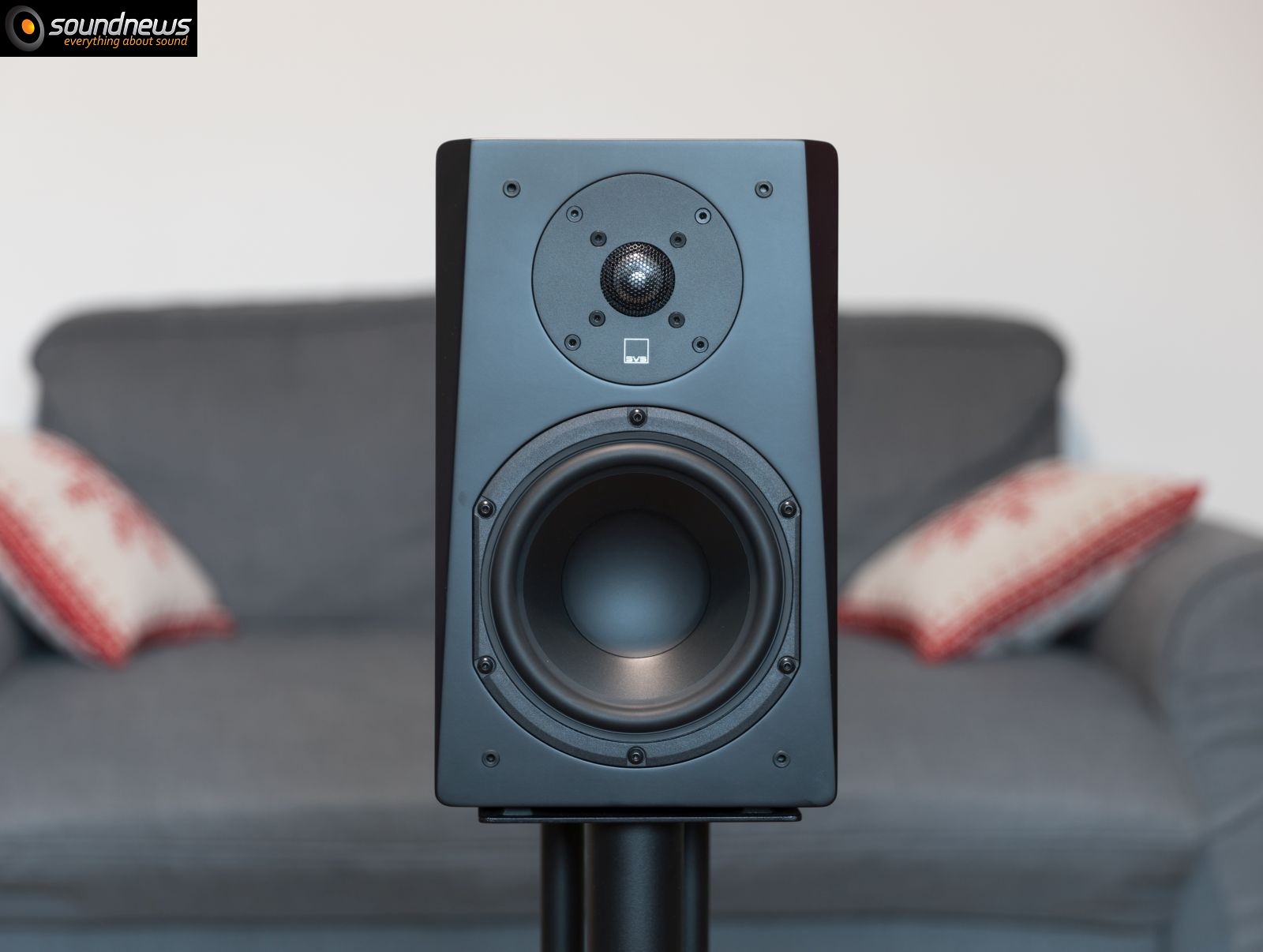
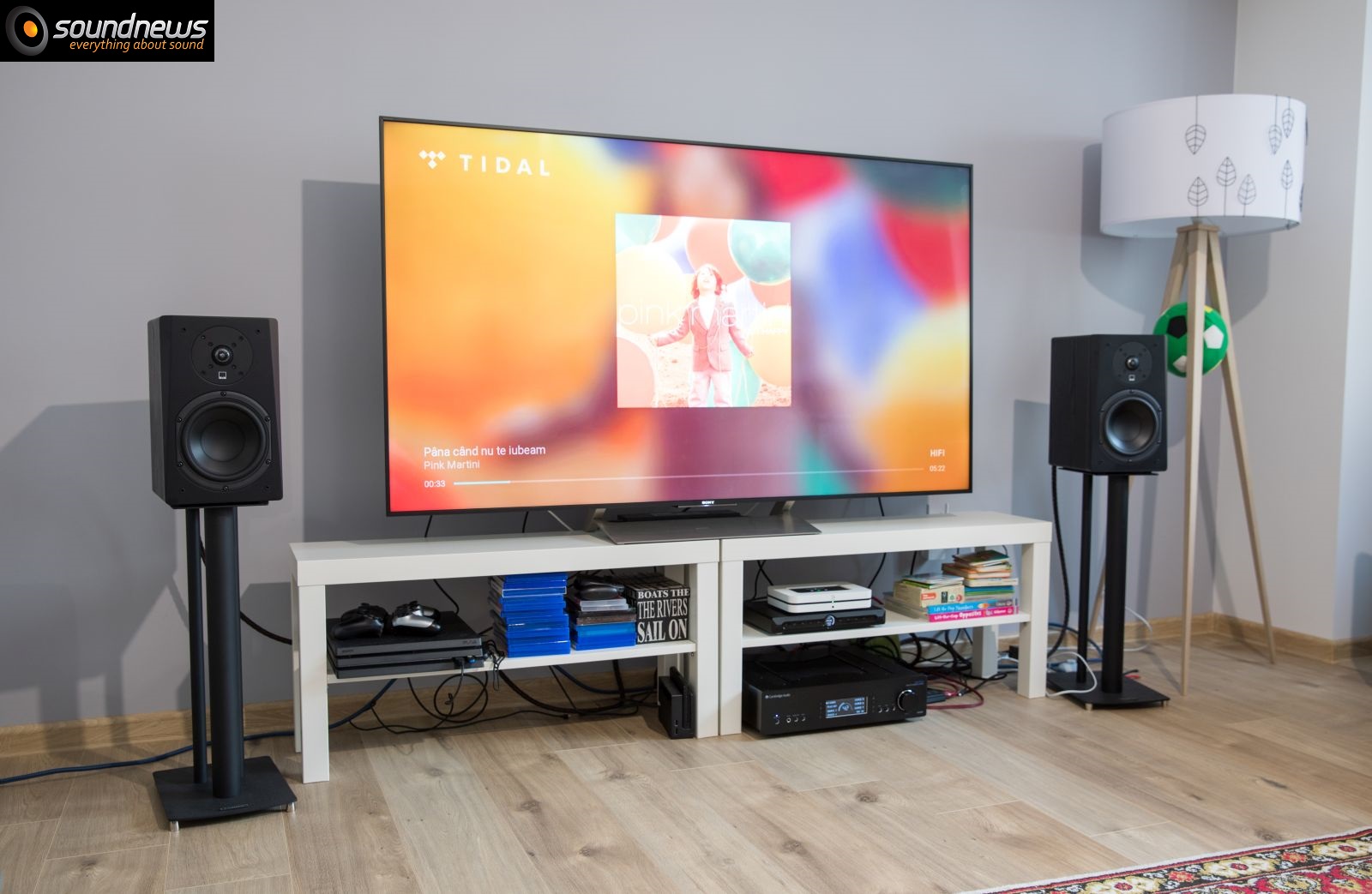
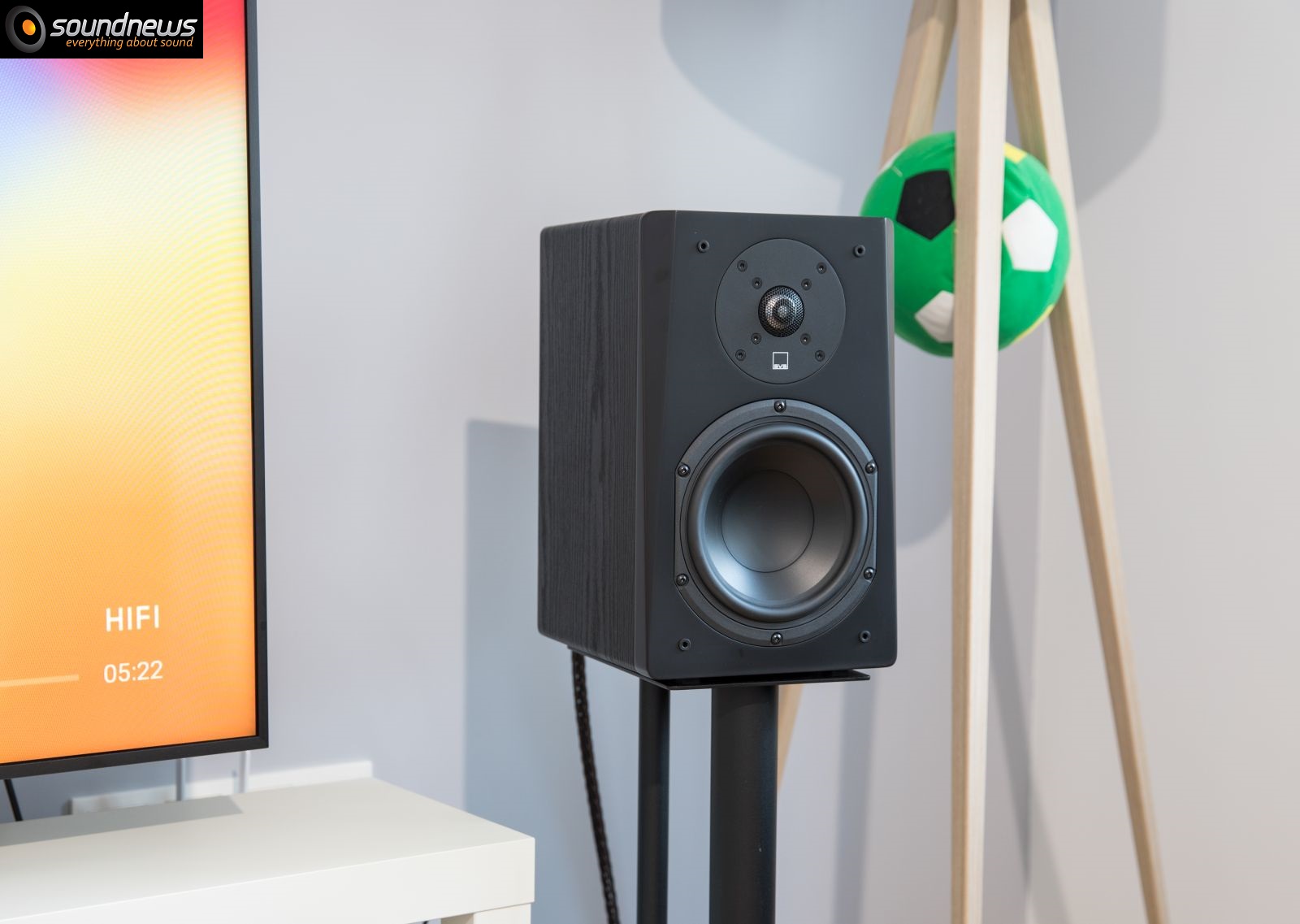
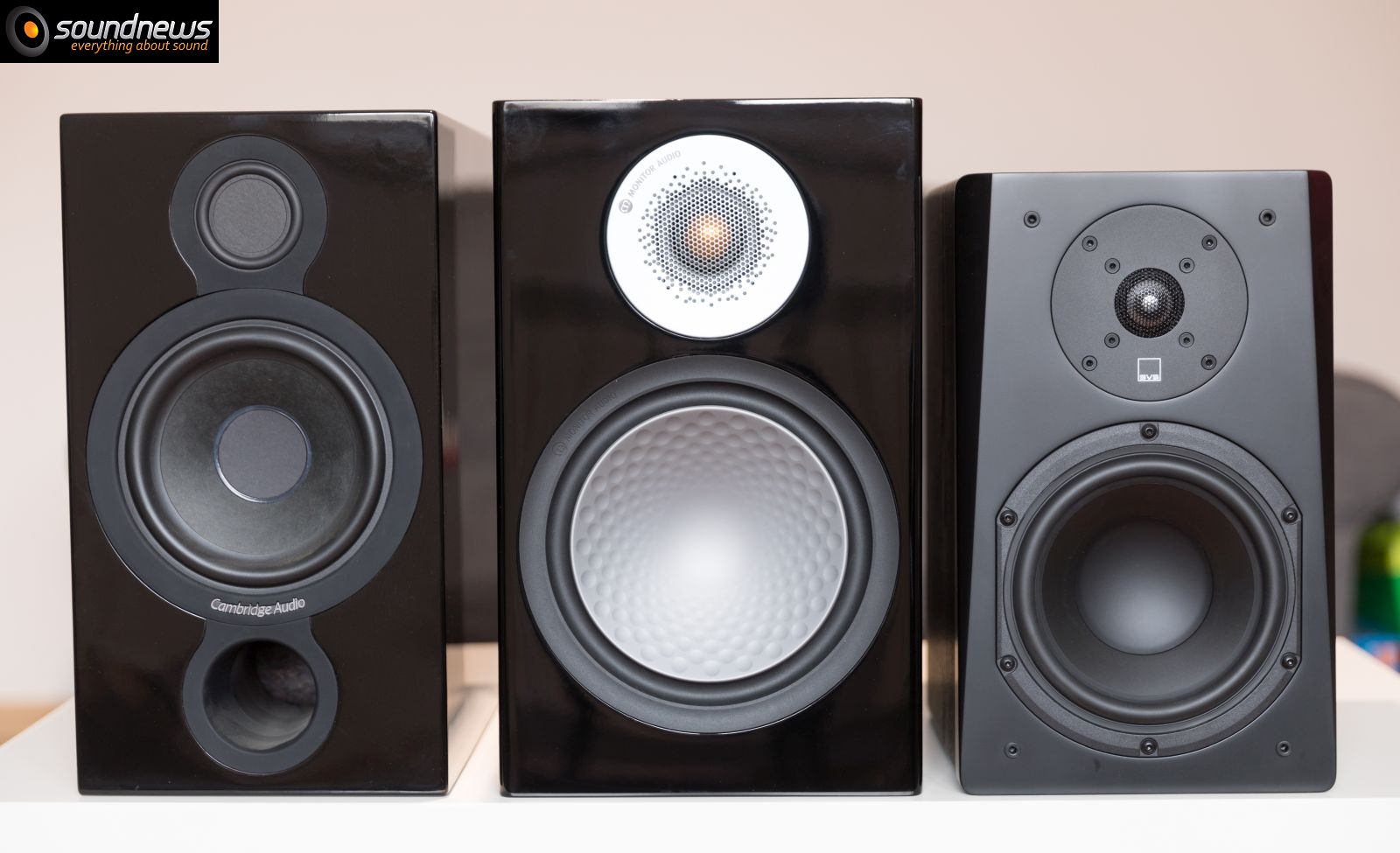
SVS Prime – 2999 RON

La dezvoltatea acestui model, producatorul American a adoptat cateva tehnologii folosite la modelele superioare (Ultra) cum ar fi crossoverul SoundMatch si tweeterul de 1” din aluminiu.

SVS Prime sunt boxe de raft cu portul de bas reflex pe spate, avand tweeterul din aluminiu si wooferul de 6.5”/16.5 cm din polipropilena. Impedanta nominala este 8 ohmi, au 7 kg bucata, iar raspunsul in frecventa este de 48 Hz – 25 kHz.

Boxele arata foarte simplu, designul mi se pare destul de plictisitor, bornele din spate sunt de calitate buna , par finisate bine pentru aceasta suma de bani.

Boxele au venit sigilate si nerodate, dar fiindca nu am avut rabdare am inceput sa le ascult din primul minut dupa ce le-am montat.

Imediat dupa ce am pornit The Prodigy – Invisible Sun eram curios daca sub-basul de la 0:37 va trezi wooferul. Am ramas sincer dezamagit nu doar de bas care nu cobora deloc si de inaltele tipatoare care urlau mai tare ca mama soacra, dar si de prestatia incordata si artificiala, notele muzicale nu erau deloc legate, auzeam sunete nu muzica.

Le-am lasat 2 zile la foc mic (in jur de 30 de ore reale de rodaj) si am reinceput auditia.

Complet alta mancare de peste! A reaparut lichiditatea sunetului, totul suna mult mai dinamic, in sfarsit a aparut si basul care si-a luat 2 zile de concediu.

Per total, dupa rodaj boxele suna destul de neutru, incercand sa nu puna in evidenta aproape nimic.

Pe muzica vintage simt o usoara atenuare a frecventelor medii – plasate mai mereu pe planul doi. Vocile suna in continuare dulci si au o prezenta placuta, insa nu par foarte centrate si nici prea focusate.

Mid-basul a fost redat bine, atat pe The Prodigy cat si pe Infected Mushroom a sunat rapid, a lovit si s-a retras la momentul potrivit. Accentul este pus pe lovitura, impact si mai putin pe adancime.

In special ascultand piesa Invisible Sun am sesizat atenuarea sub-basului, care nu a coborat cat mi-as fi dorit. Consider ca este cel mai mare minus al acestui model, care de altfel producatorul il specifica din start in specificatii (de la 48 Hz).

Scena stereofonica este de marime medie si nu foarte adanca, nu exista un perete imaginar in care s-ar lovi notele. Ele se retrag destul de lin, fara a auzi distorsiuni sau ecouri.

Punctul spot este foarte larg, se pot asculta lejer din mai multe unghiuri fara a pierde calitatile importante. Boxele par eficiente si usor de condus ce m-a bucurat.

Per total mi-au placut si nu au existat momente de deranj in care sa aud deficiente sau erori grave, insa de fiecare data cand le ascultam ma tot gandeam ca nu ar strica si un subwoofer langa ele pe podea. Consider ca s-ar impaca de minune cu frumusetile alea de subwoofere marca SVS, care printre altele le-am ascultat recent si m-au impresionat nespus (multumesc Bogdan pentru invitatie).

Daca basul nu este prioritatea numarul unu sunt niste boxe destul de echilibrate fara minusuri notabile.

Cambridge Audio AeroMax 2 – 2929 RON

Boxele de raft AeroMax 2 fac parte din gama flagship a producatorului britanic. Constructia este de tip 2 cai, avand portul de bas-reflex orientat in fata.

Observ din start ca tweeterele sunt foarte diferite, au renuntat la cele traditionale si au folosit difuzoare BMR (Balanced Mode Radiator) care supriza! pe langa redarea frecventelor inalte, redau si frecvente medii.

Tweeterul are aria de 5cm iar wooferul de 16.5cm, boxele au o greutate de 7,24 kg iar raspunsul in frecventa este de 40 Hz – 22 kHz.

Sunt finisate premium, imi place destul de mult negrul lucios care arata impecabil pe aceasta pereche de boxe. Spatele boxelor arata simplu si modest gasim doar bornele de calitate buna si cam atat.

Avand portul de bas-reflex orientat in fata am sperante mari ca voi auzi cel mai adanc si controlat bas din aceasta seara.

In primul si in primul rand vreau sa va reamintesc ca in testul precedent Cambridge Audio SX60 au fost clasate pe ultimul loc, asa ca incepand testul de astazi eram foarte reticent si aveam asteptari mici in ceea ce priveste performanta modelului AeroMax 2.

Dupa ce a pornit prestatia live Nils Lofgren – Keith Don’t Go nu mi-a venit sa cred cat de diferit suna aceste boxe fata de gama entry SX60, diferenta este de la cer la pamant.

Am remarcat imedat mediile dulci si calde de care sunt capabile aceste boxe.

Chitarile si vocile au sunat foarte texturat avand o prezenta foarte buna. De data aceasta aud vocile centrate si foarte conturate.

Vibratia chitarii este usor prelungita, tranzitia de la medii spre inalte este excelenta, fara gropi sau urcusuri.

Inaltele au sunat aerisite si detaliate. Extremitatile de sus insa au fost taiate usor.

Atenuarea inaltelor de sus am auzit-o in special pe Bozio Levin Stevens – Duende, unde cinelele au sunat mai calme, mai retrase si mai putin rapide.

Cel mai bun aspect l-am lasat la urma: basul!

Pe modelul precedent SX60 ma plangeam de basul care era complet lipsit de control si care suna prea lent pentru gusturile mele.

AeroMax 2 suna foarte diferit in acest sens, in sfarsit a revenit controlul care imi lipsea atat de mult. De acum basul nu doar coboara la un nivel impresionant de jos, dar este mult mai controlat si se retrage simtitor mai rapid. A disparut complet senzatia de bas din butoi, murdar si lent.

Scena stereofonica este putin mai mare decat cea auzita pe SVS Prime, sunetul a devenit mai larg si mai adanc. Am observant ca punctul spot are o importanta mai mica pe aceste boxe.

Aglomeratia notelor nu este prezenta, Dave Brubeck – Take Five cat si Bozio Levin Stevens – Duende au sunat bine aerisit, avand spatiu vid foarte clar intre note cu o prestatie bine imprastiata in camera de auditie.

M-au suprins si mi-au placut destul de mult AeroMax 2, le consider mult mai bune decat SX60 ale aceluiasi producator, daca bugetul va permite, AeroMax 2 sunt boxe care trebuie luate serios in considerare.

Monitor Audio Silver 100 – 3300 RON (3630 RON cele lucioase)

Deja stim ca noua serie Silver contine elemente din seriile superioare Gold si Platinum precum wooferul C-CAM RST (Ceramic Coated Aluminium-Magnesium) initial dezvoltat in industria aero-spatiala pe care Monitor Audio l-a adaptat pentru a realiza conuri de difuzoare, dar si noul tweeter personalizat C-CAM de 2.5cm.

Boxele sunt pe 2 cai, au portul de bas reflex pe spate, au greutatea de 9,3 kg per incinta iar raspunsul in frecventa este de 40 Hz – 35 kHz.

Numai uitati-va la ele: mari, frumoase, impunatoare, grele, voluptoase, woofer “all about that bass” de 20 cm, ce vreti mai mult de atat?

Serios acum, imi plac nespus cum arata, au fata curata fara nici un surub, au si tweeterul protejat de micul distrugator de 4 ani din casa, contrastul dintre negrul lucios si wooferul argintiu pune bine in evidenta boxele.

Momemtul in care am dat play melodiei The Prodigy – Invisible Sun a fost si momentul cand am inceput sa trag cu ochiul pe geam sa vad daca nu cumva a chemat vreun vecin politia. Geamurile au inceput sa imi tremure la propriu de la basul zguduitor…

Giganticul woofer de 20 cm (mister elucidat: dimensiunea conteaza!) a inceput sa-si arate muschii.

Avand mai mult de 80cm in spate fata de portul bas-reflex, basul lovea rapid cu o viteza incredibila. Cobora mai jos decat ce am auzit pe AeroMax 2 si era mai autoritar si mai prezent.

Mi-a placut ca nu ma lovea doar frontal dar din mai multe directii amplificand senzatia de scena mare si larga.

Intr-adevar aud cea mai bine imprastiata scena audio din aceasta seara, imi aminteste mai mult de prestatia boxelor de podea decat a celor de raft.

Sunetul este cu adevarat mare si impunator avand o dinamica impresionanta si un raspuns tranzitoriu foarte rapid.

Ca in cazul boxelor inferioare Monitor Audio Bronze 2 am auzit un echilibru tonal foarte bine pus la punct, este aspectul care pe mine m-a impresionat cel mai mult.

Mai presus de calitatile acustice pe mine ma impresioneaza mai mult echilibrul tonal in care nu trebuie sa aud gropi, in care sunetul trebuie sa respire avand un detaliu bun dar si o naturalete de invidiat.

Ma bucur ca traditia nu a fost schimbata si ca Silver 100 ia punctajul maxim la acest capitol.

Spre deosebire de SVS Prime si AeroMax 2 frecventele medii au o vibratia mai scurta, se termina mai brusc, sunt clar mai controlate in aceasta zona a frecventelor. Cu toate acestea mediile sunt mai dulci si sunt plasate in prim plan impreuna cu basul. Sunt bine conturate, au o textura naturala si tocmai de aceea sunt foarte placute.

Frecventele inalte sunt si ele cu totul speciale.

Extremitatile de sus nu sunt deloc taiate, se aud clar avand o rezolutie superioara modelelor ascultate anterior. Cu toate acestea nu sunt sibilante si nici taioase. Ador cand producatorii dezvolta boxe sau casti cu inalte super rezolute dar care suna natural fara a ma obosi pe termen lung.

La fel ca basul, consider ca MA Silver 100 au produs cele mai clare si cele mai extinse inalte pe care le-am auzit in aceasta seara.

Va rog sa nu ma credeti fanboy Monitor Audio, acum o luna in urma am avut primul contact cu aceasta companie si incet dar sigur am inceput sa am incredere in aceasta companie.

Concluzii

Fanboy, ne-fanboy Monitor Audio Silver 100 din nou sunt pe locul intai.

Nu au nici o treaba gusturile personale, am fost mai obiectiv de data aceasta.

Pur si simplu, din toate punctele de vedere au fost cu o clasa peste celelalte doua perechi de boxe, sunt mai scumpe dar consider pe deplin justificata diferenta.

Design-ul mi-a placut mai mult pe Silver 100, contrastul intre incinta neagra si driverii argintii pare a fi o combinatie de succes. Sunetul a fost peste asteptari, am auzit un salt urias in calitatea audio fata de boxele auzite din testul precedent (boxe pana in 2000 RON).

SVS Prime cat si AeroMax 2 momentan schimba lovituri sub centura pentru medialia de argint. Daca va intereseaza un bas mai prezent si niste inalte mai calme atunci AeroMax 2 sunt acele boxe, iar daca va intereseaza medii mai precise cat si inalte mai rezolute atunci SVS Prime sunt acele boxe.

Per total toate cele trei modele pe echipamentul de test mi-au demonstrat ca exista un salt destul de mare fata de boxele auzite in testul precedent.

Perechile ascultate astazi au sunat mai controlat, mai detaliat, oferind si mai mult aer intre notele muzicale.

Orice concluzie ati trage din acest test comparativ, va recomand sa le ascultati personal si sa alegeti cu inima nu cu capul.

Acestea fiind spuse va doresc cat mai multe auditii placute si un Paste Fericit!

50 de ani de Cambridge Audio impreuna cu noua gama de top EDGE

1

Cu ocazia aniversarii a 50 de ani de existenta, Cambridge Audio au ridicat stacheta calitatii cu noua gama HighEnd Edge.

Gama Edge a fost denumita asa pentru a onora contributia profesorului Gordon Edge, unul dintre fondatorii marcii si creatorul primului produs Cambridge Audio, amplificatorul P40.

Gama este este constituita momentan din trei produse: amplificatorul integrat Edge A (5000 Euro), streamerul-preamplificator Edge NQ (3800 Euro, 100w in 8ohmi) si amplificatorul de putere Edge W (2900 Euro, 100w in 8 ohmi).

Noile produse vor fi disponibile din Iunie 2018, dar avem informatii ca le vom putea vedea prezentate si la Munchen High-End Audio show in luna Mai.


Serviciile de streaming – 65% din incasarile industriei de muzica

0

Pentru unii stirea senzationala a zilei a fost data de raportul RIAA pe 2017 vanzarile de CD+Vinil (17% din incasarile totale) au depasit ca valoare vinzarile de fisiere audio (15% din vanzari). De aici au inceput in val de comentarii ca vinilul se intoarce, ca CD-ul revine la putere etc.

Din acel raport insa, cea mai important procent este 65%, cota de incasari a serviciile de streming audio online (Spotify, Tidal, Deezer etc). Doua treimi din toate incasarile provin din aceste servicii bazate pe abonament lunar si ne place sau nu acesta este viitorul.

FiiO Q5 – Linearity King

0

We have been waiting for a long time for a top DAC/Amp combo from FiiO, especially if we take into consideration that the last such devices were E18 and E17K launched 4 years ago and respectively 3 years ago.

Q1 Mk2 showed me that FiiO has not forgotten his old clientele, but I still wanted something better, something to surprise and amaze me.

we knew too well that the new Q5 flagship has been in development for more than two years. It is finally released and finally we have the opportunity to try it and test it thoroughly on both headphones and speakers.

The Q5 replaces the E17K/E18 and all its predecessors, delivering not only better sound and stronger amplification stage for headphones, but also new long-awaited features.

What actually is the new Q5?

First of all, it is a true audiophile hub, for both headphones and speakers, just the right thing for your iPhone via Bluetooth or lightning cable, but it can also be a powerful DAC for your PC-Fi needs or for your Hi-Fi stereo from the living room.

Under the hood of Q5

The hardware has been chosen with great care, Q5 being stuffed with many top components, many of which are found only in expensive equipment.

At the heart of the device are the two AKM chips, namely the AK4490EN, which are increasingly used in the audio industry due to velvety and clean sound it produces.

Those two DAC chips are capable of decoding both PCM up to 32bit/384kHz but also natively DSD material up to DSD 256!

The USB input is taken care by the newest XMOS interface and that is XUF208, that offers stability, low digital noise (jitter) and unaltered signal transmission to other components.

Two pieces of high-performance OPA1642 are taken care of the low-pass filter that passes the signal to the AM3A headphone amplifier module – the same one found in the flagship DAP X7 MkII.

Amplification stage in AM3A is done by one OPA8620 (JFET) and by another OPA926.

Initially this module was designed for use in the top of the line X7 MkII, but due to its versatility and high performance it was decided to be used in the Q5 as well. Output power is slightly higher than that of X7 MkII though (470mW in 16 Ω on Q5 VS 380 mW in 16 Ω on X7 MkII using the balanced output).

For every critical circuit a total of seven low-dropout regulators were used for a cleaner and purer sound performance.

Q5 can also receive data via Bluetooth; the chip used is the Qualcomm CSR8670 that offers official support for AptX.

Before raising an eyebrow you should know that native decoding of audio bit streams will still be done by the two AK4490 DAC chips and not by decoder built in the CSR8670. Because it is still impossible transmitting in real-time full streams of PCM data in 16 bit / 44.1 kHz, AptX was the right choice thanks to a low compression of the signal up to 352 kb/s (compression rate of 4:1), which can be sufficient for most listeners.

Although technically the Bluetooth chip can support BT version 5.0, at the time of testing the working BT version of Q5 is 4.2. From what I understand in the near future there might be firmware updates that can also update Bluetooth to a newest version, time will tell.

As with the Q1 Mk2, the new Q5 is MFI certified (Made For iPhone) and it perfectly works with iOS devices, both via the microUSB > Lightning cable found in the package and via Bluetooth. It will also work with some Android devices, although the manufacturer does not specify this aspect. However, I recommend testing in advance to check the functionality with your Android phone. From our tests it perfectly worked with all devices that had USB-C and with all Android devices that supports OTG audio out.

As I was saying, as in case of X7 MkII, headphone amplification is made through interchangeable amp modules, at this moment 6 amp modules are available, most recent one is the AM3B that also has a balanced Pentaconn 4.4 mm headphone out. Stock module is AM3A which besides the normal 3.5mm output offers an additional balanced 2.5 mm output via TRRS.

Package Contents

  • Textile carrying case with FiiO logo
  • MicroUSB cable for charging and connecting to PC
  • MicroUSB to Lightning cable for iOS devices
  • Analog mini 3.5mm to mini 3.5mm cable
  • Digital adapter cable from 3.5mm to coaxial
  • Coaxial to Optic adapter
  • Screwdriver to change the amp module and an additional set of screws
  • Two sets of rubber rings for attaching a mobile source (Smartphone, DAP)
  • A silicone spacer that can be used between Q5 and another audio source to avoid any damage

FiiO separately offers some additional accessories such as the Q5 leather case, and a 2-in-1 leather case for Q5 and an iPhone 6/6S/7/8.

For Android users we recommend purchasing a USB-C to microUSB or a microUSB to microUSB cable. We bought one from Amazon, a short 10 cm cable.

Design and Functionality

The combination of anodized and sandblasted aluminum (with zirconium) looks amazingly good.

The back covered with organic leather gives an air of refinement and good taste. The device has a buttons, inputs and outputs on all four lateral sides so hold tight. It’s a little complicated at first, but in just a few minutes everything is clear and simple.

On top we find two switches for bass (On/Off) and gain (Low/High), as well as a coaxial/optical input combo jack and a line output jack (1.8 V Rms).

On the right, we find the digital volume potentiometer, the On/Off button, and the green DSD LED that lights up when playing DSD tracks. On the left side, we have a microUSB input that only charges the device and the three playback buttons that sadly work only with a Bluetooth connection.

At the bottom is the amplification module where another microUSB port can be found that charges and connects the USB DAC to the PC and two headphones outputs: the normal 3.5mm and the 2.5mm balanced one.

Overall I really like how it looks and feels in my hand, it looks solid and it works flawlessly. It is worth mentioning that Q5 has several additional features that can only be accessed via the FiiO Music app installed on your iPhone.

After connecting Q5 via Bluetooth to the iPhone, additional features will appear in the FiiO Music app, such as: adjusting the channel balance, choosing a digital filter (total of 5 filters), activating a turn-off timer, switching USB port functions, displaying battery level.

The battery has a capacity of 3800 mAh with which Q5 will work for about 25 hours as a headphone amplifier and around 10 hours as a DAC/Amp.

Using Q5 in Bluetooth mode was a great experience and it worked flawlessly with the Q5 in one pocket and my phone in the other pocket, in an open space the signal drops at around 10 meters which I think is more than enough.

Speaking of sound quality via Bluetooth I was quite surprised, with a pair of Sennheiser Momentum M2.0 over-ear headphones the difference between playing a lossless 16 bit file fed from a PC or via Bluetooth is imperceptible.

On higher caliber headphones such as Sennheiser HD660S I noticed small differences, I think  a bit of resolution and clarity is lost and the stereo image becomes blurrier on Bluetooth, however the difference is quite small, in some cases pretty hard to detect, just like comparing a 320 kb/s mp3 file with a 1411 kbps wav file on your desktop rig.

Audio Performance

First of all I want to tell you that I have listened to the AKM chipsets on several occasions, I have a very solid idea how they should sound, the velvety sound they are capable I’ve heard on both Hegel HD25 DAC and on FiiO X5 MkIII.

I do not know exactly what mumbo-jumbo was done on FiiO’s part but Q5 sounds very differently.

The sound extremities that were cut on X5-III are no longer that way, Hegel HD25’s overly pronounced musicality is no longer present, Q5 sounds much more linear and true to the recording.

It sounds so neutral that you can easily use it in a studio, it reminds me a lot about  monitoring type of DACs I’ve tried in the past, being extremely precise and linear.

It doesn’t sound clinical or boring, not at all; it has a good bite and attack, an instant withdrawal of notes as well as an unexpected good rendering of micro-details.

AKMs have always emphasized smoothness, having a good airing, but almost every time sounded less resolving.

I suppose that due to a well-made power supply filtering in the Q5 everything sounds much more detailed than the above-mentioned devices, so detailed in fact that I can easily classify it over the X5-III DAP.

Audio performance is very similar to the one I’ve heard on the FiiO X7 MKII DAP and generally it leads me more towards ESS Sabre chipsets than to the AKM ones.

Too bad I did not have around a Chord Mojo for a comparison, but I presume Q5 to be at least at the same level in terms of resolution and clarity heard on my favorite tracks (will be back if I borrow one for a comparison).

The small details are heard with great ease; even using Sennheiser HD660S without too much effort I can easily distinguish the imperfections of the recordings, the hidden details become more obvious and more in your face.

Another interesting aspect that impressed me is the width of the soundstage that rivals the performance of high quality desktop DACs. The sound breathes lightly; the notes touch very late an imaginary wall, their decline is fast enough but in a smooth and calm way. I think the large soundstage it’s capable of is bigger than what I’ve heard on other FiiO devices.

If X7 MKII impressed me more with it’s depth of sound, I can say that on Q5 has a grander stage on the X, Y, Z axes, it is much more interesting and stands out clearly.

I easily enjoyed both jazz and classical pieces, but not only that, because of the good attack and instantaneous decline of the notes, faster and more crowded music shined as well.
Attack and impact are at a high level; I realized that immediately after connecting Q5 to the Cambridge Audio Azur 851A integrated amp and later to the Monitor Audio Silver 100 speakers.

Bass notes began hitting fast, hearing layers and sub-layers of it, it is clear that the focus was on quality rather than on quantity.
Good control of the notes is again present, the total lack of echo or of a thin veil leads to a crystal clear performance in which the notes breathe lightly where the dynamics are not slowed down.

Mid frequencies as well as bass were well-defined with a touch of warm and natural texture, but nevertheless sounded on of the same level as the rest of frequencies, they seem neutral and well scattered around the listener.

Highs are also very good, maybe too good with a strong outline and glitter. Unlike its predecessors, Sennheiser HD660S are really strong in this frequency area, but very rarely treble can become sibilant, together with Q5 they shown their honest character they are capable of.

I have rarely heard a slight treble peak, especially on modern rock where good mastering was not the number one priority.

Apart from this aspect, the highs are clear, I even think lower extremities (sub bass) and the top ones are really well done without any cutting, I hear them clearly without too much effort.

This time, FiiO has tried to combine the technical qualities that a flagship such as Q5 must be capable of with a slight musicality in which the soul of music must be present.

I can say this merging was achieved and I think that the Q5 sounds better than many devices I have listened to at this price point.

Also on the speaker based system I noticed a good outline of the notes; I could feel the texture of the musical instruments and notes vibration pretty easily. I’ve heard bass on multiple layers, bass muddiness is completely missing and I really enjoyed that.

On Monitor Audio Silver 100 I’ve heard a clearer treble, more than I was used to, cymbals really stood out of the crowd, executed quickly with a fast decline.

Using the stock AM3A module on high gain I drove quite easily a pair of Sennheiser HD660S on the normal 3.5mm output. Since balanced output offers about twice as much power, you can effortlessly drive dynamic headphones with impedance up to 300 Ω.

Dynamics were not altered even on such big caliber headphones, so it can easily be used as a 2-in-1 DAC/Amp in a simple yet powerful headphone setup.

I have tried the tiny F9 PRO that are super efficient but also very demanding when it comes to noise levels and hiss of an amplifier.

Luckily hiss was not present even on high gain with max volume; of course I didn’t hit the play button – that would fry the tiny IEMs and my personal measurement devices.

Therefore I consider the headphone output to be exceptional and clean, without traces of hiss or background noise, it is also very powerful, being able to handle difficult tasks such as headphones tested by me.

Conclusions

I liked this little fella both via Bluetooth and directly via the lightning cable. It sounded great as an USB DAC and as DAC linked via optical to a Chromecast audio in a speaker based system.

Headphone output has not been overlooked; it is well implemented and can handle a very wide range of headphones.

Design is simple and attractive, build quality is also high, and the aluminum brick sits very comfortable in hand.

The sound was better than expected, really deserves its flagship status in the FiiO’s DAC/Amp portfolio.

Pros:

  • Simple and beautiful design
  • Solid build quality
  • Linear/neutral frequency response
  • Great speed and impact of the notes
  • Airy presentation, big space between notes
  • Really well spread soundstage
  • Multi-function device that can be integrated in any audio system
  • Lack of hiss on very efficient IEMs
  • Powerful headphone amp

Cons:

  • Sometimes treble can be an issue (may disappear after a longer burn-in period)
  • Some features can be accessed only via FiiO Music app
  • It would be great if in the package was added a USB-C to microUSB cable

Equipment used for review:

FiiO Q5, F9 PRO, Sennheiser HD660S, Momentum M2.0 over-ear, Audio-GD Master 9, HeadAmp Gilmore Lite Mk2, Pico Power, Matrix X-Sabre Pro, Cambridge Audio Azur 851A, Monitor Audio Silver 100

Cele mai comentate articole